

 Travel Essentials
 Travel Essentials

Plan your perfect road trip from Grand Teton National Park to Yellowstone, featuring scenic drives, top hikes, wildlife spots, lodging tips, and must-see attractions for an unforgettable journey.
 Travel Essentials
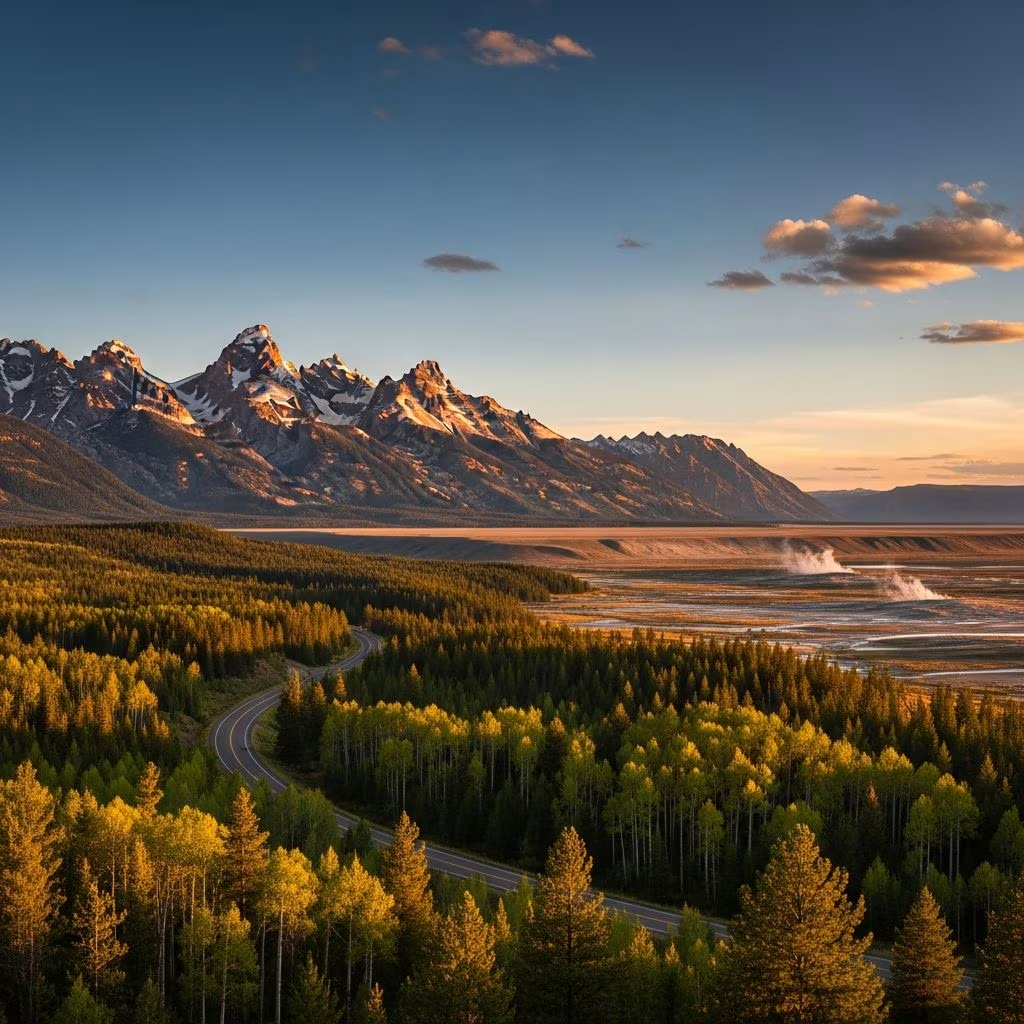
Transitioning from the sharp, snow-capped summits of Grand Teton National Park to the steaming geothermal features of Yellowstone National Park creates one of the most rewarding road trips in the American West. Linked by the picturesque John D. Rockefeller Jr. Memorial Parkway, these adjacent parks offer diverse landscapes—from glacier-carved valleys and alpine lakes to bubbling mud pots and erupting geysers—all accessible via well-maintained roads ideal for self-guided exploration.
The journey spans roughly 60 miles from Grand Teton’s southern entrance to Yellowstone’s southern boundary, but the real magic lies in the detours. Expect panoramic vistas, abundant wildlife like moose, bison, and bears, and natural phenomena that feel otherworldly. Summer brings wildflowers and long days, while fall paints the valleys in gold. Plan for 3-7 days to avoid rushing, allowing time for hikes, ranger programs, and spontaneous wildlife viewing.
Key advantages include minimal border crossings between parks (no entrance fees needed twice with an America the Beautiful Pass) and year-round access via the parkway, though seasonal closures affect some roads. Fuel up in Jackson or West Yellowstone, as services inside parks are limited and pricey.
Start in Jackson Hole, Wyoming, flying into Jackson Hole Airport (JAC) or driving from Bozeman (BZN). Rent a high-clearance vehicle for gravel roads; SUVs are popular. Book lodging months ahead—cabins and lodges fill fast. Entry fees: $35/vehicle for 7 days per park or $80 annual pass.
This flexible itinerary assumes starting in Grand Teton and heading north, with options to loop back or extend.
Begin at Moose Entrance. Drive the 42-mile Grand Teton Loop Road, stopping at key overlooks. Schwabacher Landing offers mirror-like reflections of the Tetons at dawn—perfect for photography. Picnic at Colter Bay, where rocky shores meet Jackson Lake and wildlife roams.
Hike Taggart Lake Trail (3.2 miles round-trip, moderate) for alpine lake views without crowds. End at Signal Mountain Summit Road for 360-degree panoramas. Overnight at Signal Mountain Lodge cabins with lake views.
Focus on Jenny Lake: Take the shuttle boat ($20 round-trip) to Hidden Falls and Inspiration Point (2 miles round-trip hike, steep but rewarding). Explore Jenny Lake Visitor Center for exhibits on glacial history.
Afternoon: Cruise the Jenny Lake Scenic Drive, then head north via US 191/89 through the Rockefeller Parkway. Pull over at Oxbow Bend for Snake River bends framed by peaks. Enter Yellowstone’s south entrance near Lewis Falls. Stay at Grant Village or Lake Yellowstone Hotel.
Start at Old Faithful, timing eruptions via the NPS app (every 90 minutes). Wander Upper Geyser Basin boardwalks (1-3 miles easy) to see Grand Prismatic Spring’s rainbow hues from Fairy Falls overlook (2.7 miles out-and-back).
Continue to West Thumb Geyser Basin for lakeside hot springs, then Kepler Cascades. Wildlife peaks at dusk near Fountain Paint Pot. Return via Biscuit Basin. Lodge at Old Faithful Inn for historic charm.
Drive to Canyon Village. Hike South Rim Trail (3.2 miles) from Upper Falls to Artist Point for vertigo-inducing views of the 308-foot Lower Falls. North Rim offers quieter trails like Uncle Tom’s Point (if open).
Afternoon: Hayden Valley for bison herds and possible grizzlies. Visit Canyon Visitor Center for Junior Ranger programs. Evening: Fishing Bridge area. Stay at Canyon Lodge.
Tackle the Upper Loop: Mammoth Hot Springs’ travertine terraces (boardwalk loop, easy). Norris Geyser Basin for steamy vents. Lamar Valley, the “Serengeti of North America,” for wolves and pronghorn (dawn/dusk best).
Exit via East Entrance to Cody or North to Bozeman/Gardiner. If time, Artists Paintpots (1-mile loop).
| Trail | Park | Distance (miles) | Difficulty | Highlights |
|---|---|---|---|---|
| Taggart Lake | Grand Teton | 3.2 RT | Moderate | Alpine lakes, wildflowers |
| Hidden Falls/Inspiration Pt | Grand Teton | 2 RT (w/boat) | Moderate | Cascades, Teton views |
| Grand Prismatic Overlook | Yellowstone | 2.7 RT | Moderate | Vivid hot spring colors |
| South Rim Trail | Yellowstone | 3.2 one-way | Easy-Moderate | Waterfalls, canyon vistas |
| Mammoth Terraces | Yellowstone | 1-2 loop | Easy | Steaming mineral formations |
Options range from rustic to resort-like. Book via Xanterra or NPS sites.
Both parks host 60+ mammal species. Drive slowly; use binoculars.
Bear spray essential ($40-50); attend ranger talks on etiquette.
Pack layers (40-80°F days, freezing nights), rain gear, snacks. No drones. Food storage rules strict to avoid bears. Gas stations sparse; fill up often. Roads like Teton Park Rd close winter.
For families: Junior Ranger books at visitors centers. Accessibility: Boardwalks at geysers; shuttles at Jenny Lake.
Summer: Crowded, all roads open, thunderstorms.
Fall: Foliage, elk rut, fewer people, early snow.
Winter: Snowcoach tours, no loop roads.
Spring: Muddy, bear awakening, partial openings.
About 1-2 hours via the parkway, but plan 3-4 with stops for views and wildlife.
No—with a park pass, seamless travel between them.
Check NPS predictions; mornings less crowded.
Yes, reservable sites at Colter Bay, Grant, etc.; backcountry permits required.
Check nps.gov/yell or grandtetons for updates; alternatives via Jackson or West Yellowstone.
