

 Travel Essentials
 Travel Essentials

Discover the formation, dimensions, diving adventures, and ecological significance of Belize's Great Blue Hole, a UNESCO-protected underwater sinkhole visible from space.
 Travel Essentials
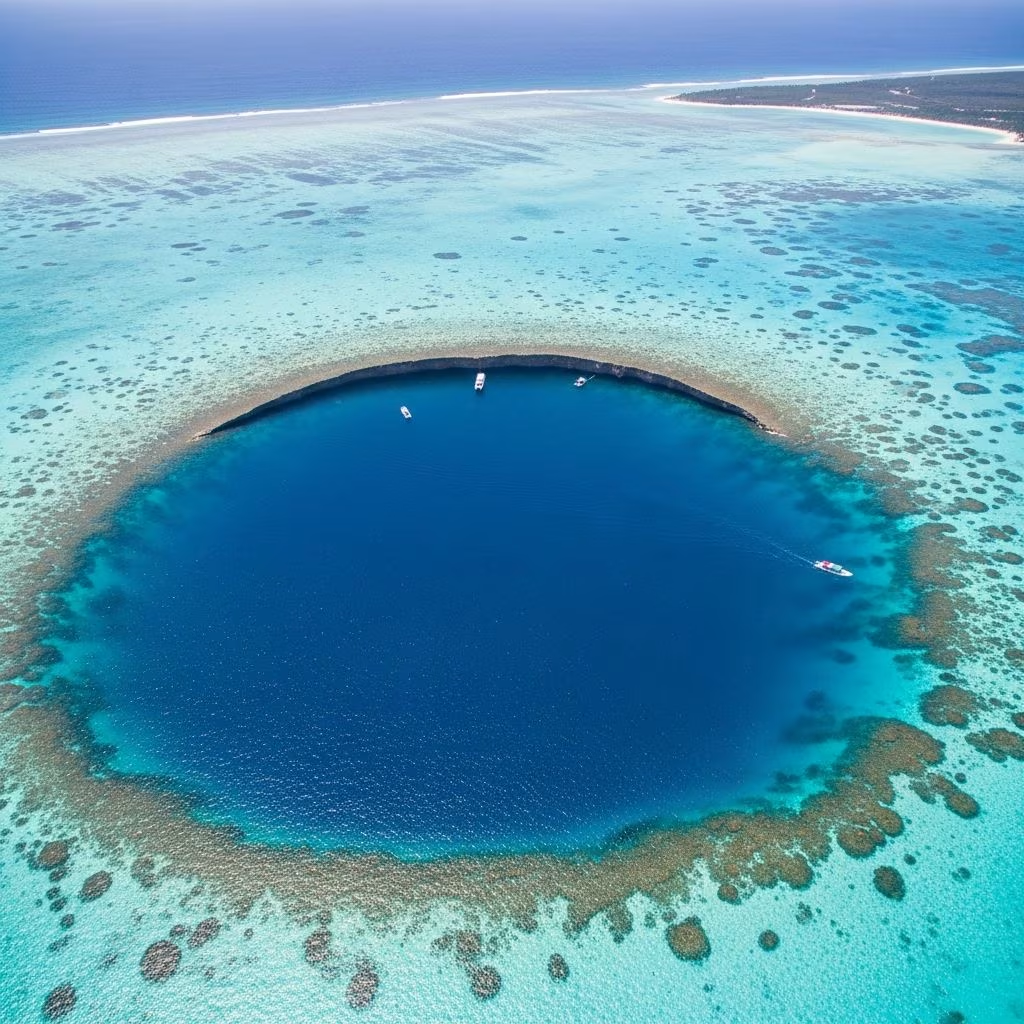
The Great Blue Hole stands as one of the planet’s most captivating natural formations, a vast marine sinkhole located off the coast of Belize in the Caribbean Sea. This nearly circular abyss, measuring over 300 meters across and plunging more than 125 meters deep, draws adventurers, scientists, and nature enthusiasts from around the globe.
Formed during the Quaternary glaciation periods when sea levels dropped significantly, the Great Blue Hole originated as an extensive limestone cave system. Approximately 153,000 years ago, these caverns began developing through karst erosion processes on what was then dry land. The last Ice Age, peaking around 26,500 years ago, kept sea levels 120 to 150 meters lower than today, allowing massive tunnels to form beneath the surface.
As glaciers melted about 15,000 years ago, rising oceans flooded these underground networks in stages. The cave ceilings eventually collapsed, creating the iconic sinkhole surrounded by the Lighthouse Reef Atoll. Evidence of this history persists in the form of giant stalactites, dripstone sheets, and columns dangling from overhangs up to 12 meters long, remnants of a time when the structure hung above water.
Shelves and ledges encircling the interior at varying depths mark the progressive flooding levels, carved by wave action over millennia. This karst-eroded feature, part of the Belize Barrier Reef system, represents the world’s largest known natural sinkhole of its type.
| Feature | Measurement | Details |
|---|---|---|
| Diameter | 300-318 meters (984-1,043 feet) | Nearly perfect circle, visible from space. |
| Depth | 124-125 meters (407-410 feet) | Bottom layers anoxic and dark. |
| Circumference | Approximately 1,000 feet | Enclosed by shallow coral ridge. |
| Surface Area | 70,650 square meters | Part of Lighthouse Reef Atoll. |
From above, the Hole appears as a profound sapphire circle amid shallower turquoise waters of the reef, its steep walls dropping sharply. The surrounding ridge, vibrant with coral, contrasts the deep blue void, making it a standout landmark even from orbit.
Beneath the surface thrives a diverse ecosystem. The upper zones host Caribbean reef sharks, nurse sharks, and occasional hammerheads patrolling the edges. Lemon, blacktip, and bull sharks also frequent the area, adding thrill for observers.
Stalactite chambers shelter groupers, moray eels, and colorful reef fish. As depths increase, oxygen levels drop, creating an anoxic zone below 100 meters barren of life but rich in geological artifacts. The nearby Mesoamerican Reef supports turtles, rays, and over 500 fish species, amplifying the site’s biological importance.
Diving here demands expertise due to depths, currents, and navigation challenges. Operators require at least 24 prior dives, advanced open-water certification, and often nitrox training to manage decompression.
A typical trip from Belize City spans 60-100 km to Lighthouse Reef, involving boat journeys of 2-4 hours. Dive profiles target key sites: the Stalactite Cathedral at 40 meters with massive formations; Shark Point for predator encounters; and Half Moon Caye Wall for reefs.
Descents reveal clearing waters unveiling cave networks, but visibility drops deeper. Night dives are rare; focus remains on daytime wall dives and fly-bys. Aquatica Submarines’ 2018 exploration uncovered stalagmites and two lost diver remains at the bottom, highlighting risks.
British diver Ned Middleton coined “Great Blue Hole” in his 1988 book Ten Years Underwater, elevating its fame after six months in Belize. Jacques Cousteau mapped it in 1971 via his ship Calypso and submarine Nautilus, ranking it among his top dive sites and sparking worldwide interest.
In 2012, Discovery Channel named it the #1 Most Amazing Place on Earth. UNESCO designated the Belize Barrier Reef, including the Hole, a World Heritage Site in 1996 for its universal value.
Combine with visits to Half Moon Caye Natural Monument or Turneffe Atoll for birdwatching and more reefs.
Climate change threatens coral bleaching, while tourism pressures demand sustainable practices. Belize enforces no-touch policies and limits visitor numbers. Recent expeditions emphasize mapping to aid preservation.
Support involves choosing eco-certified operators and avoiding single-use plastics. The site’s UNESCO status ensures ongoing monitoring by authorities.
Legends swirl around lost treasures or ancient Mayan links, though unproven. Tunnels possibly connect to the mainland, fueling exploration dreams. The anoxic bottom sparks tales of preserved secrets, as seen in submarine dives revealing intact stalagmites.
No, it requires advanced certification and at least 24 logged dives due to depth and complexity.
Through limestone cave collapse during post-Ice Age sea level rise, about 15,000 years ago.
Yes, commonly Caribbean reef and nurse sharks; hammerheads less frequent.
Yes, its circular shape stands out amid the reef.
Dry season (Feb-Jun) for optimal conditions.
Prepare with fitness training, gear checks, and weather monitoring. Pair with mainland adventures like Mayan ruins or jungle lodges for a full Belize itinerary. This sinkhole isn’t just a dive site—it’s a portal to Earth’s deep history, where geology meets ocean mystery in breathtaking scale.
With its unparalleled features, the Great Blue Hole continues captivating explorers, reminding us of nature’s raw power and beauty. Whether via scuba or submersible, an encounter here promises lifelong memories.
