

 Travel Essentials
 Travel Essentials

Explore the Great Migration in Serengeti: annual paths of 1.5M wildebeest, key viewing months, river crossings, predators, and top safari tips for an unforgettable adventure.
 Travel Essentials
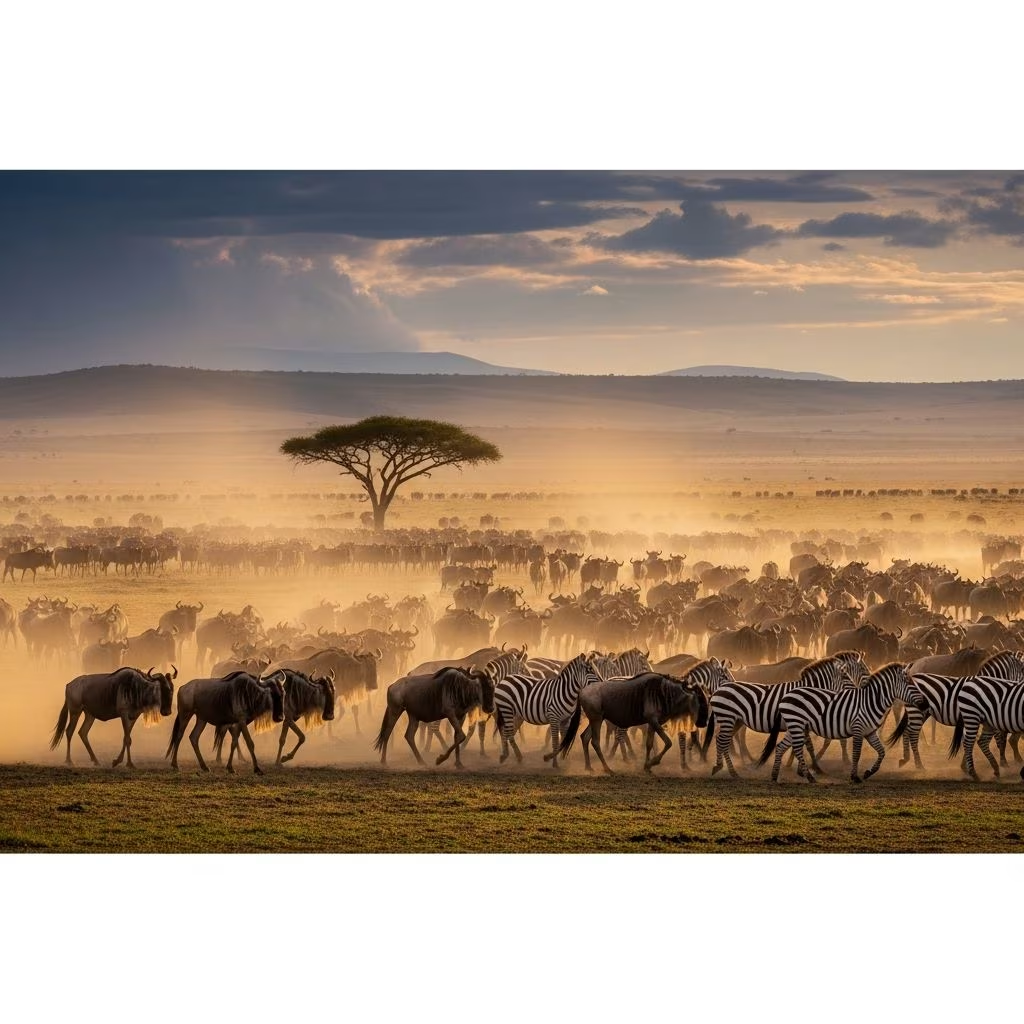
The Great Migration stands as one of nature’s most breathtaking spectacles, where over 1.5 million wildebeest lead vast herds of zebras, gazelles, and other grazers on a relentless 800-1000km circular trek through the Serengeti-Mara ecosystem. This annual odyssey, driven by the pursuit of fresh grass and water, unfolds across Tanzania’s Serengeti National Park and Kenya’s Maasai Mara, sustaining a vibrant web of life amid endless plains, rivers, and kopjes.
At its core, the migration involves approximately 1.2-1.5 million blue wildebeest, joined by 300,000 zebras, topi, Thomson’s gazelles, and more, forming columns that stretch across the horizon. These animals traverse nutrient-rich volcanic soils that regenerate rapidly after rains, creating one of Earth’s most productive ecosystems capable of supporting the world’s highest concentrations of ungulates and predators.
Each wildebeest covers up to 1000km individually, guided by instinct rather than a single leader, in a clockwise loop dictated by rainfall patterns. Zebras, with their superior sense of smell, often lead the way to water, while wildebeest follow for the grazing. This dynamic movement ensures constant renewal, as grazing stimulates new grass growth.
The migration is a year-round event, but rainfall unpredictability adds variability; herds chase short rains southward and long rains northward. Here’s a month-by-month breakdown:
| Month | Location | Highlights |
|---|---|---|
| Jan-Mar | South Serengeti/Ndutu | Calving frenzy, predator action |
| Apr-May | Central Serengeti | Dispersal, green plains |
| May-Jun | Western Serengeti | Grumeti prep |
| Jul-Oct | North Serengeti/Mara | River crossings |
| Nov-Dec | Southeast Serengeti | Return migration |
The Grumeti and Mara Rivers pose the deadliest challenges. In July, western herds tackle Grumeti, but August-October’s Mara crossings steal the show, with packs plunging into crocodile-infested waters multiple times. Thousands perish—snatched by 3,000+ Nile crocodiles or drowned—but survivors embody resilience.
Lions (3,000-4,000 in Serengeti), leopards, cheetahs, hyenas, wild dogs, and crocs ensure only the fittest endure, replenishing predator populations. Calves must stand within minutes post-birth, or risk becoming meals.
Serengeti’s 25,000 km² offers diverse zones:
Prime recommendation: Mid-July to October in North Serengeti for crossings amid dry-season concentrations.
The migration fuels an extraordinary biodiversity hotspot. Serengeti hosts Africa’s highest wild ostrich numbers and unmatched predator density. Big cats thrive on the abundance, while birds like vultures clean up remains, maintaining balance.
Vegetation cycles with herds: Grazing fertilizes soils via dung, promoting regrowth. This intact route remains the world’s largest, unaltered by human barriers.
Book 12-18 months ahead for peak seasons; fly into Seronera or regional airstrips for game drives. Opt for mobile camps tracking herds or fixed luxury options. Combine with Ngorongoro or balloon safaris for variety.
Costs vary by luxury level; focus on expert guides for spotting action. Respect distances: No off-road driving, maintain silence during crossings.
Climate change disrupts rains, altering timelines; monitor updates. Poaching and habitat loss threaten, but protected status preserves this UNESCO site. Tourism funds anti-poaching; responsible visits aid conservation.
A year-round clockwise trek of 1.5M wildebeest and companions across Serengeti-Mara seeking rain-fed grass.
July-October for North Serengeti/Mara crossings; Jan-Mar for calving.
1.2-1.5M wildebeest, 300K zebras, plus gazelles.
Yes, from guided vehicles at safe distances; never approach on foot.
Yes, but specific highlights shift monthly; Central Serengeti offers consistent sightings.
Check requirements; many nationalities get visas on arrival.
