

 Travel Essentials
 Travel Essentials

Explore the annual Great Migration in the Serengeti: its routes, seasonal highlights, river crossings, and tips for witnessing this natural wonder.
 Travel Essentials
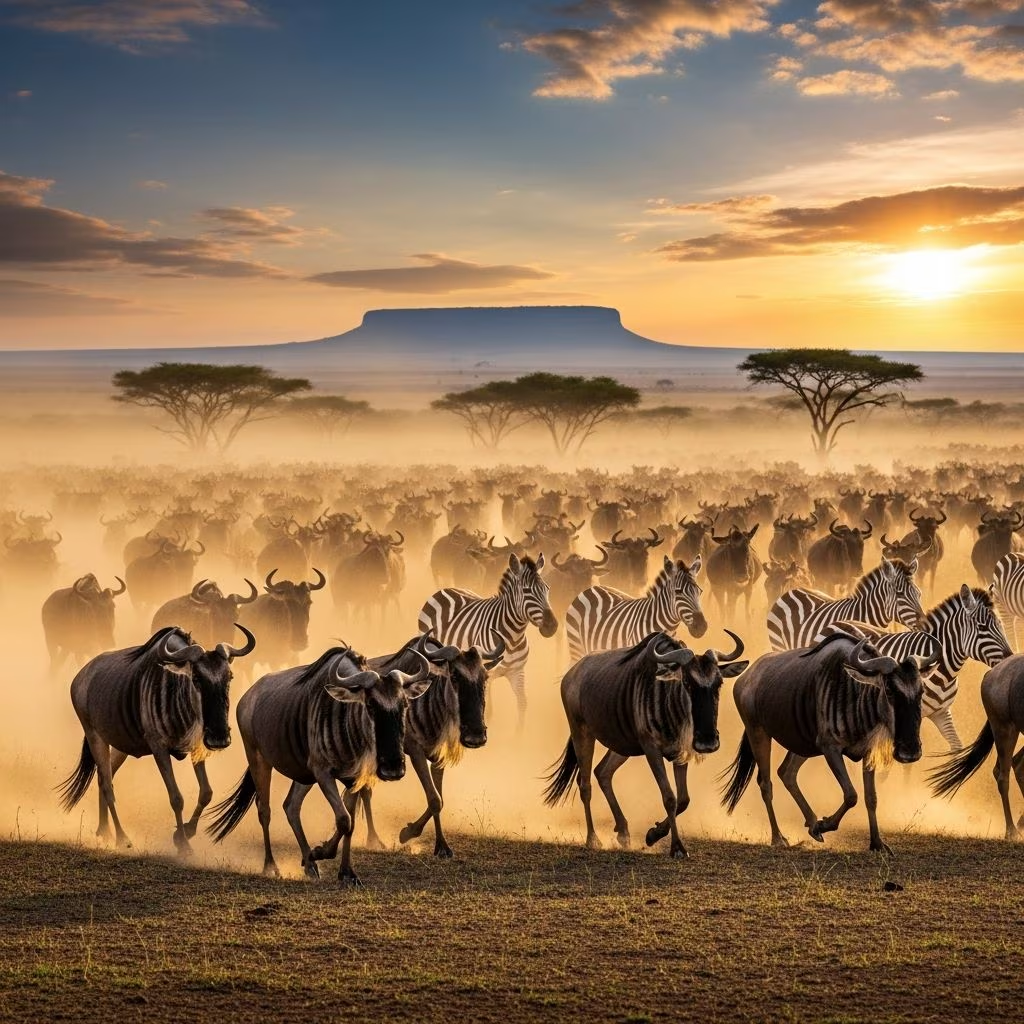
The Great Migration stands as one of Earth’s most awe-inspiring natural phenomena, where vast herds of wildebeest, zebras, and gazelles traverse the expansive Serengeti-Mara ecosystem in a perpetual quest for fresh grazing lands dictated by seasonal rains. This annual cycle, spanning Tanzania’s Serengeti National Park and Kenya’s Maasai Mara, captivates travelers with its raw drama of survival, birth, and predation.
At its core, the migration involves approximately 1.5 million wildebeest, joined by around 300,000 zebras, topi, and gazelles, forming colossal columns that stretch for kilometers across the savanna. These animals cover 800 to 1,000 kilometers annually in a roughly clockwise loop, driven by the need for nutrient-rich grasses that emerge after rains. The Serengeti-Mara ecosystem, encompassing 25,000 square kilometers of endless plains, kopjes (rocky outcrops), rivers, and woodlands, provides the perfect stage for this ‘greatest show on Earth’.
This movement sustains a complex food web, with predators like lions, leopards, cheetahs, hyenas, wild dogs, and Nile crocodiles preying on the weak, injured, or newborn, ensuring only the fittest survive. During peak calving, up to 8,000 wildebeest calves are born daily, replenishing the herds and fueling intense predator activity.
The migration follows a predictable yet rain-influenced path, making timing crucial for visitors. Herds begin aggregating in the southern Serengeti around the Ngorongoro Conservation Area and Ndutu Plains, then proceed northward through central regions, tackle western river barriers, reach the northern frontier for dramatic crossings, spill into Kenya, and loop back south.
To optimize sightings, position yourself strategically across the ecosystem. The Serengeti National Park dominates, with zones tailored to migration phases.
| Region | Best Months | Highlights |
|---|---|---|
| Southern Serengeti / Ndutu | Jan-Mar | Calving, big cats, quiet safaris |
| Central Serengeti (Seronera) | Apr-May | Resident wildlife, en-route herds |
| Western Corridor (Grumeti) | Jun-Jul | River crossings, fewer crowds |
| Northern Serengeti / Mara | Aug-Oct | Mara crossings, predator action |
Ngorongoro Conservation Area borders the south, offering calving views without entering the crater itself. For Mara extensions, Kenya’s Maasai Mara provides northern perspectives during peak season.
Wildebeest, often called ‘clowns of the savanna’ for their odd appearance (weighing 260-290 kg with mismatched features), lead the charge on short, nutritious grasses post-rain. Zebras complement them by eating taller blades first, exposing shorter ones, in a symbiotic partnership. Thomson’s gazelles and topi add to the throng.
Dangers abound: calves must stand within minutes or face jackals; riverbanks claim legs and lives; crocodiles ambush at crossings; and pride hunts cull stragglers. Yet, the cycle endures, with births balancing losses in this ballet of life and death.
Visiting requires foresight due to weather variability and park fees. No single ‘best’ time exists—calving suits predator fans, crossings thrill seekers of drama. Book 9-12 months ahead for August-October peaks.
Combine with Ngorongoro Crater or Tarangire for diverse itineraries. Respect rules: maintain distance, no off-trail driving.
Climate change disrupts rain patterns, altering routes unpredictably. Poaching and habitat loss threaten, but protected areas safeguard the ecosystem. Initiatives by Tanzanian and Kenyan authorities promote sustainable tourism.
The annual clockwise movement of 1.5 million+ herbivores across Serengeti-Mara seeking rain-fueled grasses.
June-July for Grumeti (less crowded) and August-October for Mara (most dramatic).
About 1.5M wildebeest, 300K zebras, plus gazelles—totaling over 2M.
No—unpredictable, but skilled guides maximize chances.
Lions, cheetahs, hyenas during calving; crocs at rivers.
Beyond spectacle, it embodies nature’s resilience amid vast, timeless landscapes—from dust-choked columns to thundering hooves vibrating the earth. Whether witnessing a calf’s first steps or a herd defying crocs, the migration forges profound connections to wild Africa.
(Word count: 1678)
