

 Travel Essentials
 Travel Essentials

Discover expert tips on timing, locations, and planning for the Great Migration, nature's epic journey of over 1.5 million wildebeest through Serengeti and Maasai Mara.
 Travel Essentials
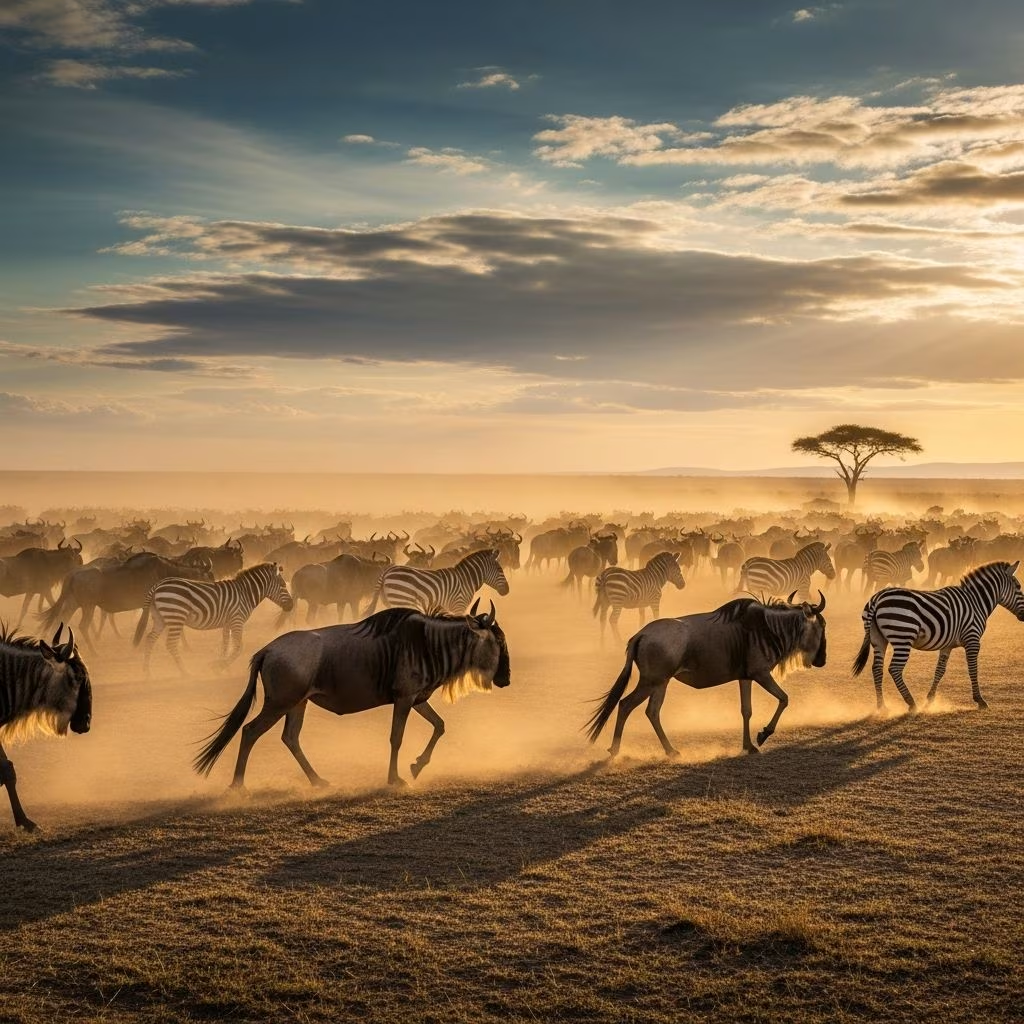
The Great Migration stands as one of the planet’s most awe-inspiring natural events, where roughly 1.5 million wildebeest, accompanied by hundreds of thousands of zebras and gazelles, traverse the vast plains of Tanzania and Kenya in a relentless quest for fresh pasture and water. This annual odyssey, spanning about 800 miles, unfolds across the Serengeti-Mara ecosystem, drawing adventurers eager to behold river crossings, calving seasons, and predator-prey dramas up close.
At its core, the migration responds to rainfall patterns that dictate grass growth and water availability. Herds initiate their circuit in Tanzania’s southern Serengeti near the Ngorongoro Conservation Area, where calving peaks from January to March, birthing up to 8,000 calves daily and attracting lions, hyenas, and cheetahs. As grasses deplete, the animals press northward through the Serengeti’s Western Corridor, facing Grumeti River challenges in May-June, before surging into Kenya’s Maasai Mara for dramatic Mara River crossings from July to October.
Climate variability introduces unpredictability; recent shifts in rain have altered traditional timelines, emphasizing the need for flexible itineraries. Yet, this fluidity sustains the ecosystem, with predators thriving on the abundance and newborns replenishing losses, embodying nature’s resilient cycle.
Planning hinges on desired highlights. For calving spectacles, target January-March in southern Serengeti and Ndutu Plains, where vulnerable newborns fuel intense predation. River crossings dominate July-October, particularly in northern Serengeti and Maasai Mara, as herds plunge into crocodile-infested waters amid thunderous splashes.
| Month | Primary Location | Key Events |
|---|---|---|
| Jan-Mar | Southern Serengeti/Ndutu | Calving season, high predator activity |
| May-Jun | Western Serengeti/Grumeti | Grumeti River crossings |
| Jul-Oct | Northern Serengeti/Maasai Mara | Mara River crossings, peak drama |
| Nov-Dec | Southern Serengeti | Return to calving grounds |
July-November offers the most reliable action, though peak season means booking 12-18 months ahead; October provides crowd relief with up to 30% savings. Tanzania hosts the herds longer, offering expansive, less crowded vistas compared to Kenya’s busier Mara.
The Serengeti National Park, a UNESCO World Heritage site, dominates the migration’s path. Southern regions shine during calving, while central Seronera Valley delivers year-round Big Five sightings amid kopjes—ancient rock islands harboring leopards. Northern Serengeti hosts Mara crossings, with Lobo and Loliondo areas ideal for late-year loops. Adjacent Ngorongoro Crater boasts dense wildlife concentrations on its 105-square-mile floor.
From July, herds flood the Maasai Mara National Reserve, where Mara River plunges create iconic chaos. Less vast than Serengeti but richer in lion prides, it pairs migration views with Maasai cultural interactions. Conservancies like Olare Motorogi offer exclusive access.
Serengeti edges out for scale and solitude, but Mara excels in predictable crossings and accessibility. Multi-park itineraries blending both maximize diversity.
Luxury lodges, tented camps, and mobile setups elevate the experience. Permanent camps like those in Seronera provide comfort with prime game-viewing decks. Mobile camps chase herds dynamically, offering front-row drama but requiring adaptability.
Opt for eco-focused operators emphasizing low-impact tourism. All-inclusive packages cover guides, meals, and transfers, essential in remote areas.
Suitability for novices? Yes, with balance. Pair migration crowds with quieter conservancies for gentler introductions—think walking safaris, horse rides, and cultural visits in Laikipia. Infrastructure in Kenya/Tanzania is robust: daily flights from Nairobi or Arusha hubs simplify access.
Flights via Nairobi (Kenya) or Kilimanjaro (Tanzania). Safaris cost $600-1,500/night; budget 7-10 days for depth. Book via reputable operators for seamless ops. Respect rules: no off-road driving, maintain distance from wildlife.
Beyond game drives, hot-air balloon rides offer bird’s-eye migration views. Night drives reveal nocturnal hunters. Cultural visits to Maasai villages add human context to the wilderness. Combine with Ngorongoro Crater descents or Tarangire for elephants.
A year-round trek of 1.5+ million wildebeest and companions seeking rain-driven resources across Serengeti-Mara.
Absolutely, with experienced guides; combine with low-key areas for optimal intro.
Rain dictates shifts, but patterns hold; flexible plans via expert operators mitigate risks.
Tanzania for space/calving; Kenya for crossings—both for full circuit.
No absolutes, but July-Oct in north maximizes odds.
Tourism funds conservation, but responsible travel curbs impacts. Choose operators supporting anti-poaching and community projects. By treading lightly, visitors ensure this timeless wonder endures.
Embarking on a Great Migration safari promises transformative encounters—thunderous herds reshaping horizons, life’s raw pulse on display. With strategic planning, it becomes accessible to all passionate about wildlife’s grandeur.
