

 Travel Essentials
 Travel Essentials

Explore the tallest sand dunes in North America at Great Sand Dunes National Park, with hiking, sandboarding, wildlife, and stunning landscapes year-round.
 Travel Essentials
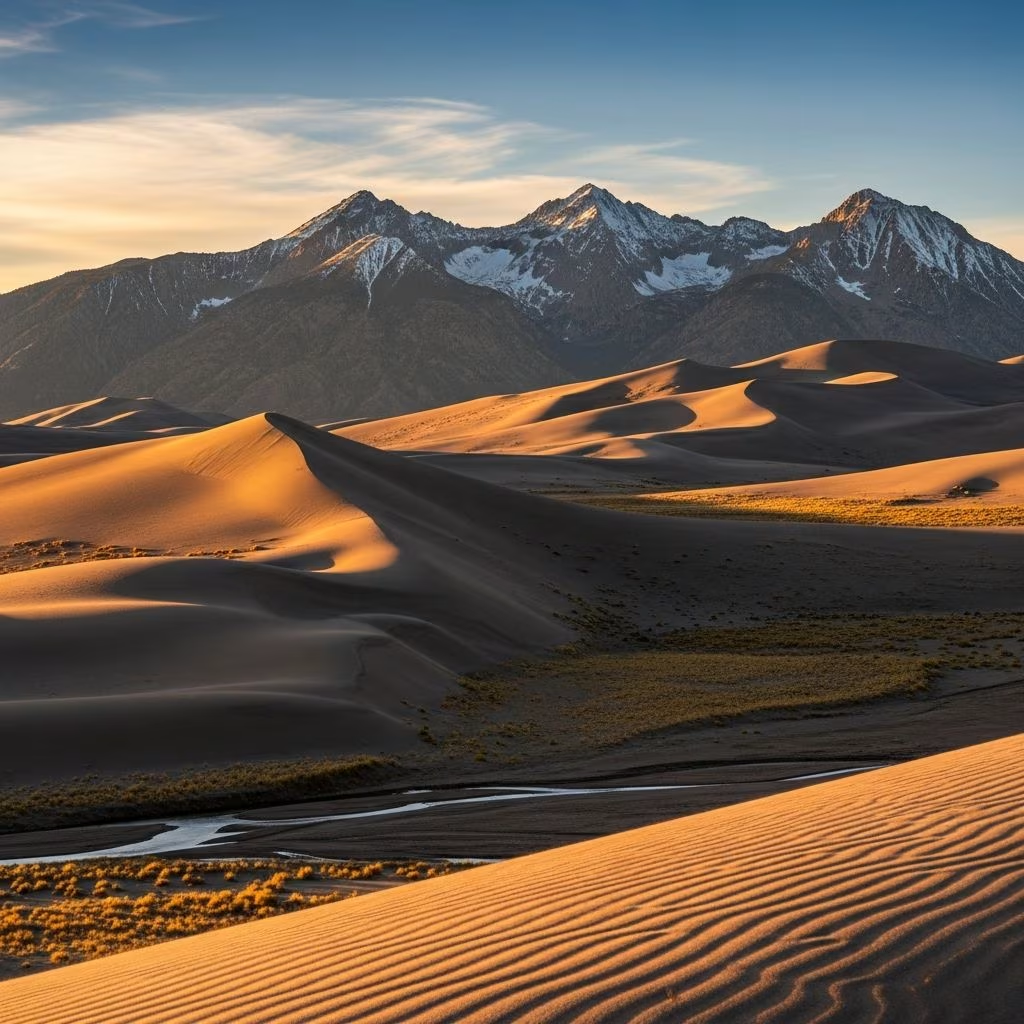
Nestled in the vast San Luis Valley of southern Colorado, Great Sand Dunes National Park and Preserve stands as a geological marvel, home to the tallest sand dunes in North America. These colossal piles of sand, reaching heights of up to 750 feet, create a surreal playground against the dramatic backdrop of the Sangre de Cristo Mountains. Spanning over 30 square miles with an estimated 5 billion cubic meters of sand, the park offers more than just dunes—it’s a diverse ecosystem encompassing grasslands, wetlands, conifer forests, alpine lakes, and peaks exceeding 13,000 feet.
The story of how these massive dunes came to be is as captivating as their appearance. Millions of years ago, ancient rivers and lakes deposited fine grains of sand from the surrounding mountains into the San Luis Valley. Prevailing southwest winds then pushed this sand into towering heaps, while opposing winds from the east and northeast shaped them into the undulating ridges seen today. The key to their extraordinary height lies in a rare combination of strong winds, an abundant sand supply, and a natural barrier formed by the Sangre de Cristo Range that prevents the dunes from migrating eastward.
Today, the dune field covers approximately 30 square miles, with the park and adjacent preserve totaling 149,028 acres. The highest point in the park reaches 13,604 feet above sea level, while visitor areas sit around 8,200 feet. This dynamic environment ensures the dunes are constantly shifting, with no designated trails to preserve their natural form—adventurers are encouraged to forge their own paths.
Great Sand Dunes caters to thrill-seekers and leisurely explorers alike, with activities ranging from adrenaline-pumping sandboarding to serene stargazing. The park is open 24 hours a day, 365 days a year, with no timed entries or reservations required for general access.
One of the park’s signature experiences is sliding down the dunes on a sand sled or board. Rent equipment from local outfitters near the entrance, as these specialized boards are designed to glide over the coarse sand. Beginners should start on gentler slopes near the main parking area, while experts tackle steeper faces. Note that the sand can reach scorching temperatures in summer—early morning or evening sessions are ideal.
With no fixed trails on the dunefield, hiking here feels like stepping into an infinite sandbox. Popular routes include the trek to **High Dune** (about 2-3 hours round trip, 650 feet elevation gain) for panoramic views, or the ambitious 5-hour journey to **Star Dune**, one of the continent’s tallest at around 750 feet. Beyond the sands, trails lead into the preserve’s forests and tundra, offering wildflower meadows in spring and golden aspens in fall.
In spring (typically April to June), snowmelt feeds Medano Creek, creating a shallow beach perfect for splashing, wading, and building sandcastles at the dune base. This ephemeral waterway disappears in summer but reappears with afternoon thunderstorms.
For off-road enthusiasts, the Medano Pass Primitive Road offers a rugged 22-mile drive through dunes, forests, and over the pass into the Wet Mountain Valley. High-clearance 4WD vehicles only; check conditions seasonally as water crossings vary.
Beyond the dunes, the park’s 107,342 acres of national park land and 41,686 acres of preserve host thriving biodiversity. Look for elk, pronghorn, bison, and mule deer grazing in grasslands; over 50 mammal species including black bears and mountain lions roam the higher elevations. Birdwatchers spot nearly 200 species, from sandhill cranes to peregrine falcons. Rare plants like the starry false lily thrive in the dunes, while alpine tundra blooms with wildflowers above treeline.
| Ecosystem | Key Features | Wildlife Highlights |
|---|---|---|
| Dunefield | 30 sq mi of shifting sands | Kangaroo rats, insects adapted to heat |
| Grasslands & Wetlands | Cottonwood groves, seasonal creeks | Elk, waterfowl, amphibians |
| Montane Forests | Spruce, pine, aspen stands | Bears, Abert’s squirrels |
| Alpine Tundra | Peaks over 13,000 ft, lakes | Pikas, bighorn sheep |
Spring brings wildflowers and creek play; summer is prime for sandboarding but hot (daytime highs 80-90°F); fall offers mild temps and fewer crowds; winter transforms dunes into a snowy wonderland for cross-country skiing. At 8,200 feet elevation, nights are always cool—pack layers. The park’s International Dark Sky status makes it stellar for stargazing, especially on moonless nights.
Entrance fees are $25 per vehicle (7 days); America the Beautiful passes accepted. Camp at Piñon Flats Campground (88 sites, reservations recommended) or backcountry in the preserve (free permits). The Visitor Center at 8,200 feet offers exhibits, ranger talks, and Junior Ranger programs. From Alamosa (30 miles west), it’s a scenic drive; no public transit.
Accessibility: Wheelchair-friendly paths to the dune base; sand ramps available. Pets allowed on leashes in day-use areas but not on dunes or trails.
Designated a national monument in 1932 by President Hoover, it became a full national park in 2000 and preserve in 2004, expanding protections to 149,028 acres. Efforts focus on preserving the fragile dunes from erosion and invasive species while allowing ethical recreation.
No, standard vehicles reach the main parking lot. 4WD is only for Medano Pass Road.
Pets are prohibited on the dunefield to protect wildlife but allowed in parking areas on leash.
Yes, on any dune except vegetated areas. Rent boards nearby—no park rentals.
High Dune: 2-3 hours round trip. Star Dune: 5 hours. Allow extra time for sinking sand.
Ranger-led programs yes; private tours available from Alamosa outfitters.
This park’s blend of desert, mountain, and sky creates unforgettable experiences. Whether climbing endless ridges or camping under stars, Great Sand Dunes delivers raw natural beauty.
