

 Travel Essentials
 Travel Essentials

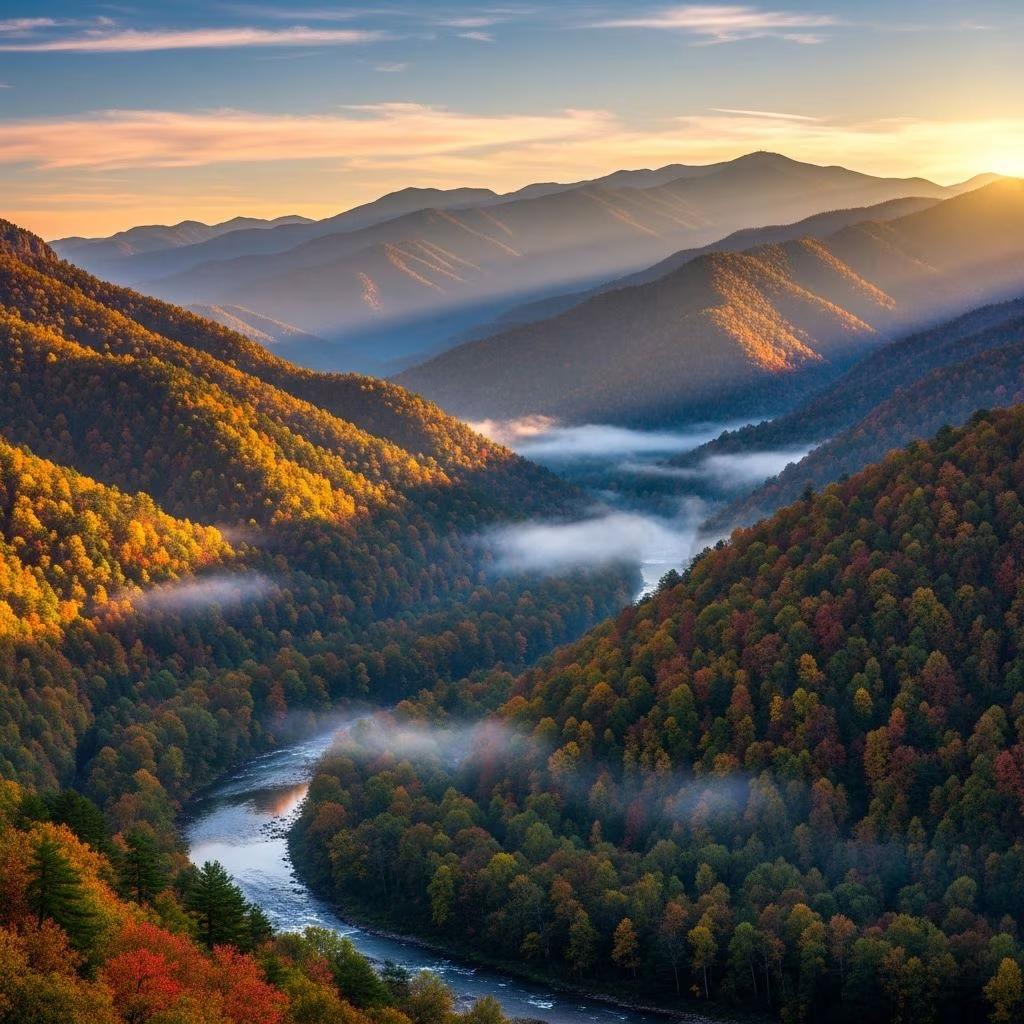
Uncover the best attractions in Great Smoky Mountains National Park: from Clingmans Dome hikes to Cades Cove wildlife spotting and thrilling Gatlinburg experiences.
 Travel Essentials
The Great Smoky Mountains National Park, straddling Tennessee and North Carolina, draws millions annually with its ancient forests, diverse wildlife, and breathtaking vistas. Spanning over 500,000 acres, this UNESCO World Heritage Site offers endless opportunities for outdoor enthusiasts, history buffs, and families seeking nature’s embrace. Whether you’re chasing waterfalls, summiting peaks, or meandering through historic valleys, the Smokies deliver unparalleled experiences year-round.
Elevations exceeding 6,000 feet define the Smokies’ skyline, with several summits providing jaw-dropping panoramas. Start with Kuwohi (formerly Clingmans Dome), the park’s highest point at 6,643 feet. A short but steep half-mile paved trail leads to an observation tower offering 360-degree views stretching across seven states on clear days. Accessible via Clingmans Dome Road off Newfound Gap, it’s a must for sunrise or sunset chasers.
Nearby, the Forney Ridge Trail extends to Andrews Bald, a grassy mountaintop bald bursting with wildflowers in late spring. This 3.6-mile round-trip hike from the Clingmans Dome parking area rewards with open vistas uncommon in the dense forest below. Summer brings lush greenery, while fall paints the landscape in fiery hues.
For a more strenuous challenge, tackle the Alum Cave Trail to Mount LeConte. This 11-mile round-trip ascent gains 2,800 feet, passing through iconic features like Arch Rock, a natural stone tunnel, and duck-under boulders. The trail hugs cliffs with vertigo-inducing views before reaching LeConte’s summit lodges, where misty clouds often swirl. Overnight stays in historic LeConte cabins add magic, but book far ahead.
The Smokies boast over 2,000 miles of streams feeding dozens of waterfalls, perfect for photographers and casual hikers. Laurel Falls is an accessible 2.6-mile round-trip paved path to an 80-foot cascade, splitting into twin streams over a ledge. Its popularity means early arrivals beat crowds; note the trail’s partial closure history for safety upgrades.
These hikes vary in difficulty, but all showcase the park’s hydrological marvels.
Curvy roads wind through the Smokies, blending accessibility with stunning scenery. Newfound Gap Road (US-441) spans 33 miles between Gatlinburg, TN, and Cherokee, NC, climbing to 5,046 feet. Overlooks like Oconaluftee Valley provide wildlife spotting—black bears, elk, turkeys—plus the Appalachian Trail crossing. It’s the park’s spine for quick panoramas.
The Roaring Fork Motor Nature Trail, a 5.5-mile one-way loop near Gatlinburg, twists past log cabins, streams, and forests. Access Grotto Falls and Baskins Creek en route; it’s narrow and thrilling but closes in winter.
For valley immersion, Cades Cove Loop Road circles an 11-mile valley ringed by mountains. Historic homes, churches, and mills dot the path, with deer, bears, and foxes often grazing. Bike it vehicle-free on Wednesdays (summer) for a peaceful ride; rent bikes at the campground.
| Drive | Length | Highlights | Best Time |
|---|---|---|---|
| Newfound Gap Road | 33 miles | Overlooks, AT crossing, wildlife | Any season |
| Roaring Fork | 5.5 miles | Waterfalls, historic sites | Spring-Fall |
| Cades Cove Loop | 11 miles | Wildlife, history, biking | Dawn/Dusk |
Preserved structures reveal Appalachian life from the 1800s-early 1900s. In Cades Cove, the John Oliver Cabin (log home from 1866) and nearby grist mills evoke pioneer resilience. The Mingus Mill and Mountain Farm Museum demonstrate water-powered milling and farmstead living.
Elkmont Historic District features abandoned resort cabins from the logging era, now ghostly reminders of early tourism. Self-guided tours highlight the Smokies’ transition from industry to preservation.
Ooutside the park, Gatlinburg’s Old Mill Campus operates a functional 1830s grist mill, with shops and eateries. These sites, managed by the National Park Service, offer free entry and ranger talks.
Home to 65 mammal species, the Smokies thrive with synchronous fireflies (June lottery tours), elk in Cataloochee Valley, and black bears everywhere. Dawn/dusk in Cades Cove maximizes sightings—stay 100 yards from bears, 25 from other wildlife.
Nearby Gatlinburg amps up fun: Anakeesta mountaintop park with chondola rides, treetop bridges, and zip lines over 600 feet above town. The SkyLift and SkyBridge—North America’s longest pedestrian suspension bridge—delivers adrenaline and views. Alpine coasters and moonshine tastings add variety.
Other pursuits: Fontana Lake kayaking, ranger-led programs on fungi/foraging, fall foliage drives (peak mid-October).
Entrance & Fees: Free admission, but parking tags required ($5/day, $15/week, $40 annual) via recreation.gov.
Best Time: Spring wildflowers, summer waterfalls, fall colors, winter fewer crowds (some roads close).
Lodging: LeConte cabins, campgrounds like Cades Cove, or Gatlinburg hotels.
Essentials: Bear spray illegal; use food storage. Trails busy—arrive early. Check nps.gov/grsm for alerts.
Laurel Falls: 2.6 miles, paved, family-friendly.
Yes, but expect traffic; bike Wednesdays in summer.
Road closes mid-December to mid-March; tower always accessible via trail.
Oconaluftee or Cataloochee Valley at dawn/dusk.
No, only leashed on two roads/gatlinburg strip.
Very; 14M visitors/year. Use shuttles off-season.
