

 Travel Essentials
 Travel Essentials

Discover the unique characteristics of Greece and Croatia to determine which Mediterranean destination best matches your travel preferences and vacation style.
 Travel Essentials
When planning a Mediterranean escape, two nations consistently dominate travel wish lists: Greece and Croatia. Both countries offer crystalline waters, sun-drenched beaches, and centuries of cultural heritage. Yet despite sharing similar geography and climate, each destination tells a distinctly different story. Understanding their unique characteristics empowers travelers to select the destination that truly aligns with their vacation aspirations, timeline, and budget constraints.
One of the most significant distinctions between these destinations lies in their physical layout and how that impacts your ability to explore efficiently. Geography fundamentally shapes travel logistics, influencing everything from transportation costs to the number of sites you can realistically visit.
Croatia presents a notably more compact vacation footprint. The country’s coastline stretches just over 1,000 kilometers, making it possible to journey from the capital Zagreb southward to Dubrovnik within approximately ten days while encountering most major attractions. This condensed geography means less time spent traveling between destinations and more time enjoying each location. The relatively short distances between towns and islands make spontaneous itineraries feasible without extensive planning.
Greece, conversely, spans a considerably larger territory—nearly three times the size of Croatia. This expansive landscape creates both opportunities and challenges. While mainland Greece offers diverse experiences, island-hopping typically requires substantial travel time, with journeys between major destinations like Athens and Santorini consuming six hours or more. Exploring Greece thoroughly demands either extended vacation time or strategic destination selection.
Mediterranean sunshine attracts millions annually, yet these destinations experience notably different seasonal rhythms. Climate variations affect not only comfort but also local experiences and cultural engagement.
Greece benefits from a longer, more intensely hot summer season due to its southern geographic position. The Greek calendar stretches with extended periods of scorching temperatures and abundant sunshine, creating the quintessential Mediterranean summer atmosphere. Afternoon siestas remain embedded in daily Greek life during warm months, reflecting adaptation to intense heat.
Croatia enjoys Mediterranean climate characteristics, yet with important nuances. Summers prove hot but somewhat less extreme than Greece’s, and temperatures cool more noticeably as travelers move northward along the Adriatic coast. Croatian cities and coastal areas increasingly follow Central European schedules, with less emphasis on traditional afternoon rest periods and more conventional business hours year-round.
For travelers seeking intense sun and traditional Mediterranean rhythms, Greece offers the more pronounced experience. Those preferring moderately warm weather with less extreme heat might find Croatia’s climate more comfortable for extensive daily exploration.
While both nations celebrate ancient and medieval heritage, their historical narratives diverge significantly, reflected distinctly in their architectural landscapes. Cultural architecture reveals how each destination interprets Mediterranean history.
Greece’s cultural identity centers on classical civilization. The Parthenon, Byzantine churches like Hosios Loukas, and mythologically-infused landscapes dominate the tourist experience. Walking through Greek destinations connects visitors directly to ancient philosophy, democratic principles, and legendary gods. This classical focus creates a specific type of historical immersion—one rooted in antiquity and timeless philosophical significance.
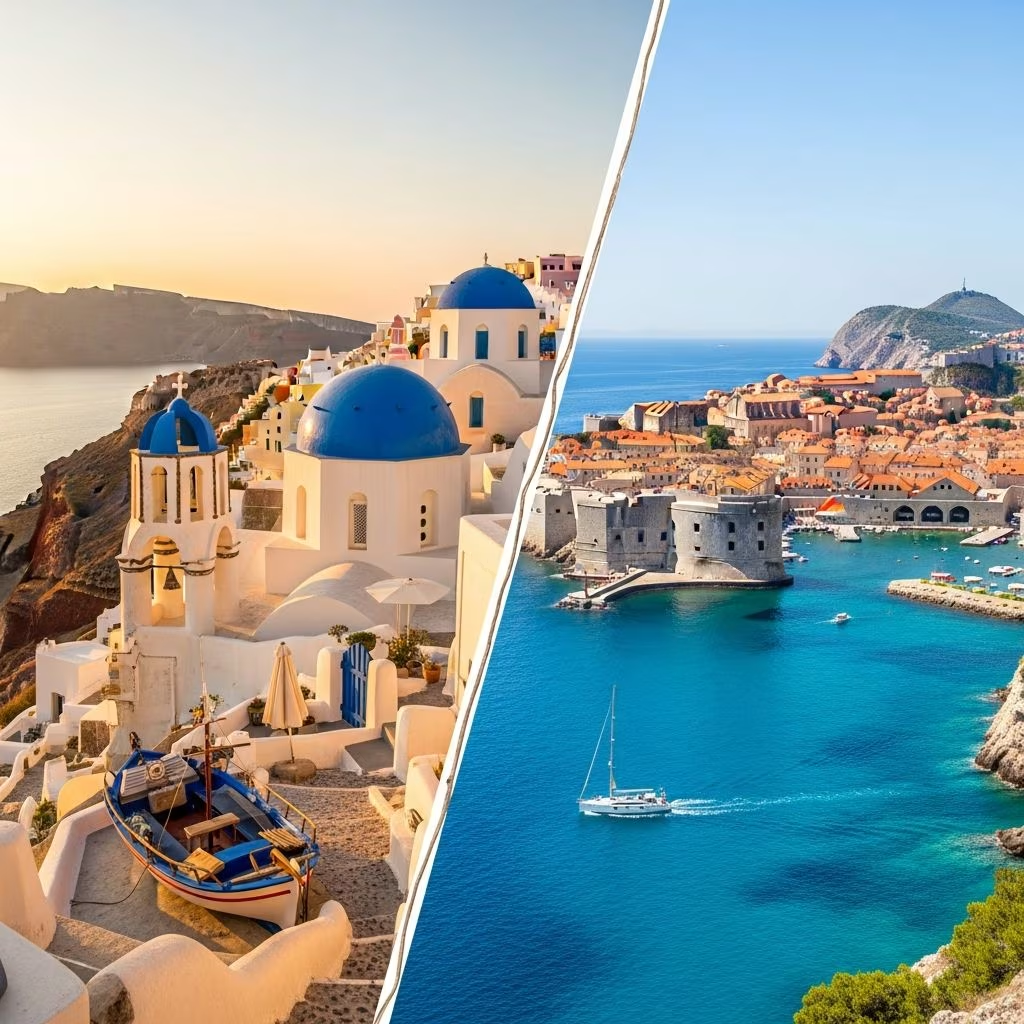
Croatia presents a more eclectic historical tapestry. Rather than emphasizing a single historical period, Croatian architecture reflects layers of Roman, Venetian, and Austro-Hungarian influences. The Diocletian’s Palace in Split exemplifies this cultural complexity, showcasing how different empires left their marks on the same spaces. This architectural eclecticism offers travelers a more geographically-influenced historical experience, demonstrating how proximity to Central Europe, Venice, and the Ottoman Empire shaped Croatian culture differently than Greek influences shaped Greece.
The distinction matters for travelers: Greece delivers classical world immersion, while Croatia offers a European cultural blend.
Both destinations feature magnificent islands, yet the island experience differs substantially between them. Island characteristics fundamentally shape vacation atmospheres and available activities.
Croatia’s islands emphasize intimacy and discovery. Destinations like Hvar and Vis combine lavender-covered hillsides with medieval streetscapes and secluded beaches. These islands attract travelers seeking quieter bays, hidden swimming spots, and opportunities for private boat explorations. The island experience prioritizes relaxation and under-the-radar charm rather than postcard perfection.
Greece’s islands, particularly the Cyclades, showcase iconic whitewashed buildings cascading toward the sea, volcanic cliffs, and dramatically framed seascapes. Islands such as Santorini and Milos are designed for their visual impact—they’re destinations where the scenery itself becomes the primary attraction. Additionally, Greek archipelagos offer greater variety, spanning the Cyclades, Ionian islands, and Dodecanese chains, each with distinct identities and characteristics.
Beach character also differs meaningfully. Croatian beaches typically feature pebble and rocky terrain, creating a rugged aesthetic ideal for swimming and exploration. Greek beaches more commonly showcase golden sand, aligning with traditional beach vacation expectations. Water clarity proves exceptional in both locations, though Croatian waters tend toward different transparency qualities than Greek waters due to geological factors.
| Island Feature | Croatia | Greece |
|---|---|---|
| Atmosphere | Intimate, relaxed, under-the-radar | Iconic, postcard-perfect, mythologically-rich |
| Beach Type | Pebbled coves, rugged terrain | Sandy shores, golden sand |
| Primary Appeal | Private exploration, quiet discovery | Visual drama, legendary context |
| Island Variety | More homogeneous experiences | Distinct regional characteristics |
Nature enthusiasts will discover that both destinations offer impressive landscapes, though approached from different perspectives. Natural attractions showcase how geology and human conservation create distinct outdoor experiences.
Croatia excels with accessible water-based natural wonders. Plitvice Lakes and Krka National Park feature cascading waterfalls, interconnected lakes, and scenic walking paths that immerse visitors in lush, watery landscapes. Kornati National Park protects a complex maze of islands, reefs, and dramatic cliffs, perfect for boating enthusiasts. These attractions prioritize accessibility—many require minimal technical hiking while delivering spectacular scenery.
Greece pairs natural beauty with mythological context, elevating outdoor experiences beyond mere landscapes. Mount Olympus connects rugged mountain trails to legendary narratives about ancient gods. Samaria Gorge and other canyon systems invite challenging hikes through dramatically carved terrain. Greek natural attractions typically incorporate historical significance and ancient storytelling, creating multi-layered experiences that satisfy both adventure seekers and history enthusiasts.
The distinction appeals to different travelers: Croatia works for those prioritizing pristine nature and relaxed exploration, while Greece attracts those seeking nature intertwined with cultural and mythological significance.
Mediterranean cuisine represents both destinations’ greatest treasures, yet regional preferences and ingredient availability create distinct culinary profiles. Food culture reveals local traditions and geographic influences.
Croatian cuisine emphasizes seafood paired with Adriatic simplicity. Fresh fish, locally-sourced produce, and emerging wine regions characterize the dining experience. Croatia’s wine and truffle gastronomy continues developing, attracting food-focused travelers seeking authentic, lesser-known culinary destinations. The experience feels immersive yet delightfully relaxed—diners might enjoy medieval-overlooked meals punctuated by lavender-hill landscapes and fresh seafood complemented by local wines.
Greek cuisine balances Mediterranean staples with legendary culinary heritage. Olive oil, feta cheese, fresh vegetables, and seafood form the foundation of meals that have remained largely unchanged for centuries. Dining in Greece connects visitors to ancient food traditions, with many recipes traceable to classical texts and mythology. The culinary experience in Greece feels more historically rooted and culturally significant, though perhaps less adventurous than emerging Croatian gastronomic scenes.
Financial feasibility significantly influences destination selection, particularly for budget-conscious travelers. Currency and pricing structures create meaningful cost differences between the two destinations.
Croatia maintains its own currency, the Kuna, positioning it as a slightly cheaper vacation destination compared to Greece. While both countries offer accommodation and dining options across various price points, Croatia generally delivers better value, particularly for luxury experiences. The emerging luxury travel scene in Croatia presents high-end accommodations and services at comparatively affordable rates.
Greece’s adoption of the Euro links it to broader European pricing, typically resulting in higher costs across accommodation, dining, and attractions. However, this doesn’t render Greece unaffordable—travelers simply need to account for higher baseline expenses when budgeting.
Overall vacation costs depend heavily on travel style and choices, but Croatian destinations consistently offer modest financial advantages without sacrificing quality experiences.
Making the right choice requires honestly assessing your travel priorities and constraints.
Choose Croatia if you prioritize efficiency and desire experiencing historical charm combined with natural beauty within a compact geography. Croatia suits travelers with limited vacation time, those seeking relaxed under-the-radar exploration, and visitors interested in emerging culinary scenes. The country’s manageable scale makes comprehensive exploration feasible within 7-10 days.
Select Greece if you value classical civilization immersion, dramatic island experiences, and don’t mind extended travel between destinations. Greece appeals to travelers with flexible schedules, history enthusiasts drawn to ancient mythology, and those seeking iconic Mediterranean aesthetics. The larger geography demands more time but rewards patience with profound cultural depth and visual drama.
Can I visit both countries during a single trip?
Absolutely. A 3-week vacation could incorporate Greece’s highlights alongside Croatian experiences. Consider dedicating 7-10 days to Croatia, then flying to Greece for the remaining period, or vice versa.
Which destination offers better value for budget travelers?
Croatia generally provides superior value, particularly for mid-range and luxury accommodations. The Kuna currency positioning creates favorable conditions compared to Greece’s Euro-linked pricing.
What’s the best time to visit each destination?
Both countries shine during summer months (June-September). Greece offers more extreme heat, while Croatia provides moderately warm weather. Shoulder seasons (May and October) offer pleasant conditions with fewer tourists in both locations.
How much time should I allocate to each destination?
Croatia rewards 7-10 days of exploration, allowing comprehensive coverage of major attractions. Greece benefits from extended time—ideally 10-14 days—to properly experience island-hopping and mainland highlights without feeling rushed.
Are direct flights available between these destinations?
Limited direct flight options exist. Most travelers either book separate flights from their origin country or utilize regional airports. Ground transportation between the countries requires ferry, bus, or flight combinations.
