

 Travel Essentials
 Travel Essentials

Greece's tourism boom brings economic benefits but strains infrastructure and local communities. Learn how the country is addressing overtourism challenges.
 Travel Essentials
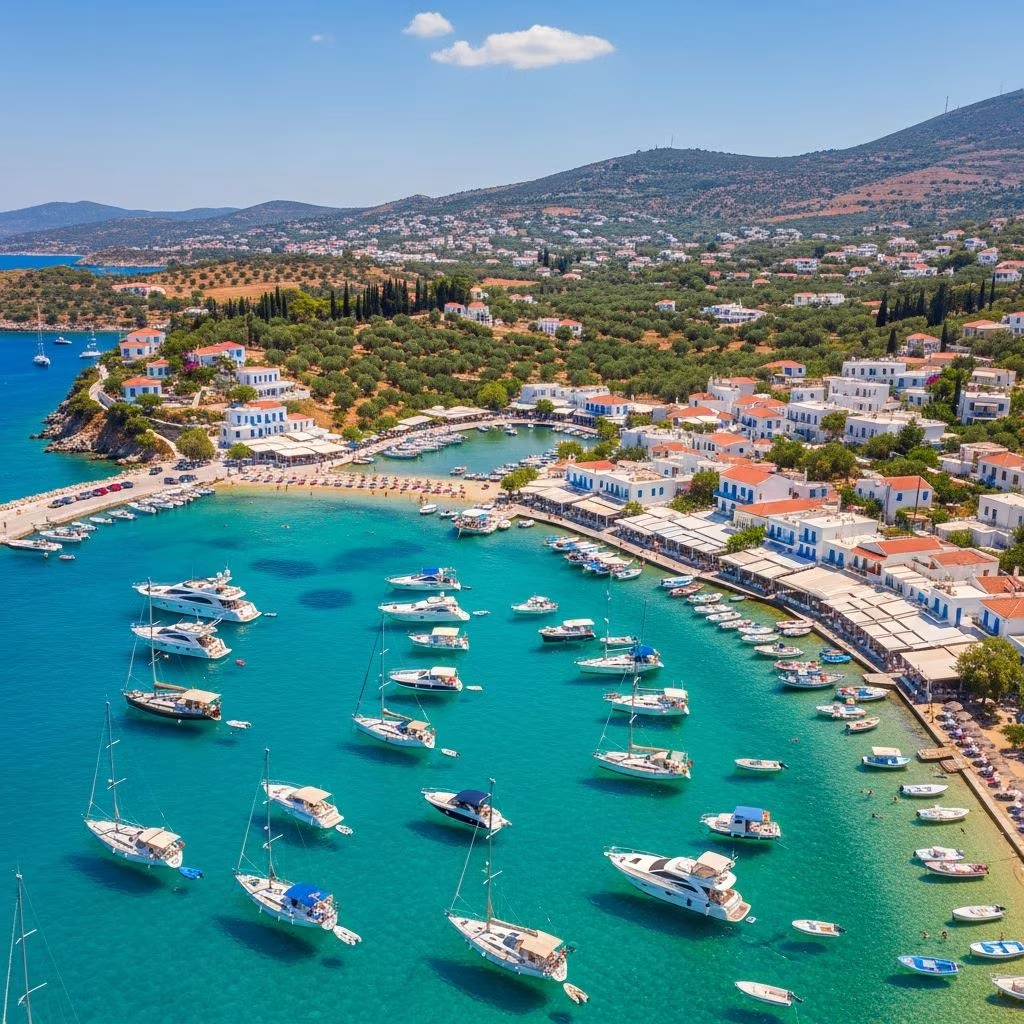
Greece has emerged as one of the world’s most visited destinations, attracting record numbers of international travelers each year. This remarkable growth represents both significant economic opportunity and mounting challenges for the nation’s fragile ecosystems, infrastructure systems, and communities. Understanding the dynamics of this tourism boom and the strategies being implemented to manage it provides important insights into sustainable destination management globally.
The numbers tell a compelling story about Greece’s popularity as a vacation destination. According to recent data, Greece welcomed approximately 40.7 million visitors in a single year, a figure that represents roughly four times the country’s entire population. This unprecedented volume of travelers underscores the nation’s transformation into a major player in global tourism markets. Tourism minister Olga Kefalogianni has celebrated these achievements, noting that Greece has successfully positioned itself among the world’s top 10 most visited destinations.
What makes these figures even more remarkable is that tourism growth has continued even during traditionally slower travel seasons. Winter tourism has become increasingly significant, spreading visitor arrivals across more months of the year. Revenue generation from tourism has accelerated substantially, with industry reports indicating growth rates of 12% in recent years. These economic gains have made tourism central to Greece’s national development strategy and fiscal planning.
The concentration of millions of visitors within a relatively small geographic area, particularly on popular islands, has created substantial pressure on essential infrastructure systems. Water resources face particular scrutiny during peak summer months when tourist populations can equal or exceed local populations in popular destinations. The combination of increased demand for fresh water alongside limited supply during dry seasons creates genuine scarcity challenges for island communities.
Energy consumption patterns have similarly been disrupted by tourism surges. Electrical grids designed to serve permanent populations struggle when temporary residents dramatically increase demand during summer months. Housing markets have experienced unprecedented transformation as property prices have skyrocketed, making long-term residence economically unfeasible for many local families. These interconnected infrastructure challenges have prompted policy makers to consider innovative solutions and regulatory approaches.
While tourism generates substantial revenue for national coffers and creates employment opportunities across hospitality and service sectors, the economic benefits do not distribute evenly across all population segments. A concerning statistic reveals that approximately 46% of Greek citizens report being unable to afford vacation holidays due to rising costs associated with tourism-driven inflation. Local residents find themselves priced out of leisure experiences and increasingly unable to afford housing in their own communities as tourism-related investments and property speculation drive market values upward.
This economic paradox—where tourism prosperity makes vacation unaffordable for locals—represents one of the most pressing social challenges created by unchecked visitor growth. Communities experience wealth extraction as tourism revenue flows to external investors and international hotel chains rather than remaining circulated within local economies.
Recognizing the need to manage visitor flows while generating additional resources for infrastructure improvements, Greek authorities have implemented targeted financial mechanisms. A cruise ship levy system was introduced in July, establishing fees ranging from €5 to €20 per passenger depending on destination and season. Ships calling at particularly popular islands such as Santorini and Mykonos face the highest charges, reflecting their intense concentration of cruise tourism.
These maritime fees are expected to generate approximately €50 million annually in dedicated revenue. Rather than simply adding to general government budgets, these funds are allocated specifically toward port infrastructure enhancements, municipal service improvements, and tourism-related projects. This allocation strategy attempts to direct visitor-generated revenue toward addressing the very pressures that visitor volume creates.
Beyond cruise ship levies, some municipal leaders have proposed additional measures to regulate day-tripper flows. The mayor of a major Greek city recently advocated for a €3 fee on day-visitors, conceptualized as a protective mechanism against the destabilizing effects of mass tourism. Such proposals recognize that managing tourist distribution and density requires both financial and regulatory tools.
Tourism pressure is not evenly distributed across Greece’s territory. Specific islands have become so inundated with visitors that they experience genuine overtourism conditions. Santorini and Mykonos exemplify destinations where visitor numbers exceed sustainable thresholds for quality experiences, environmental preservation, and infrastructure capacity. These islands struggle with the dual pressures of maintaining their attractiveness as vacation destinations while protecting their physical and cultural integrity.
The picturesque qualities that make these islands internationally famous—narrow streets, whitewashed buildings, Mediterranean atmosphere—become compromised when overwhelming crowds fill every public space. Local residents report reduced quality of life as tourism infiltrates daily routines and transforms community spaces into commercial enterprises oriented toward visitor consumption.
Beyond immediate infrastructure concerns, overtourism threatens the environmental and cultural assets that originally attracted visitors. Island ecosystems, fragile Mediterranean environments, and archaeological sites face degradation from intensive use and inadequate waste management. Cultural authenticity erodes as local traditions become transformed into performances for tourist consumption, and genuine community life retreats behind commercialized facades.
Water quality, biodiversity, and landscape aesthetics all suffer under tourist pressure. Waste generation from millions of visitors overwhelms disposal systems designed for smaller permanent populations. Wastewater treatment infrastructure, where it exists, operates at or beyond capacity during peak seasons. These environmental consequences create potential threats to long-term tourism viability, as destinations risk destroying the very natural and cultural assets that sustain their tourist appeal.
Greek policymakers are exploring multiple strategies to balance tourism growth with sustainability objectives:
Greece’s overtourism challenges mirror patterns emerging in popular destinations across Europe and globally. Mediterranean islands, Alpine regions, and historic city centers worldwide struggle with similar pressures. The Greek experience offers valuable lessons about the economic opportunities tourism creates alongside the social, environmental, and infrastructural challenges it generates when left unmanaged.
Successful destination management requires integrated approaches combining economic incentives, regulatory mechanisms, infrastructure investment, and community engagement. Revenue-generation mechanisms like cruise fees represent one tool within a broader toolkit of policy responses necessary for sustainable tourism governance.
As Greece continues pursuing its position within top global tourism rankings, the tension between growth objectives and sustainability concerns will likely intensify. Balancing the legitimate economic benefits of tourism with protection of local communities, environments, and cultural heritage requires sophisticated policy frameworks that extend beyond current interventions. The €50 million annual revenue from cruise levies and proposed day-tripper fees represents a beginning, but comprehensive solutions will require coordinated efforts across transportation, infrastructure, housing, environmental, and cultural policy domains.
