

 Travel Essentials
 Travel Essentials

The towel movement sees Greeks using simple towels to protest beach privatization, demanding free access amid rising fees and business overreach on islands like Paros and Crete.
 Travel Essentials
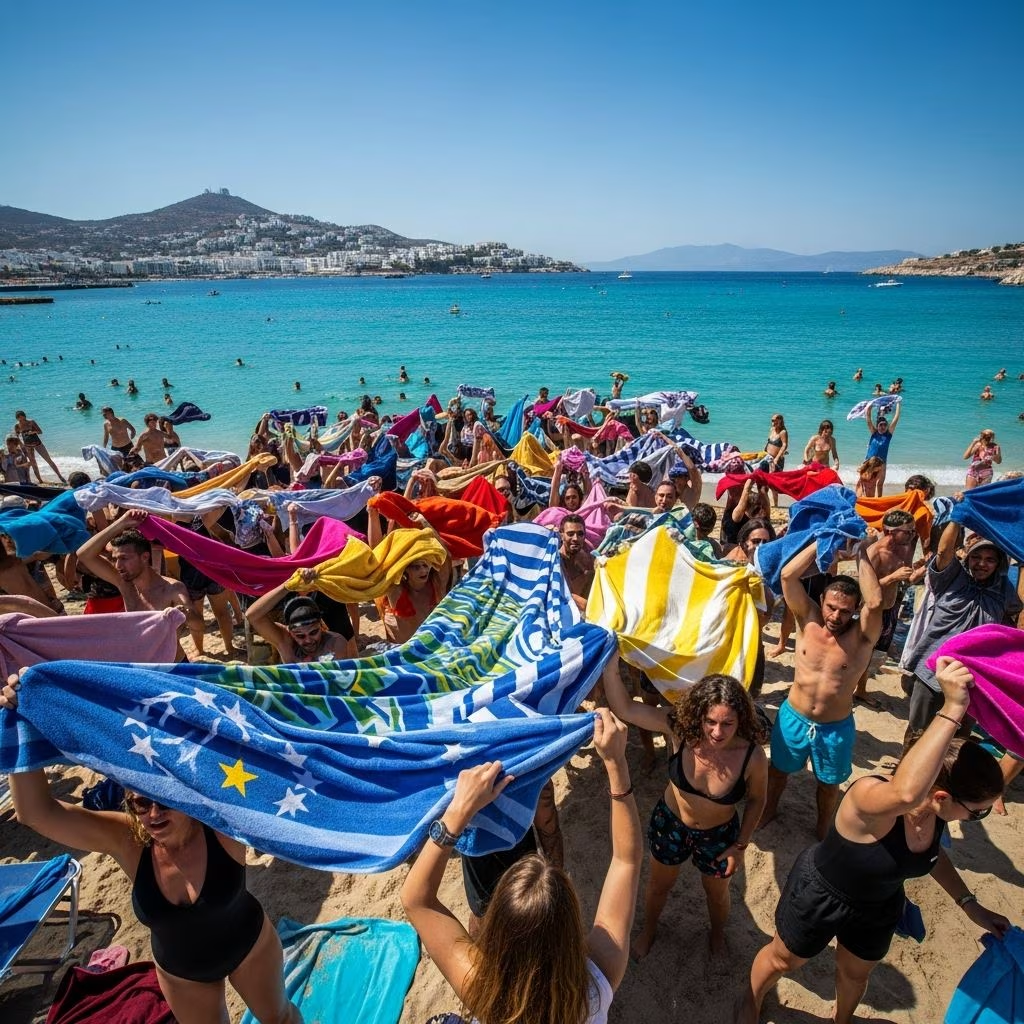
Across the sun-drenched shores of Greece, a grassroots uprising known as the towel revolt is gaining momentum. Frustrated residents are spreading out simple beach towels to symbolically reclaim public sands overrun by private sunbeds and exorbitant fees. This movement highlights a deeper conflict over who truly owns Greece’s iconic coastlines: the people or profit-driven enterprises.
Greece’s beaches have long been cherished as communal treasures, open to anyone with a towel and a desire for the sea. However, in recent years, beachfront businesses have expanded aggressively, securing licenses for sun loungers and umbrellas that often spill far beyond permitted zones. What started as modest setups has ballooned into vast expanses of paid seating, leaving scant space for locals to relax without paying premium prices.
Prices for a pair of loungers and an umbrella can exceed €100 daily, turning idyllic spots into exclusive enclaves. This commercialization has alienated everyday Greeks, who view their coastlines as birthrights rather than commodities. The revolt began on islands like Paros, where groups such as Save Paros Beaches rallied residents to plant towels and placards declaring their right to free access.
What originated as a local stand on Paros quickly rippled outward. Protests erupted on Rhodes, Crete, Halkidiki, and beyond, with demonstrators in Nikiti and Potidaia joining the fray. Dubbed the “towel movement,” participants arrive early, lay down towels, and hold signs reading “Reclaim the Beach” to challenge the dominance of rented furniture.
Activists argue that these encroachments destroy the serene vibe unique to these destinations, prioritizing profit over nature and community.
Greek law unequivocally states that all beaches are public property—no private ownership allowed. A pivotal supreme court memo in May reinforced this, declaring that the law “does not recognize private beaches.” This ruling prompted investigations into violations, with prosecutors ordering probes into overreaches.
Finance Minister actions further fueled hope. Local authorities dispatched inspectors to dismantle illegal setups, fining offenders and prompting some businesses to preemptively remove loungers. Reports emerged of three businessmen arrested in connection with beach occupations, and temporary clearances that regrettably saw beds reappear post-inspection.
| Key Legal Milestones | Date | Impact |
|---|---|---|
| Supreme Court Memo | May (recent) | Affirms no private beaches; triggers inspections |
| Prosecutor Investigations | Ongoing | Arrests and removals of illegal loungers |
| Finance Minister Directive | Recent | Encourages local enforcement against fees |
Imagine arriving at your favorite beach only to find every meter claimed by rows of loungers, fences blocking paths, and staff demanding payment for bare sand use. This is the frustration driving the towel revolt. Locals decry how summer tourism booms enable businesses to exploit public spaces, erecting parasols and beds that crowd out free areas.
“Hope you enjoy your swim; we just want to reclaim our right to free access,” protesters chant, emphasizing that expansions often ignore legal limits. Families once picnicking freely now scout for elusive towel spots, while high fees deter budget travelers and residents alike.
Beach bar owners defend setups as necessary for services like drinks and shade, but critics point to greed. Licensed areas are routinely exceeded, with some claiming entire beaches despite minimal leases. VIP packages amplify inequality, offering plush amenities at nosebleed prices inaccessible to most.
Protesters from Save Paros Beaches accuse operators of social irresponsibility, occupying sands meant for all. This has sparked a cultural shift, with towels becoming symbols of resistance against commercialization.
Beyond access, the movement safeguards Greece’s coastal heritage. Overcrowded loungers compact sand, hinder turtle nesting, and alter natural landscapes. Paros locals lament the loss of peaceful vibes, where calmness once defined the island. Reclaiming space preserves biodiversity and traditional beach culture, ensuring future generations inherit pristine shores.
The towel revolt’s success lies in its simplicity and visibility. As more join, businesses face mounting pressure to comply. Early wins include voluntary removals and inspector interventions, suggesting a tipping point.
In Turkey’s Çeşme, the model spreads, proving public outrage transcends borders. Greece’s government signals commitment, but sustained vigilance is key to prevent reseeding of loungers.
Amid the turmoil, visitors can navigate responsibly:
What is the towel movement?
A protest where Greeks lay towels on beaches to reclaim public space from paid sunbeds.
Are Greek beaches legally public?
Yes, per supreme court rulings; no privatization allowed.
Why are fees so high?
Businesses charge for loungers often placed beyond legal areas, up to €100+ per setup.
Has it spread beyond Greece?
Yes, inspiring actions in Turkey’s Aegean region.
What can tourists do?
Use towels, avoid paid zones, and report violations to support locals.
This revolt underscores a universal quest: balancing tourism’s bounty with public heritage. As towels dot the sands, Greece edges toward equitable shores for all.
