

 Travel Essentials
 Travel Essentials

Discover how to plan an unforgettable Arctic adventure with practical insights on timing, transportation, and must-see destinations in Greenland.
 Travel Essentials
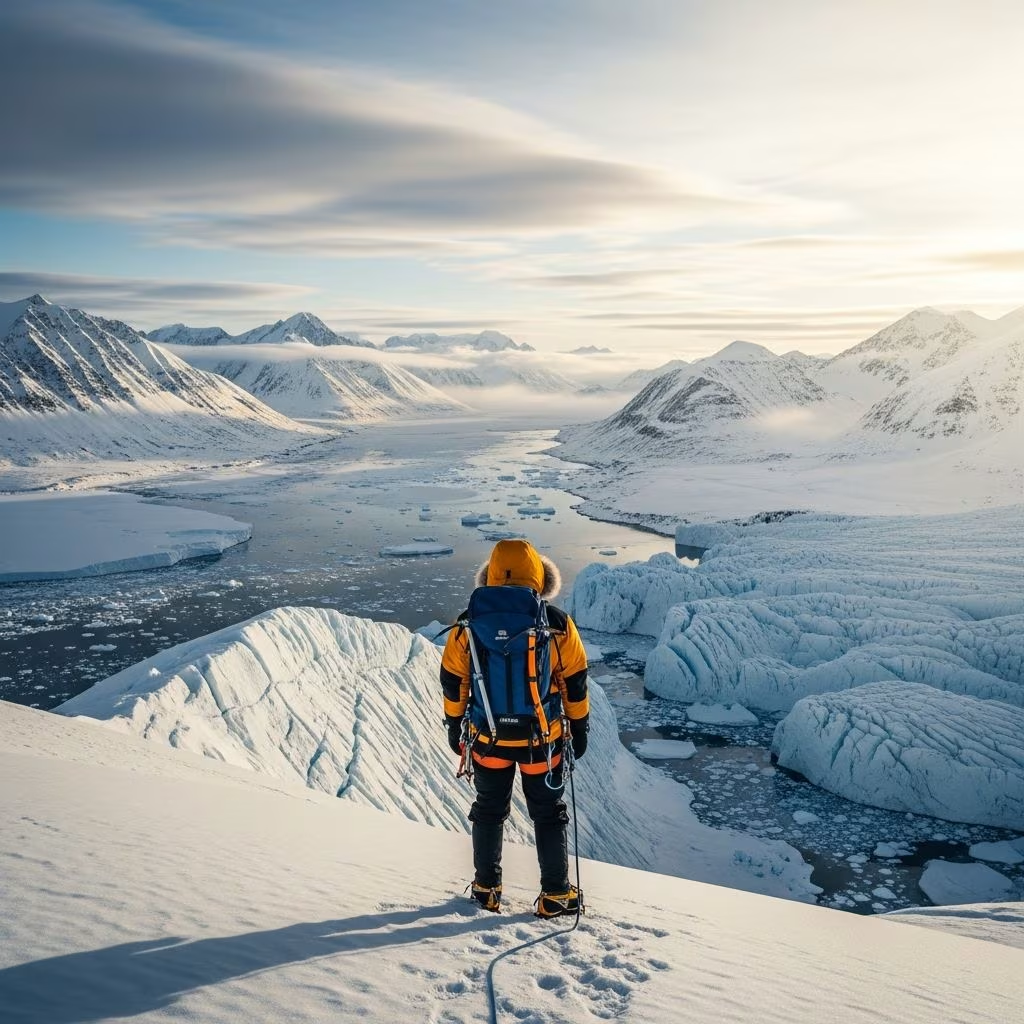
The Arctic region offers some of the world’s most dramatic natural landscapes, with towering ice formations, pristine wilderness, and unique cultural experiences found nowhere else on Earth. For travelers seeking an authentic connection with one of the planet’s last truly remote destinations, proper planning is essential. This guide provides comprehensive insights into organizing a memorable journey to this extraordinary territory.
The Arctic transforms dramatically throughout the calendar year, offering distinctly different experiences depending on when you visit. Understanding these seasonal shifts is crucial for maximizing your adventure.
The period from June through September represents the most accessible window for travelers new to Arctic exploration. During these months, the landscape awakens with extraordinary vitality. The tundra bursts into vibrant life, displaying patches of lichen, colorful wildflowers, and various herb and berry species across the spongy, springy earth. Open-water boat tours operate reliably during this period, ferry connections between major settlements function with greater regularity, and hiking trails become safely traversable. The extended daylight hours allow for extended exploration and outdoor activities, though the sun’s intensity means bringing a sleep mask is advisable.
Those pursuing the Northern Lights should target the period from mid-August through April, with February and March offering the optimal balance between winter landscapes and aurora activity. The polar night creates ideal conditions for witnessing this celestial phenomenon. However, winter travel demands greater preparation, as weather becomes unpredictable and infrastructure limitations intensify.
Unlike most destinations, Arctic settlements lack connecting road systems, requiring travelers to understand alternative transportation methods before arrival.
Water-based travel forms the backbone of Arctic transportation infrastructure. The Arctic Unimaq ferry line operates weeklong voyages connecting distant settlements, extending northward to Upernavik above the Arctic Circle and southward to communities in the south. These ferries feature onboard accommodations, entertainment amenities, and dining facilities, making them practical for both local residents and visitors. Between formal ferry services, water taxis provide flexible connections, though schedule reliability varies considerably depending on weather and regional conditions.
Small aircraft connect major settlements during favorable weather conditions, representing the fastest transportation option available. However, services remain limited compared to conventional destinations. Walking serves as the primary mode for exploring individual settlements and nearby areas. One notable exception exists—Kangerlussuaq provides the region’s only direct road access, making it an important hub for certain activities.
Cruise ship travel has emerged as an increasingly popular option, combining transportation with accommodation and guided experiences in a single package. This approach appeals particularly to first-time visitors seeking structured itineraries and reduced logistical complexity.
Travel experts suggest that a comprehensive first-time Arctic experience requires 10 days to two weeks to properly explore major settlements and understand the region’s character. A week-long itinerary can cover the most renowned destinations—Kangerlussuaq, Ilulissat, Nuuk, and Sisimiut—though accounting for travel time between locations is essential. The vast distances and reliance on water transportation mean that significantly more calendar time should be allocated compared to conventional travel.
Kangerlussuaq functions as a crucial hub due to its road access and proximity to the ice sheet. From here, visitors can undertake day expeditions to Point 660, described as one of the region’s most spectacular viewpoints, offering unobstructed vistas of the frozen landscape.
Ilulissat attracts visitors with its stunning fjord system and proximity to calving glaciers. The surrounding waters showcase icebergs in countless formations and shades of blue, drifting through mineral-rich turquoise fjords. These fjords serve as premier locations for spotting Arctic marine life including migrating whales, seabirds, polar bears, and seals.
Nuuk demands at least two days of exploration to meaningfully engage with local culture. The Greenland National Museum provides historical context, while the city’s café scene and Paradise Valley hiking area offer more intimate experiences. Nearby Qoornoq Island provides an excellent day trip destination for those with additional time.
Sisimiut and other secondary settlements offer authentic cultural encounters and are less crowded than primary destinations.
Walking through the Arctic tundra provides direct connection with the landscape. Guided hiking tours offer both safety and educational context regarding the region’s geology and natural history. The tundra ecosystem supports diverse flora including mushrooms, wildflowers, and berry-producing plants. Wildlife enthusiasts should maintain sharp observation for terrestrial animals such as Arctic hares, Arctic foxes, and muskoxen—species found nowhere else.
Multiple activity options exist for experiencing the fjords: paddleboarding, helicopter tours, kayaking, and boat expeditions. Each provides distinct perspectives on the icebergs and marine environment. Historical note: the iceberg responsible for the Titanic’s sinking likely originated from Greenlandic fjords.
Only two ice sheets remain globally, with one covering nearly 80% of Arctic territory and spanning 1.7 million square kilometers, with origins dating back millions of years. Aerial tours provide comprehensive perspectives of this immense formation, while ground-based day tours from Kangerlussuaq allow visitors to walk directly upon the ancient ice. These contrasting perspectives—aerial and pedestrian—reveal different aspects of this natural wonder.
For experienced adventurers, options include heli-mountain biking expeditions and camping experiences that allow extended immersion in remote landscapes. Dog sledding represents an authentic Arctic travel method, connecting visitors with traditional practices.
Whale watching opportunities abound in coastal regions, with pods of these marine mammals regularly visible near shorelines during summer months. The fjords and open waters support diverse cetacean species providing unforgettable viewing experiences.
Polar bears roam Arctic shorelines, representing the region’s iconic predator. Muskoxen, rare terrestrial mammals found in limited locations globally, inhabit Arctic territories. Guided tours maximize wildlife viewing safety and success rates.
The Northern Lights represent one of Earth’s most spectacular natural phenomena, visible throughout the region during winter months when conditions align favorably.
Arctic territories preserve unique Indigenous cultures and heritage sites reflecting centuries of human habitation. Community visits provide authentic cultural encounters, while museums and heritage sites document regional history from Viking exploration through contemporary Inuit traditions. Engaging respectfully with local populations enhances the travel experience significantly.
The Arctic’s challenging geography and unpredictable weather necessitate flexibility in travel plans. Building buffer time into itineraries accommodates weather delays, transportation cancellations, and unexpected opportunities. A rigid schedule will cause frustration; instead, view flexibility as essential to successful Arctic travel.
Many activities involve hiking over challenging terrain at altitude. Prior fitness conditioning enhances enjoyment and safety. Certain hikes, such as the Lyngmark Glacier trek, require 8-9 hours of strenuous activity and warrant overnight stays for adequate recovery.
Visitors should understand that vast distances characterize Arctic geography, with no roads connecting settlements. Travel occurs by boat or on foot, creating the adventure’s authentic character while demanding realistic time allocation. The landscape’s immensity and infrastructure limitations mean that what might require hours elsewhere could take days here. This reality, while challenging, forms the foundation of Arctic travel’s appeal—genuine remoteness and untouched wilderness remain accessible despite modern tourism infrastructure.
June through September provides optimal conditions with reliable boat services, accessible hiking, and regular ferry operations between major settlements.
Travel experts recommend 10 days to two weeks for a comprehensive experience, though a seven-day itinerary covering major destinations is achievable with realistic expectations about travel time.
Yes—ground-based day tours from Kangerlussuaq allow visitors to walk on the ice sheet directly, while aerial tours provide aerial perspectives of this vast formation.
Expectations include polar bears, whales, muskoxen, seals, Arctic foxes, Arctic hares, and diverse seabird species depending on location and season.
Arctic exploration demands more preparation than conventional tourism but rewards that effort with unparalleled natural beauty, unique cultural encounters, and transformative personal experiences. By understanding seasonal considerations, transportation realities, key destinations, and activity options, travelers can craft itineraries matching their interests and capabilities. The silence of the Arctic landscape, the drama of glacial fjords, and the warmth of local hospitality combine to create memories that endure far beyond the journey’s completion.
