

 Travel Essentials
 Travel Essentials

An essential travel guide to Grenoble featuring iconic attractions, cultural experiences, local cuisine, and practical tips for first-time visitors.
 Travel Essentials
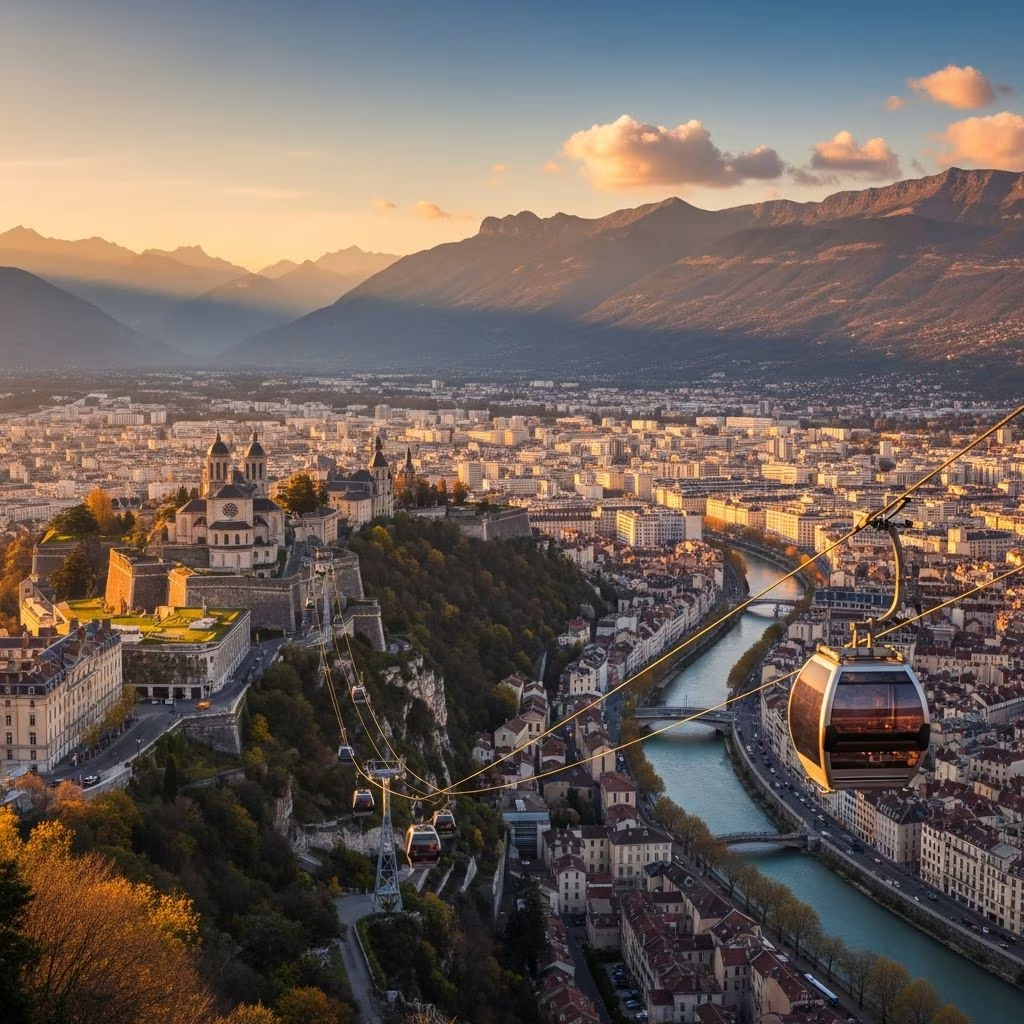
Nestled at the foot of the French Alps, Grenoble stands as one of Europe’s most captivating mountain destinations. The writer Stendhal, who was born here, famously observed that “at the end of every street, there’s a mountain”—a poetic description that perfectly captures the city’s dramatic setting. Surrounded by three magnificent mountain massifs and traversed by two glacial rivers, Grenoble offers an extraordinary blend of natural beauty, historical significance, and contemporary culture that makes it an ideal destination for travelers seeking authentic French alpine experiences.
Located approximately 300 kilometers from Bern and in southeastern France near the borders of Italy and Switzerland, Grenoble occupies a unique position within the Alps. The city’s distinctive position within a valley creates a dramatic backdrop where mountain peaks are visible from virtually every vantage point throughout the urban area. This geographic advantage has shaped the city’s identity and continues to influence how residents and visitors experience daily life here. The presence of the Isère River and its glacial tributary adds another layer of natural beauty to the landscape, creating a serene aquatic setting that contrasts with the rugged mountain terrain.
Rising above the city like a gateway to alpine splendor, the famous cable car—known as the téléférique or affectionately called “Les Bulles” for its distinctive bubble-shaped cabins—represents one of the world’s most remarkable transportation engineering achievements. Inaugurated in 1934, this pioneering aerial cable system was the first urban cable car ever constructed globally, a distinction that underscores Grenoble’s innovative spirit. The approximately five-minute ascent carries visitors 263 meters upward, providing unobstructed panoramic views of the surrounding city, river valleys, and mountain ranges.
The cable car terminates at Fort de la Bastille, a 19th-century military fortress that once served as a defensive stronghold protecting France against potential invasions from the neighboring Duchy of Savoy. Today, rather than military fortifications, the fort offers elevated observation platforms, walking trails, and opportunities for reflection on the city spread below. Many travelers consider riding the cable car and exploring the Bastille fortress an essential introduction to Grenoble, as it provides immediate geographic context and breathtaking visual impressions that frame understanding of the city’s layout and natural surroundings.
Grenoble’s cultural landscape extends far beyond its natural attractions into world-class artistic and historical institutions. The Musée de Grenoble represents one of France’s most significant art collections, featuring works by renowned 20th-century masters including Pablo Picasso and Claude Monet. The museum also maintains an extensive collection of ancient artifacts from Egyptian, Greek, and Roman civilizations, offering visitors rare opportunities to examine objects spanning millennia of human history. Standard admission costs approximately 8 euros, with reduced rates of 5 euros available for certain visitors, and free access offered to individuals under 26 years and on the first Sunday of each month.
The Musée Dauphinois occupies a beautifully restored 17th-century convent and serves as a gateway into understanding the unique cultural traditions of the Dauphinois people. Reached by climbing Montée Chalemont—an ancient Roman road that winds through residential neighborhoods with characteristic red-roofed buildings—the museum explores regional customs, traditional practices, and historical evolution. Additionally, travelers interested in specialized topics can explore the Musée Stendhal, dedicated to the famous writer’s life and legacy, or the Musée de la Chimie, which chronicles the history of chemistry and industrial development in the region.
The heart of Grenoble pulses within its narrow, cobblestone-lined medieval streets where centuries of history remain visible in architectural details and urban planning. Despite the mountainous terrain surrounding the city, Grenoble itself maintains a surprisingly flat topography, making pedestrian exploration both accessible and enjoyable. The Métrovélo bicycle rental scheme offers another excellent transportation option for visitors wishing to cover greater distances while maintaining connection to the urban environment.
Place Notre-Dame serves as an excellent entry point into the historic quarter, with alleyways radiating outward offering glimpses of hidden squares, fountains, and atmospheric terrace bars. The cobblestone expanse of Place Saint-André contains Palais du Parlement du Dauphiné, arguably the city’s most architecturally significant building. This 16th-century former courthouse represents a splendid synthesis of Gothic and neo-Renaissance design elements, featuring ornate stone work and decorative details that reflect the building’s historical importance as a seat of judicial power.
Place Grenette, also known as the main square, anchors the city’s social and commercial life, particularly during morning hours when the Place aux Herbes farmers’ market activates the surrounding area with activity. Operating daily except Mondays, this traditional market has supplied residents and visitors with fresh produce, artisanal cheeses, and local provisions since the 17th century when it originally served grain and animal commerce functions. The architectural facades surrounding the square house numerous cafés and restaurants with outdoor seating, creating ideal settings for observing daily urban rhythms while sampling regional cuisine.
In the square’s center stands the striking “Le Château d’Eau Lavalette,” an ornamental fountain featuring winged cherubs and dolphins sculpted by artist Victor Sappey. This sculptural centerpiece provides an attractive focal point for photographs and moments of aesthetic appreciation, while also serving as a traditional meeting location for locals and visitors.
The Caserne de Bonne district exemplifies Grenoble’s commitment to modern sustainable urban development. Designated as France’s first écoquartier (green neighborhood), this revitalized area combines retail establishments with environmental design principles, featuring green spaces alongside contemporary commercial facilities. The development demonstrates how historic industrial sites can transform into vibrant, environmentally-conscious communities that serve contemporary needs while respecting ecological considerations.
Exploring Grenoble’s attractions requires minimal logistical complexity. Walking represents the optimal way to experience the historic core, particularly the old town’s character and street-level details. Visitors should prioritize comfortable walking footwear over fashionable alternatives, as cobblestone streets and hilly sections demand practical shoes. The efficient public transportation network accommodates longer distances when needed, while the cable car provides both practical access to the Bastille and memorable scenic experiences.
Beyond urban exploration, Grenoble functions as an exceptional base for mountain activities. During winter months, the city provides convenient access to alpine ski regions, while summer presents hiking opportunities throughout the surrounding massifs. The dramatic natural setting creates unlimited possibilities for outdoor enthusiasts, from casual nature walks to ambitious alpine expeditions.
A recommended two-day visit structure might include dedicating the first day to the cable car, Bastille fortress, and primary museum collections, followed by an afternoon exploring the historic quarter. The second day could emphasize wandering through the old town, enjoying marketplace experiences, and either pursuing additional cultural institutions or venturing into surrounding alpine environments. This balanced approach accommodates both urban cultural engagement and natural landscape appreciation.
Grenoble maintains vibrant contemporary culture alongside historical preservation. The student population contributes to lively café culture, artistic expression, and varied entertainment options. Local communities often welcome visitors through organized social experiences, including opportunities to explore the city with resident guides who provide insider perspectives on neighborhood characteristics and local traditions.
Summer offers optimal weather for mountain exploration and outdoor activities, while winter provides alpine skiing opportunities. Spring and autumn present moderate conditions with fewer crowds, making these seasons ideal for cultural tourism and leisurely exploration.
Two days allows adequate time for primary attractions including the cable car, Bastille, museums, and historic quarter exploration. Weekend visitors can experience core highlights, while week-long stays permit deeper alpine immersion and day excursion planning.
While French language knowledge enhances cultural engagement, major attractions accommodate English-speaking visitors. Learning basic French phrases demonstrates respect and can facilitate more meaningful local interactions.
The city maintains excellent rail connections to major European centers, and proximity to Switzerland and Italy facilitates multi-country itinerary planning. Bern and other alpine destinations remain readily accessible.
The marketplace and surrounding cafés offer affordable casual dining, while various restaurants throughout the old town provide mid-range and upscale options. Regional specialties provide authentic cultural food experiences at various price points.
| Attraction | Duration | Cost | Best Time |
|---|---|---|---|
| Bastille Cable Car & Fort | 2-3 hours | €8-12 | Afternoon |
| Musée de Grenoble | 1-1.5 hours | €8 (€5 reduced) | Anytime |
| Historic Quarter Walking Tour | 2-3 hours | Free | Morning |
| Place Grenette Market | 1-2 hours | Variable | Morning |
| Musée Dauphinois | 1-1.5 hours | €5-7 | Afternoon |
Grenoble ultimately rewards visitors with authentic alpine experiences that balance cultural exploration with natural landscape immersion. The city’s combination of historical significance, artistic achievement, culinary tradition, and mountain majesty creates memorable travel experiences that extend well beyond typical European city tourism. Whether pursuing cultural engagement or outdoor adventure, first-time visitors discover that Grenoble’s reputation as the Alps’ cultural capital remains thoroughly justified through direct experience.
