

 Travel Essentials
 Travel Essentials

Explore Guadalupe Mountains National Park's stunning fall colors, from maple-filled canyons to peak trails. Learn best times, hikes, tips, and planning for an unforgettable autumn adventure.
 Travel Essentials
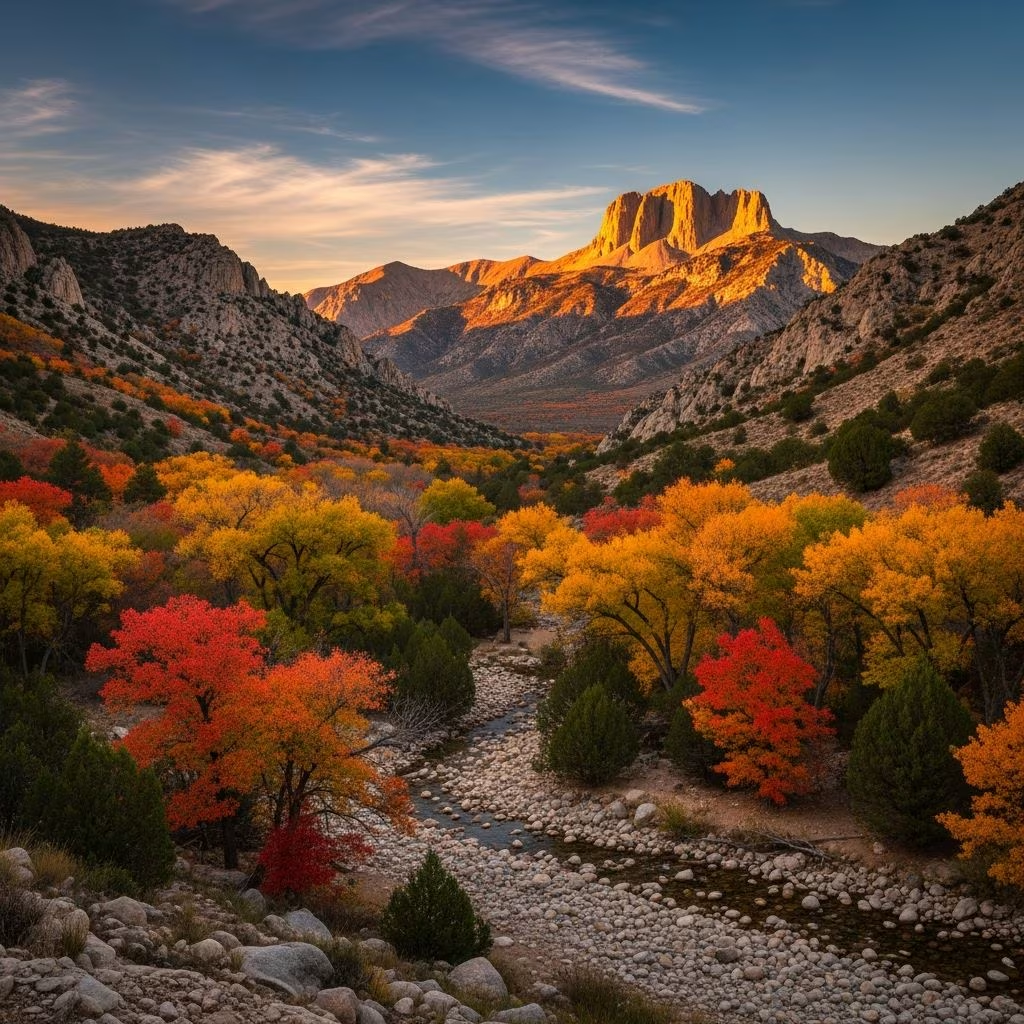
Guadalupe Mountains National Park in West Texas transforms into a riot of color each fall, offering a rare display of vibrant foliage amid its rugged desert peaks. Bigtooth maple trees, thriving at higher elevations, paint canyons in shades of red, orange, and gold from mid-October through mid-November, creating one of the Southwest’s most striking seasonal spectacles.
The park’s unique environment—combining high altitude, protected canyons, and adequate moisture—supports deciduous trees uncommon in the arid Chihuahuan Desert. Elevation above 5,000 feet provides cooler temperatures that trigger color changes in bigtooth maples, oaks, and sumacs. Precipitation plays a key role; wet summers, like recent soaking rains, promise intensified hues, as noted by park interpreters.
A brief cold snap in early October, lasting three to five days with mild winds, further enhances the vibrancy. Peak viewing typically aligns with the last week of October and first week of November, though exact timing varies yearly based on weather patterns.
All major fall color hotspots require hiking, rewarding visitors with immersive canyon vistas. No drive-up views exist, emphasizing the park’s backcountry allure.
Guadalupe Peak Trail offers minimal foliage, focusing instead on summit panoramas.
Tailor your adventure to fitness and time. Here’s a comparison of top trails:
| Trail | Distance (Round Trip) | Difficulty | Duration | Highlights |
|---|---|---|---|---|
| McKittrick Canyon to Grotto | 7 miles | Moderate | 4-6 hours | Lush canyon colors, Pratt Cabin, late-season viable |
| Devil’s Hall | 4.2 miles | Strenuous | 2-4 hours | Quick access to maples from Pine Springs |
| The Bowl | ~9 miles | Very Strenuous | 6+ hours | High-country overlooks, pine-maple contrast |
| Dog Canyon Loops | 2-5 miles | Easy-Moderate | 2-4 hours | Early colors, remote feel |
Data drawn from park resources; all trails demand water, sun protection, and sturdy footwear.
Best Windows: Monitor the park’s Fall Color Report on its website and social media for real-time updates. Weekdays beat weekend crowds, when Pine Springs and McKittrick often reach capacity by morning.
Access: Located on US Hwy 62/180, 110 miles east of El Paso, 56 miles southwest of Carlsbad Caverns, or 62 miles north of Van Horn. Dog Canyon adds travel time from main areas.
Fall days are mild (60-70°F), but nights dip to 40°F. Layer clothing, pack 1 liter water per hour of hiking, and apply sunscreen—elevations amplify UV exposure. Check forecasts for sudden changes; a light jacket suffices for color-peak chills.
For photography: Golden hour lighting at dawn/dusk maximizes saturation. Wide-angle lenses capture canyon depths; tripods aid low-light shots near the Notch.
Pine Springs offers a visitor center, campground, and restrooms. Stock up in Van Horn or Carlsbad; no concessions inside. Nearby Carlsbad Caverns provides a complementary day trip, blending underground wonders with surface splendor.
Extend your stay: Camp at Pine Springs or Dog Canyon for stargazing amid foliage. Multi-day itineraries combine foliage hikes with Guadalupe Peak ascent.
Stay on trails to protect fragile soils and trees. Leave no trace: pack out waste, avoid picking leaves. Crowds strain resources—your stewardship ensures future seasons.
Last week of October to first week of November, varying by weather. Check park reports.
Yes, all views require trails; no roadside spots.
Moderate start to cabin is accessible; beyond is tougher. Go early.
Opt for weekdays or Dog Canyon for quieter access.
Carlsbad Caverns area has minor displays, but Guadalupe excels.
This autumn, Guadalupe Mountains delivers Texas’ premier foliage escape—rugged, vivid, and rejuvenating.
