

 Travel Essentials
 Travel Essentials

Discover Guadeloupe's diverse landscapes, from rainforests and waterfalls to turquoise beaches. Learn where to stay, what to do, and how to experience authentic Caribbean charm.
 Travel Essentials
Nestled in the heart of the Lesser Antilles, Guadeloupe stands as a captivating destination that seamlessly blends European sophistication with authentic Caribbean warmth. This island archipelago offers travelers an extraordinary range of experiences, from scaling active volcanoes to lounging on powder-soft beaches framed by palm trees. Whether you seek adventure in lush rainforests or relaxation in turquoise waters, Guadeloupe delivers unforgettable memories shaped by its unique cultural heritage and natural splendor.
Guadeloupe comprises an intricate collection of islands spread across the Caribbean Sea, with Basse-Terre and Grande-Terre serving as the two principal landmasses. This geographical arrangement creates distinctive ecosystems and experiences across the archipelago. The eastern island of Grande-Terre showcases sun-drenched beaches and gentle coastal terrain, while the western expanse of Basse-Terre reveals dramatic mountainous landscapes punctuated by dense tropical vegetation.
Beyond these main islands, several smaller territories extend Guadeloupe’s appeal. Marie-Galante, La Désirade, and the picturesque Les Saintes islands each possess their own character and charm. This multi-island composition means visitors can curate diverse experiences within a single vacation, transitioning from bustling cultural centers to tranquil hideaways in a matter of hours.
Basse-Terre represents the mountainous spine of Guadeloupe, dominated by verdant rainforests and dramatic volcanic formations. This region captivates visitors who crave immersion in untamed nature and seek challenging outdoor pursuits. The landscape transforms continuously as elevation changes, revealing new vistas and environmental zones with each ascending kilometer.
The undisputed crown jewel of Basse-Terre is La Soufrière, an active volcanic peak that continues to remind visitors of the island’s geological dynamism. This commanding mountain rises majestically above surrounding terrain, its slopes covered in vegetation that shifts from vibrant green at lower elevations to sparse alpine scrub near the summit. Ascending this intermediate-to-difficult trail requires approximately three to four hours of dedicated hiking, but the panoramic reward encompasses sweeping island views and distant Caribbean horizons.
The Route de la Traversée, a scenic highway cutting through Basse-Terre’s central mountainous region, presents travelers with one of the Caribbean’s most beautiful driving experiences. This winding road transitions from cultivated sugar cane plantations into the heart of Guadeloupe National Park, where dense jungle encroaches upon the asphalt. The park itself encompasses over 12,000 acres of protected rainforest, featuring cascading waterfalls, natural mineral pools, and extensive hiking trails suited to various fitness levels.
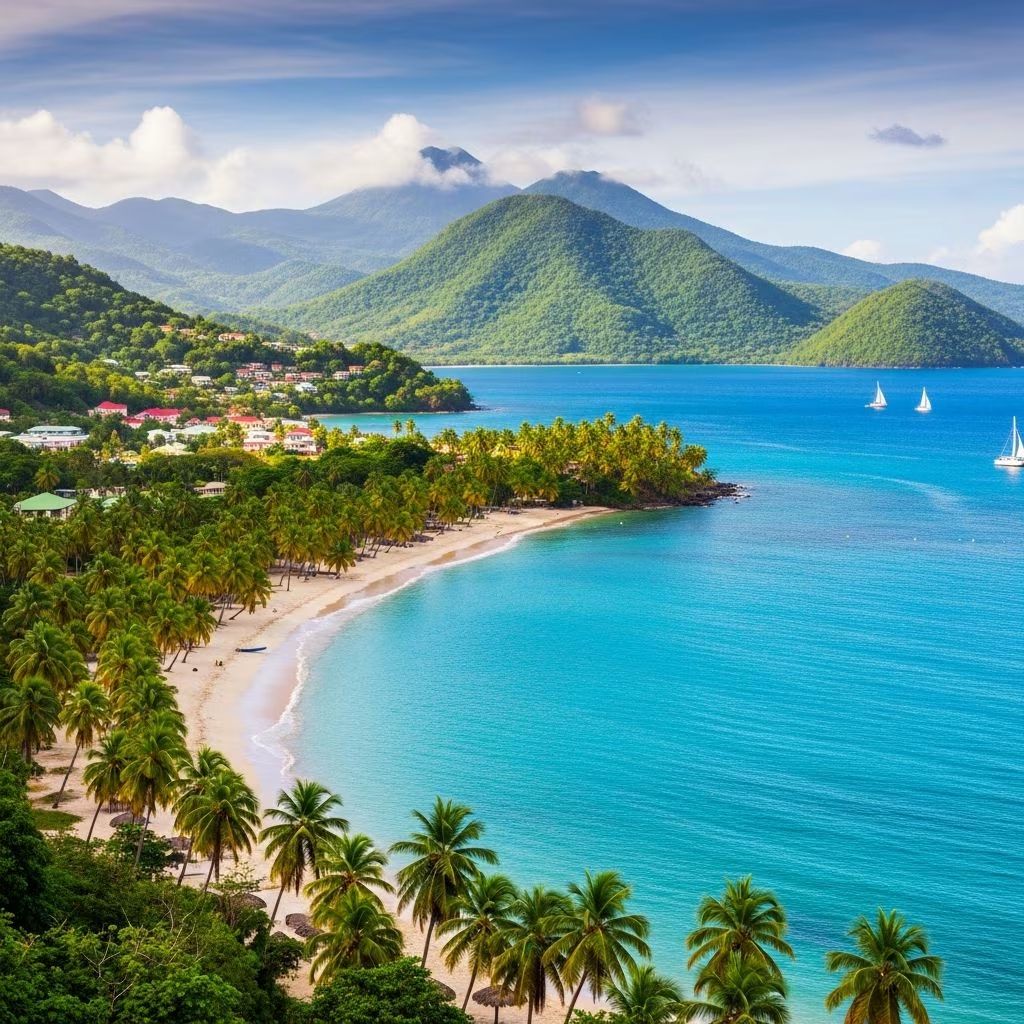
Contrasting sharply with its mountainous neighbor, Grande-Terre showcases flatter topography dominated by white-sand beaches and historical agricultural landscapes. The southern coastline, protected by an offshore reef system, presents calm and crystalline waters ideal for swimming and water sports. Sainte-Anne, a charming coastal settlement, anchors the south coast with one of Guadeloupe’s most celebrated beaches, where towering palms cast dancing shadows across powdery sand.
The northern regions of Grande-Terre reveal a more rural character, with winding country roads leading through agricultural interior zones known as the Grands Fonds. These areas showcase dramatic terrain formations called mornes, creating an undulating landscape that speaks to Guadeloupe’s geological heritage. Explorers venturing into these inland regions encounter authentic village life largely untouched by tourism’s homogenizing effects.
Pointe-à-Pitre, Guadeloupe’s largest urban center, functions as the archipelago’s primary gateway and commercial hub. While many visitors pass through hastily en route to beach destinations, the city deserves consideration for its architectural treasures and cultural significance. French colonial buildings retain elegant proportions and ornamental details, while the Cathédrale de St-Pierre et St-Paul and Place de la Victoire provide cultural touchstones. The covered market buzzes with activity as vendors hawk tropical fruits, spices, and traditional crafts.
| Beach Name | Notable Features | Best For |
|---|---|---|
| Sainte-Anne | Palm-lined shore, calm protected waters | Family swimming, relaxation |
| Caravelle | Scenic beauty, postcard-perfect setting | Photography, beach walks |
| Grandes Salines | Wild landscape, strong currents | Experienced swimmers, surfers |
| Pointe de la Vigie | Dramatic cliffs, spectacular viewpoints | Hiking, scenic overlooks |
| Porte de l’Enfer | Deep bay setting, occasionally sargassum | Exploration, quieter visits |
Located merely 20 minutes by ferry from Basse-Terre’s coast, the Les Saintes archipelago transforms island-hopping into an essential Guadeloupe experience. These diminutive islands seem lifted from Caribbean tourism fantasies, featuring turquoise bays, vibrant fishing villages adorned with colorful buildings, and a relaxed pace that contrasts with mainland tourism infrastructure.
Terre-de-Haut, the archipelago’s most developed island, sustains a population of approximately 1,500 inhabitants whose livelihoods intertwine with fishing and tourism sectors. The island’s compact size discourages automobile rentals, with golf carts and electric bicycles emerging as the preferred mobility solutions. This transportation reality preserves the island’s intimate character while enabling comprehensive exploration during single-day visits.
Fort Napoléon stands as Terre-de-Haut’s historical cornerstone, its 17th-century ramparts commanding views across surrounding seascapes. The fortress-to-beach transitions exemplify the island’s capacity to satisfy multiple travel motivations within confined geography. Visitors ascending Fort Napoléon’s ramparts encounter both historical narratives and contemporary vistas that justify the modest entry fee and climbing effort.
Marie-Galante and La Désirade offer contrasting alternatives for travelers seeking less-visited island experiences. Marie-Galante emphasizes rural authenticity, with traditional rum distilleries preserving centuries-old production methods and visitors encountering genuine village life. La Désirade lives up to its poetic designation as the “end of the world,” offering isolated beaches, minimal tourism infrastructure, and genuine tranquility for solitude-seekers.
Guadeloupe’s food culture represents a sophisticated fusion of French culinary traditions, African heritage, and tropical ingredient availability. Dining experiences range from casual street-food encounters to refined restaurant settings showcasing contemporary interpretations of Creole classics.
The Wednesday night market in Le Moule epitomizes authentic culinary immersion, with local vendors preparing traditional dishes while live music fills the air. Wandering through market stalls reveals Guadeloupe’s spice palettes, allowing visitors to sample bokit (fried bread sandwiches), accras (fritters), and other street specialties prepared fresh before their eyes. This sensory experience transcends mere eating, becoming cultural participation and community engagement.
Established restaurants throughout the archipelago showcase refined approaches to Creole traditions. Establishments like “Au bon vivre” blend crossbred cuisine techniques with local ingredients, while “Ti Kaz’ la” maintains more traditional preparation methods. Sunset dining at clifftop venues combines gastronomic satisfaction with visual drama, as golden light descends toward the horizon and ocean colors shift from sapphire to amber.
The Vieux-Fort Lighthouse area emerges as Guadeloupe’s premier sunset venue, where dramatic cliffs meet open Caribbean waters. The panoramic ocean views create romantic backdrops that justify advance dinner reservations and arrival timing coordinated with sunset progression.
Guadeloupe’s natural endowment supports diverse recreational pursuits accommodating varying fitness levels and thrill-seeking predilections. Water-based activities capitalize on the archipelago’s marine environments, while terrestrial adventures exploit rainforest and mountainous terrain.
Paddleboarding through mangrove ecosystems provides serene yet engaging exploration, with experienced guides interpreting ecological relationships and wildlife behavior. This paddling approach minimizes environmental disturbance while maximizing intimate nature connection. The shallow water clarity reveals submerged ecosystems normally invisible to casual beach visitors.
Snorkeling and scuba diving at sites like Reserve Cousteau and Pigeon Island reveal underwater biodiversity comparable to land-based ecosystems. These marine protection zones harbor coral formations, tropical fish species, and occasionally larger marine mammals. Boat excursions to Petite Terre, designated as an “Island of Iguanas,” showcase protected wildlife sanctuaries and crystal-clear waters suitable for diverse swimming abilities.
For thrill-seekers, gyrocopter tours departing from Saint-François provide aerial perspectives transforming landscape comprehension. The lightweight aircraft elevation reveals topographical relationships invisible from sea-level perspectives, while the sensation of hovering above familiar terrain creates memorable emotional resonance.
Guadeloupe’s 44 rivers support guided exploration combining hiking with natural pool swimming and waterfall viewing. These expeditions require experienced local guides who navigate terrain safely and interpret ecological narratives, particularly after heavy rainfall when water volumes increase significantly.
Effective Guadeloupe experiences benefit from strategic planning that balances structured activities with unscheduled exploration time. Travel specialists recommend allocating minimum four to six nights per location visited, allowing sufficient time for acclimatization and spontaneous discoveries that guided tours often bypass.
First-time visitors typically benefit from dividing stay durations between Grande-Terre’s beach-centric relaxation and Basse-Terre’s adventure-focused opportunities. This geographical split ensures exposure to Guadeloupe’s most diverse attractions while respecting travel fatigue realities. Subsequent visits can emphasize lesser-known islands or deeper immersion in specific regions.
Ferry bookings during December through March tourist season benefit from advance online reservations, as seasonal visitor volumes can exhaust same-day availability. Vehicle rentals remain optional on smaller islands like Terre-de-Haut but prove advantageous for Grande-Terre exploration, enabling access to inland Grands Fonds villages and distant coastal attractions.
Guadeloupe’s French colonial heritage influences everything from official language (French with Creole commonly spoken locally) to currency (Euro) and driving customs (right-hand traffic with European road norms). Tourist infrastructure throughout the archipelago maintains international standards while preserving distinctive local character.
Accommodation options span luxury resort properties to modest family-operated guesthouses and vacation rental properties. The French terminology “gîtes” describes holiday cottages frequently positioned with spectacular views across to neighboring Les Saintes islands. Botanical gardens, many developed on historic estates, provide cultural enrichment and botanical education supplementing beach and adventure activities.
Guadeloupe’s accessibility, combined with year-round tropical climate and diverse activity options, positions the archipelago as an ideal destination for families, couples, adventure enthusiasts, and cultural explorers. The islands accommodate varying vacation philosophies—from action-packed itineraries to contemplative retreats—within geographically compact territory accessible via convenient ferry systems.
Minimum stay recommendations suggest 7-10 days to experience primary attractions across multiple islands. This timeframe permits exploration of both Grande-Terre and Basse-Terre while allowing day trips to Les Saintes, Marie-Galante, or La Désirade without excessive travel fatigue.
Vehicle rental becomes beneficial for Grande-Terre exploration and accessing inland attractions. However, smaller islands like Terre-de-Haut function effectively via golf carts or walking, while taxis serve visitors preferring not to navigate unfamiliar roads.
La Soufrière’s summit trail presents intermediate-to-difficult difficulty levels requiring reasonable cardiovascular fitness but not technical climbing expertise. Most physically capable adults complete the three-to-four-hour round-trip ascent successfully with proper pacing and hydration.
December through March represents peak tourist season with ideal weather. However, September through November offers fewer crowds despite increased hurricane season probability. Specific weather patterns and wind conditions influence suitability depending on planned water activities.
French constitutes the official language, though English-speaking staff work throughout tourist facilities. Learning basic French phrases demonstrates cultural respect and enhances local interactions, though tourists manage successfully with English in major resort areas.
Guadeloupe transcends conventional beach destination categorization through its remarkable synthesis of natural drama, cultural authenticity, and accessibility. The archipelago welcomes visitors into experiences ranging from solitary jungle immersion to convivial market exploration, from mountain-peak achievement to tranquil beach meditation. Whether seeking adventure or restoration, families pursuing shared memories or couples celebrating togetherness, Guadeloupe accommodates diverse travel aspirations within its distinctive Caribbean setting. The islands’ geological dynamism, cultural vitality, and natural splendor combine to create destination experiences that resonate long after departure, inspiring return visits and rekindling appreciation for tropical paradise concepts that transcend tourism cliché.
