

 Travel Essentials
 Travel Essentials

A comprehensive guide to Guyana's natural wonders, wildlife, indigenous cultures, and adventure opportunities for travelers seeking authentic experiences.
 Travel Essentials
Nestled on the northeastern shoulder of South America, Guyana remains one of the continent’s most enigmatic and least-explored destinations. Despite its remarkable natural treasures and cultural richness, this nation of approximately 800,000 inhabitants has largely escaped the mainstream tourism circuit, offering intrepid travelers an opportunity to experience authentic wilderness and indigenous traditions in their purest forms. Unlike its more commercialized neighbors, Guyana preserves vast tracts of untouched rainforest, maintains thriving wildlife populations, and showcases the remarkable biodiversity that defines the Amazon region.
The country’s unique positioning as the only English-speaking nation in South America adds another layer of accessibility for visitors seeking immersive experiences without language barriers. With a landscape dominated by dense jungle, serpentine rivers, and dramatic geological formations, Guyana beckons adventurers, nature enthusiasts, and cultural explorers who crave destinations beyond the typical tourist infrastructure.
Guyana’s distinctive geography encompasses three primary ecosystems that converge to create extraordinary environmental diversity. The Atlantic coastal plains, characterized by fertile lowlands, transition into the interior highland forests, which eventually merge with vast savannahs in the southern and western regions. This ecological mosaic supports some of the highest concentrations of biodiversity on Earth.
The tropical climate maintains warm temperatures throughout the year, typically ranging between 16°C and 34°C, with substantial rainfall distributed across two main wet seasons. This climatic consistency ensures that vegetation remains lush and wildlife remains active year-round, though visitors should plan accordingly for humidity and moisture-intensive conditions. The country’s position near the equator contributes to intense solar radiation and consistent daylight hours, facilitating extended exploration periods during daylight hours.
Geographically, Guyana spans an area nearly equivalent to the United Kingdom but supports a fraction of the population, meaning vast territories remain essentially uninhabited wilderness. This demographic distribution creates unique opportunities for encountering pristine landscapes and wildlife in their natural state, undisturbed by extensive human infrastructure or development.
Travel within Guyana presents distinctive logistical considerations that distinguish it from conventional tourism destinations. The nation’s interior, where most attractions cluster, remains accessible primarily through specialized transportation methods rather than conventional road networks.
Regional aircraft operators, including Air Services Limited and Trans Guyana Airways, maintain essential connectivity across the country’s remote regions. These carriers operate small regional planes designed for unprepared landing strips scattered throughout the interior, enabling access to otherwise unreachable destinations. Chartered flights represent the most practical approach for reaching premier attractions like Kaieteur Falls, with services typically departing from Ogle Airport in Georgetown and allowing same-day excursions.
Road infrastructure remains limited and challenging, with an unpaved highway connecting Georgetown to southern regions representing the primary overland route. Most interior roads require four-wheel-drive vehicles and experienced navigation, making independent exploration inadvisable for most visitors. Consequently, arranging transportation through established lodges or tour operators provides safer and more reliable alternatives.
River transportation assumes critical importance throughout Guyana’s interior, with the Essequibo River and its tributaries serving as primary transportation arteries. Motorboat excursions along these waterways facilitate wildlife observation, cultural encounters, and access to remote communities while providing authentic perspectives on regional life and ecosystem dynamics.
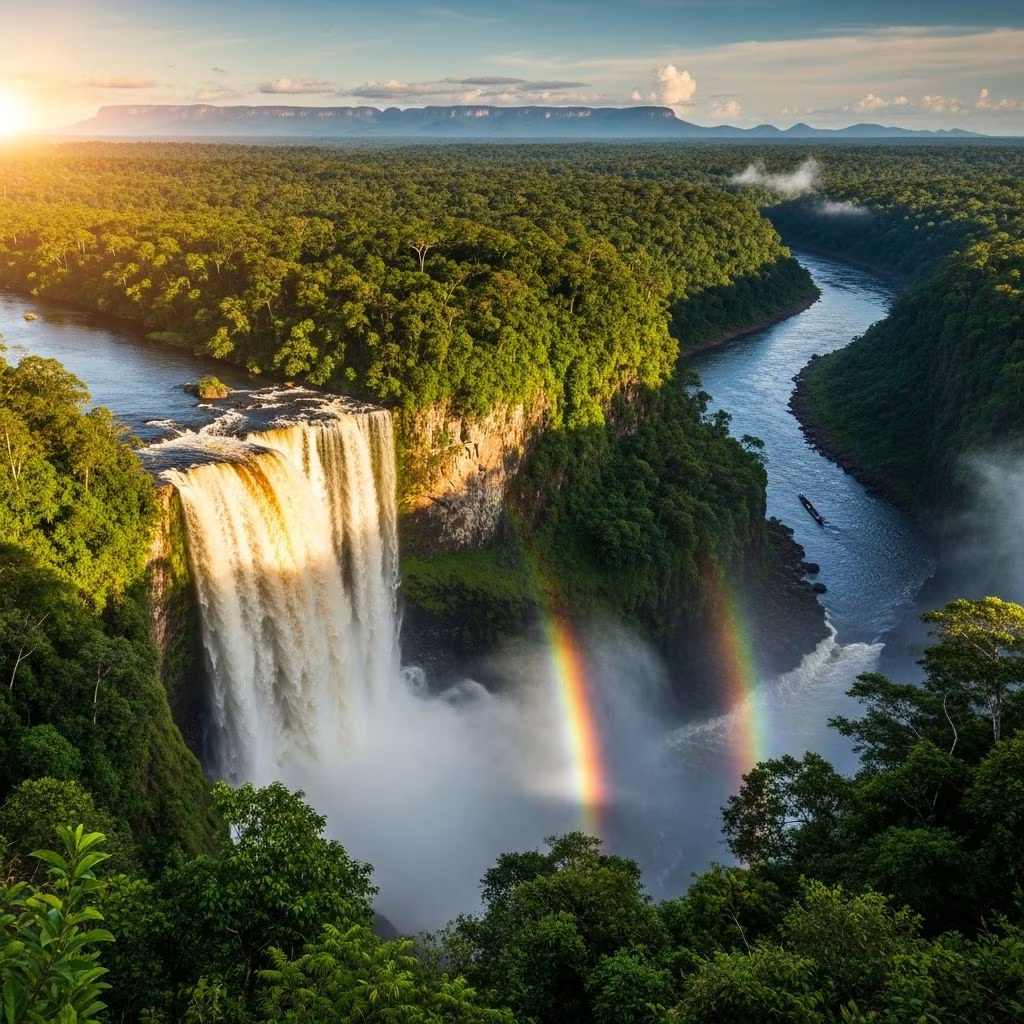
Kaieteur Falls stands as the world’s largest single-drop waterfall, representing Guyana’s most iconic natural monument and primary visitor destination. This extraordinary geological formation descends over 226 meters in an uninterrupted cascade, plunging through a verdant landscape of rainforest canopy and flowing into a pristine gorge enveloped by tree-covered valley walls.
Approaching Kaieteur via chartered aircraft unveils breathtaking perspectives unavailable from ground level. The aerial approach reveals hundreds of miles of broccoli-like forest canopies, the complete absence of power lines or roads, and the overwhelming sense of pristine wilderness. Upon arrival, visitors discover minimal infrastructure—merely facilities for sanitation, information, refreshments, and basic supplies—allowing the natural splendor to dominate the experience entirely.
The falls generate a perpetual rainbow visible from Rainbow View, an aptly-named observation point showcasing nature’s interplay with geological formations. Multiple hiking trails provide access to various vantage points, each offering distinct perspectives on this natural phenomenon. The difficulty of access, while challenging for casual visitors, ensures that visitor impact remains minimal and ecological integrity persists.
Beyond Kaieteur, Guyana harbors additional spectacular waterfalls including Orinduik Falls, which presents different geological characteristics and ecological contexts. The Rupununi Savannah and Kanuku Mountains offer alternative landscapes and wildlife-observation opportunities for visitors seeking diversity beyond rainforest experiences.
Guyana’s rainforests, encompassing substantial portions of the Amazon basin, represent global biodiversity hotspots supporting extraordinary wildlife concentrations. The nation hosts approximately 870 bird species, alongside populations of tapirs, caimans, jaguars, howler monkeys, sloths, and anteaters. This remarkable fauna diversity reflects the ecological complexity and environmental stability that characterize pristine rainforest systems.
Specialized lodges such as Atta Rainforest Lodge facilitate targeted wildlife exploration, including opportunities to observe the cock-of-the-rock, an endemic species displaying brilliant orange plumage and inhabiting humid, lush rainforest environments. The Iwokrama Canopy Walkway provides elevated perspectives on rainforest architecture, allowing visitors to experience arboreal ecosystems at multiple vertical levels.
Guided rainforest walks, conducted by experienced naturalists, reveal ecological relationships, medicinal plant applications, and behavioral adaptations that characterize this complex ecosystem. These immersive experiences transform wilderness into educational opportunities while respecting ecological boundaries and wildlife protection principles.
Guyana’s interior harbors Amerindian villages representing pre-Columbian cultural continuity and traditional lifeways that have persisted largely unchanged for centuries. These communities maintain ancestral practices, languages, and ecological knowledge systems that offer profound insights into sustainable living and human-nature relationships.
Cultural tourism initiatives increasingly facilitate respectful encounters with indigenous populations, enabling visitors to experience authentic traditions, artistic expressions, and culinary practices. These interactions, conducted with cultural sensitivity and appropriate compensation frameworks, support economic opportunities for indigenous communities while fostering cross-cultural understanding and appreciation.
Guyana offers challenging trekking experiences for adventurous travelers prepared for demanding physical conditions and remote wilderness navigation. Multi-day treks to Kaieteur Falls from Mahdia, a central mining town, require three days of continuous hiking through dense jungle terrain featuring fallen trees serving as improvised bridges and numerous creek crossings requiring swimming or wading. Trail sections bearing dramatic names like “Oh My God” testify to the physical and psychological challenges inherent in these expeditions.
These adventures remain exclusively for experienced hikers possessing appropriate physical conditioning, wilderness navigation skills, and psychological resilience for isolation and environmental uncertainty.
Capybara swimming experiences, visits to conservation-focused eco-lodges like Wichabai Ranch, and curated nature walks provide accessible alternatives to extreme trekking for visitors seeking immersive but less physically demanding experiences. These activities balance adventure with comfort while maintaining authentic wilderness engagement and ecological education.
Guyana’s diverse culinary heritage reflects multicultural influences and regional ingredients, creating distinctive flavor profiles and traditional dishes. Georgetown’s markets and specialized food tours provide comprehensive introductions to local gastronomic traditions, featuring opportunities for extensive food sampling and culinary education. These experiences celebrate indigenous ingredients, colonial influences, and contemporary culinary creativity while supporting local food producers and market communities.
As Guyana’s capital and primary urban center, Georgetown serves as the essential entry point for international visitors. The city functions simultaneously as a cultural repository, commercial hub, and departure point for interior expeditions. Georgetown’s diverse architecture, vibrant market culture, and multicultural population offer urban exploration opportunities contrasting with interior wilderness experiences.
While Georgetown lacks major tourist infrastructure comparable to regional capitals, its authenticity and local character provide genuine cultural immersion unavailable in heavily commercialized destinations. Visitors should exercise appropriate urban safety precautions, including vigilance at financial institutions, awareness of surroundings, and avoidance of nighttime walking or driving.
Guyana’s historical narrative encompasses colonial legacies, indigenous heritage, and significant twentieth-century events requiring thoughtful interpretation. As of 2025, the Jonestown site in Port Kaituma has reopened to public visitation with guided tours offering historical context and lessons regarding this complex historical episode. These educational experiences facilitate critical engagement with difficult historical narratives and their contemporary relevance.
Successfully navigating Guyana requires advance planning, realistic expectation management, and engagement with experienced tour operators. Independent travel, while theoretically possible in coastal areas, becomes increasingly impractical in interior regions where infrastructure remains minimal and specialized knowledge proves essential.
Tropical climate exposure, remote location limitations, and wildlife encounters necessitate comprehensive health precautions including vaccinations, antimalarial medications, and comprehensive travel insurance. Remote locations lack immediate medical facilities, making preventive measures and evacuation insurance particularly crucial.
Guyana offers accommodation spanning from luxury eco-lodges featuring amenities and naturalist expertise to basic facilities in remote locations. Selection depends on adventure preferences, budget constraints, and comfort requirements. Established lodges typically provide meal services, guided activities, and essential logistical support, eliminating independent planning burdens.
Guyana’s tropical climate maintains year-round visitation feasibility, though planning around wet seasons and regional events enhances experience quality. Consult seasonal wildlife activity patterns and regional festival calendars when scheduling visits.
Yes, Guyana’s remote interior requires specialized transportation, tour arrangement, and realistic timeframe expectations. Accessibility challenges, however, directly correlate with pristine ecosystem preservation and limited visitor impact.
Kaieteur Falls represents the quintessential Guyana experience, combining accessibility through tour arrangements with extraordinary natural spectacle. Georgetown exploration, Essequibo River tours, and established eco-lodge stays provide balanced introductions for visitors preferring moderate adventure intensity.
While Georgetown permits independent exploration, interior regions genuinely require local guide partnerships and advance arrangements. Tour operators facilitate logistical coordination that independent travelers cannot effectively replicate.
Depending on destination and season, visitors might encounter jaguars, sloths, capybaras, caimans, tapirs, and numerous bird species including the iconic cock-of-the-rock. Guided experiences maximize wildlife observation opportunities while ensuring appropriate safety protocols.
Guyana represents an exceptional destination for travelers exhausted by conventional tourism experiences and seeking authentic wilderness, genuine cultural encounters, and ecological significance. The country’s accessibility challenges, while demanding advance planning, directly preserve the environmental and cultural authenticity that characterize transformative travel experiences.
Unlike destinations where infrastructure and tourism have fundamentally altered ecological and cultural dynamics, Guyana remains fundamentally shaped by its natural and human communities rather than tourist accommodation. This essential distinction positions Guyana as a destination for conscious travelers willing to embrace adventure complexity in exchange for genuine wilderness engagement and meaningful intercultural connection.
