

 Travel Essentials
 Travel Essentials

Explore Gyeongju's rich history as Silla's capital, featuring ancient tombs, temples, fortresses, and museums that showcase Korea's golden age of culture and architecture.
 Travel Essentials
Gyeongju served as the capital of the Silla Kingdom from 57 BCE to 935 CE, ruling the Korean peninsula for nearly a millennium and leaving behind an unparalleled legacy of cultural achievements.
The story of Gyeongju begins with the Silla Kingdom, one of the Three Kingdoms of Korea, which transformed a modest settlement into a thriving metropolis. Early records from the Samhan period mention it as Saro-guk, part of the Jinhan confederacy, marking its entry into non-Korean annals during the early Common Era. Over centuries, Silla expanded under visionary rulers, culminating in King Munmu’s unification of the peninsula by conquering Goguryeo and Baekje in the 7th century.
At its zenith, Gyeongju likely supported up to a million residents, a testament to its economic and administrative prowess. The city’s layout included grand palaces, state temples, and defensive fortresses, all designed to reflect Silla’s power and piety. This era, often called the golden age of ancient Korean civilization, produced innovations in Buddhist and secular architecture that influenced the region profoundly.
Silla’s 56 kings reigned over this domain, fostering a vibrant cultural flowering evident in surviving monuments. The kingdom’s fall in 935 CE did not erase its imprint; instead, Gyeongju evolved into a repository of history, earning the moniker “museum without walls.”
In 2000, UNESCO recognized the Gyeongju Historic Areas as a World Heritage Site, honoring five interconnected zones that encapsulate Silla’s achievements. These include mountainous temple sites, palace ruins, tumuli parks, temple foundations, and fortress remnants, each illustrating exceptional advancements in architecture and artistry.
The designation underscores the area’s criterion (ii) significance: sites of outstanding importance in Buddhist and secular architectural development on the Korean peninsula. Today, with a population around 270,000, Gyeongju preserves the aura of its millennial past amid modern life.
The Great Tumuli Park stands as a highlight, housing over 20 earthen mounds that served as eternal resting places for Silla royalty. These structures, some reaching 20 meters high, were sealed for centuries until excavations began in the 1920s, revealing gold crowns, jade belts, and intricate glassware.
Daereungwon Tomb Complex exemplifies this, with tombs like Cheonmachong yielding artifacts now displayed in local museums. These burials reflect Silla’s belief in an afterlife adorned with luxury, blending indigenous traditions with continental influences via the Silk Road.
| Tomb Name | Key Discoveries | Historical Significance |
|---|---|---|
| Cheonmachong | Golden crown, horse-rider figurine, silk remnants | 5th-century elite burial showcasing early Silla artistry |
| Geumnyeongchong | Jade ornaments, silver arrows, pottery | Paired tomb of a king and queen from the 6th century |
| Seongbongak | Weapons, armor, ceremonial items | Warrior nobility interment highlighting military prowess |
Visitors can walk paths winding through these grassy hills, imagining the processions that once accompanied royal funerals.
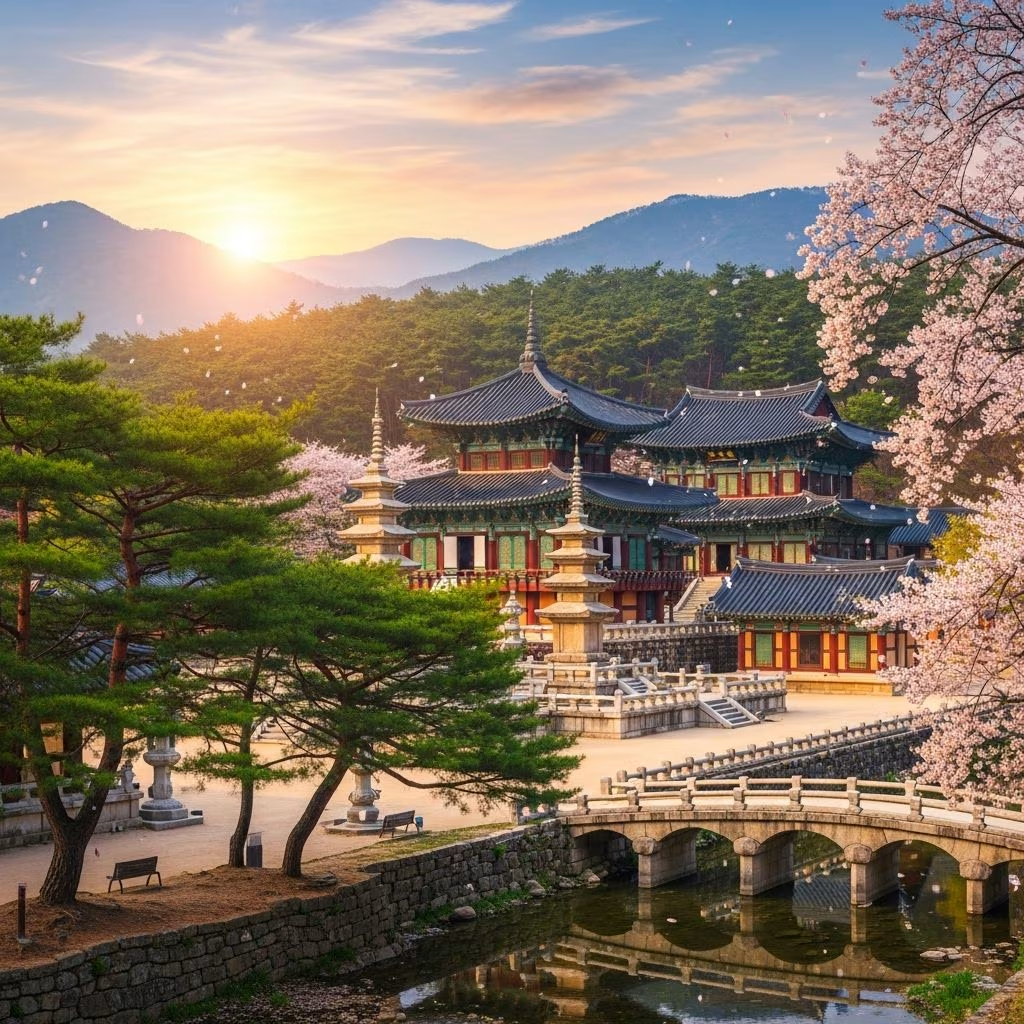
Buddhism flourished under Silla patronage, birthing architectural wonders. Bulguksa Temple, perched on Mt. Toham, exemplifies this with its wooden pavilions and stone pagodas dating to the 8th century. Nearby Seokguram Grotto houses a serene Buddha statue carved into granite, its serene expression captivating pilgrims and tourists alike.
Hwangnyongsa Temple ruins reveal the scale of Silla’s devotion: this state sanctuary once featured a nine-story wooden pagoda, the tallest in East Asia at the time. Though destroyed, its stone foundations and recent reconstructions evoke its former grandeur.
These sites not only served religious functions but also as cultural academies, where monks translated scriptures and artists honed goldsmithing techniques.
Gyeongju’s strategic location demanded robust defenses. The Mountain Fortress (Najeong) atop hills encircling the city offered panoramic views and refuge during sieges. Walls stretching kilometers were built with stone and earth, incorporating watchtowers and gates.
Wolseong Fortress in the city center protected the palace district, its massive stones still visible amid ponds and pavilions. These fortifications underscore Silla’s military innovations, blending terrain advantages with engineering skill.
At the heart of the historic areas, the Gyeongju National Museum safeguards Silla’s artifacts. Its collections span jewelry, ceramics, and pagoda relics, with the Divine Bell of King Seongdeok as a star exhibit—a massive bronze ringing with a voice like a mother’s call.
The museum’s outdoor pond displays a reconstructed Emille Bell replica, while indoor halls chronicle Silla’s evolution. Interactive exhibits and English signage make it accessible for global visitors, embodying the essence of Silla culture.
Reaching Gyeongju is straightforward via KTX high-speed trains from Seoul (about 2 hours) or Busan (30 minutes). The city is compact, ideal for bikes or tourist shuttles looping major sites.
Night tours illuminate tombs and temples, creating a magical atmosphere.
While rooted in history, Gyeongju pulses with contemporary life. Cafes dot ancient paths, and festivals like the Silla Cultural Festival revive royal parades. The city’s 21st-century vibe harmonizes with its heritage, drawing over a million visitors annually.
Preservation efforts by cultural authorities ensure sites remain intact, balancing tourism with sustainability.
Its historic areas represent exceptional testimony to Silla’s 1,000-year rule and innovations in Korean Buddhist and secular architecture.
From 57 BCE to 935 CE, nearly 1,000 years.
Some, like Cheonmachong, allow interior access; others are viewable externally to protect contents.
Yes, with bike rentals, easy trails, and interactive museum displays suitable for all ages.
A masterpiece of Silla Buddhist architecture, paired with Seokguram Grotto as a UNESCO site nearby.
Ongoing archaeological digs and restorations keep Silla’s story alive. Gyeongju invites travelers to walk through time, connecting with a civilization that shaped Korea’s identity.
