

 Travel Essentials
 Travel Essentials

Discover essential rules for visiting Hagia Sophia: tickets at 25€, dress modestly, security checks, prayer times, and AR audio guides for tourists.
 Travel Essentials
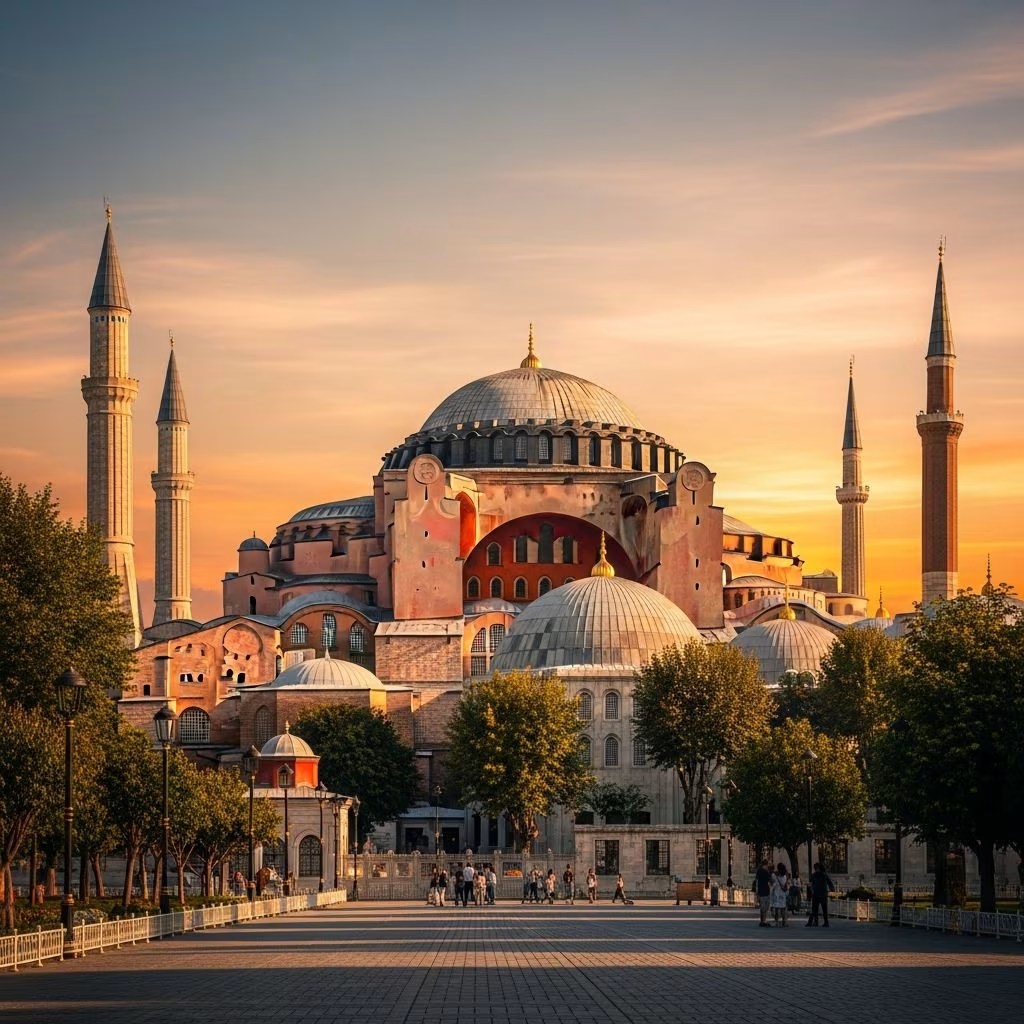
One of Istanbul’s most treasured landmarks, Hagia Sophia stands as a testament to centuries of architectural brilliance and cultural fusion. Originally a cathedral, later a mosque, and briefly a museum, it now functions primarily as a mosque while welcoming tourists to designated viewing areas. Understanding the current visitor protocols ensures a respectful and enjoyable experience amid its stunning domes, mosaics, and historical layers.
Since early 2024, Hagia Sophia has adopted a structured approach to separate worshippers from sightseers, enhancing safety and preservation. Foreign tourists enter via a dedicated temporary gate opposite the Sultan Ahmed III Fountain, near the Topkapı Palace’s Imperial Gate. This setup includes a ticket booth for seamless purchases.
Security is paramount: all entrants undergo checks. To expedite entry, travel light—avoid large bags, sharp objects, or unnecessary items. Cameras and detectors along the route bolster protection during visits.
Entry mandates a ticket for anyone aged 8 and above, priced at 25 euros (subject to exchange rate fluctuations into Turkish lira). Children under 8 enter free with a parent, showing a valid passport or ID.
| Visitor Type | Ticket Price | Notes |
|---|---|---|
| Adults (8+) | 25€ | Mandatory for tourist area |
| Children (<8) | Free | With adult + ID/passport |
| Museum Pass Holders | Not valid | Purchase separate ticket |
Open daily from 9:00 a.m. to 7:30 p.m. in 2025, the site accommodates visitors outside prayer times. Note closures: the tourist area shuts from 12:30 p.m. to 2:30 p.m. on Fridays for congregational prayers. Other prayer slots (typically 30-45 minutes) may pause wandering in main spaces—check schedules in advance.
Avoid peak crowds on weekends or Fridays by arriving early morning or late afternoon. This strategy yields quieter exploration of Byzantine mosaics and Ottoman additions from the gallery.
As an active mosque, modest attire is non-negotiable. Both genders must cover shoulders and knees; sleeveless tops, shorts, skirts, or revealing clothes are prohibited.
Non-compliance risks denial. Loose, opaque fabrics align best with sanctity.
Scan QR codes for augmented reality (AR) audio guides in 23 languages via personal devices or loaned headphones. This immersive tool details the site’s evolution—from Justinian’s 6th-century basilica to Ottoman conversions—without disrupting prayers.
Visitor paths include the upper gallery for mosaics and overlooks of the mihrab, with ongoing restorations (e.g., Bayezid II minaret) prompting temporary gates for safety.
Respect defines the visit: silence near worshippers, no photography of prayers, and no blocking paths. Walking is encouraged; refrain from loud conversations or flashes.
By adhering, you contribute to a serene atmosphere for all, honoring the site’s dual role as worship space and UNESCO highlight.
Worshippers enter freely; tourists pay 25€ for galleries.
Fold and carry it to safeguard floors.
Rentals at the booth: 1€ scarves, 3€ covers.
Yes, but discreetly—avoid prayer areas.
Yes, for QR skip-the-line to upper levels.
AR aids multiple languages; inquire for specifics at entry.
Built in 537 CE by Emperor Justinian, Hagia Sophia’s massive dome revolutionized engineering. Conquered by Ottomans in 1453, it became a mosque with minarets and mihrab added. Its 1935 museum status ended in 2020, reverting to mosque amid global debate. Today, tourists access galleries preserving Christian mosaics alongside Islamic elements.
Restorations continue, ensuring longevity. This blend of faiths underscores Istanbul’s crossroads identity.
