

 Travel Essentials
 Travel Essentials

Explore Haidhausen, Munich's historic French Quarter with charming streets, lively markets, cultural landmarks, and diverse nightlife.
 Travel Essentials
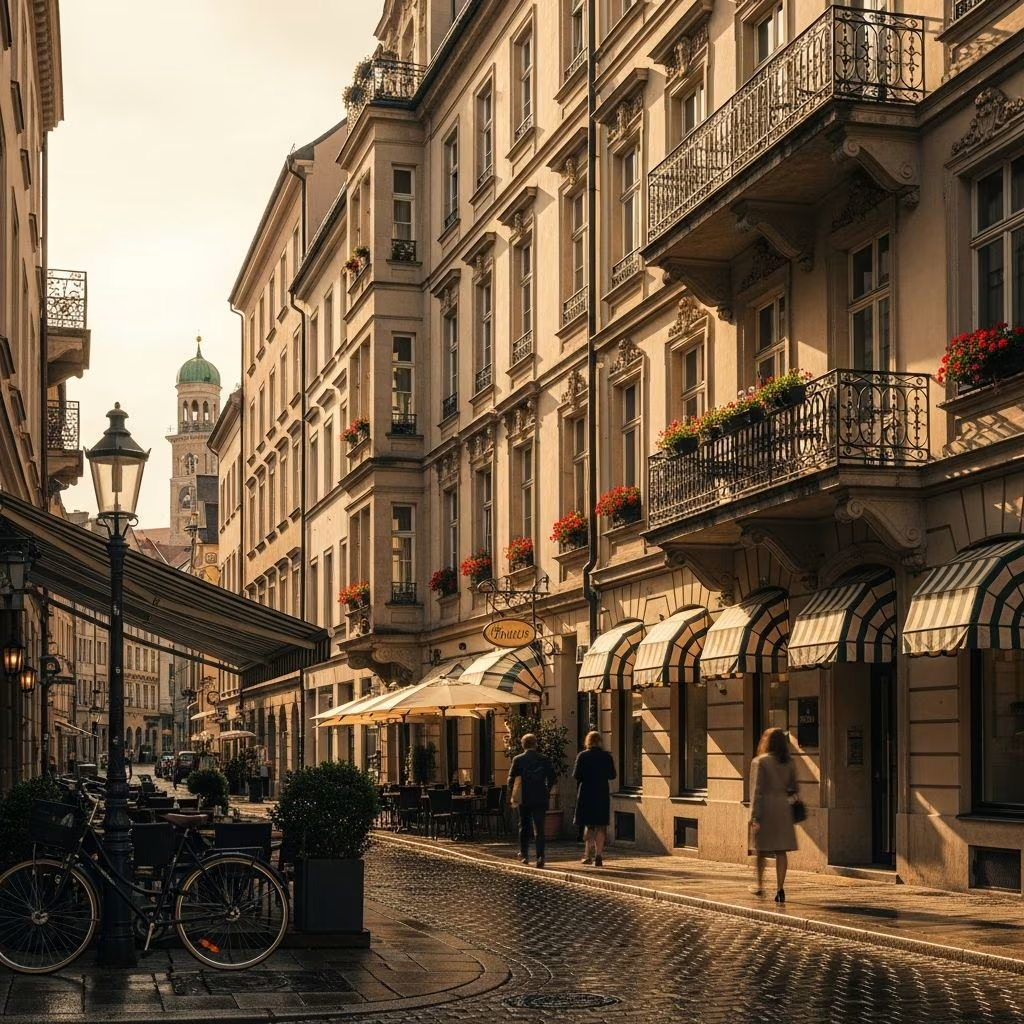
Nestled just across the Isar River from Munich’s bustling city center, Haidhausen stands out as a captivating blend of ancient heritage, architectural elegance, and contemporary vibrancy. This district, affectionately dubbed the French Quarter, transports visitors to a realm where Bavarian roots intertwine with Parisian sophistication. Its streets, many bearing names of French locales, evoke the grandeur of 19th-century Europe while pulsating with modern Munich life. Ideal for pedestrians, Haidhausen rewards explorers with hidden courtyards, artisanal shops, and a lively social scene that captures the essence of local culture.
Haidhausen’s origins trace back over a millennium, predating much of Munich’s famed Altstadt. The name itself derives from “haidhusir,” an Old High German term signifying “houses on the heath,” reflecting its early days as a modest settlement amid barren lands. Documented as early as 808 AD, it served as a hub for artisans, laborers, and industries tied to the nearby Isar River, including clay mining and brick production.
The district’s transformation accelerated in the 19th century amid Germany’s industrialization boom. Integrated into Munich in 1854, Haidhausen evolved from a rural outpost into a densely packed workers’ suburb, spurred by railway expansion and urban planning. A pivotal moment came post-Franco-Prussian War (1870-71), when streets were christened after French cities like Paris, Orleans, Bordeaux, and Sedan to commemorate German triumphs. This naming convention birthed the “Franzosenviertel” moniker, infusing the area with a distinctly Gallic aesthetic through symmetrical plazas and tree-lined avenues.
World War II left scars, but postwar reconstruction revitalized Haidhausen. The 1980s marked a turning point: industrial zones gave way to cultural venues like the Gasteig Cultural Centre and Lothringer13 gallery, while renovated tenements attracted artists and intellectuals. Today, it’s one of Munich’s most desirable addresses, balancing upscale residences with bohemian energy.
Haidhausen’s architectural treasures anchor its allure. The Maximilianeum, seat of the Bayerischer Landtag (Bavarian State Parliament), dominates the skyline at the district’s edge. Begun in 1857, this palatial edifice along Maximilianstrasse overlooks the Isar, its neoclassical facade glowing spectacularly under evening lights. Visitors can admire its grandeur from public vantage points, soaking in views of the river and beyond.
Religious sites add spiritual depth. St. Johann Baptist Church, adjacent to the Franzosenviertel, exemplifies Gothic Revival style with intricate spires and serene interiors. Nearby, the Müller’sche Volksbad offers a plunge into Edwardian luxury. This historic bathhouse, with its Art Nouveau mosaics and Roman steam saunas, harks to an era when public bathing was communal elegance. Post-swim, the on-site cafe provides a cozy retreat.
At Haidhausen’s core lie its enchanting squares, designed in a radial pattern reminiscent of French urbanism. Wiener Platz buzzes as the district’s lively nexus, centered on a majestic fountain amid preserved facades. Daily markets overflow with fresh produce, cheeses, and baked goods, while encircling cafes spill patrons onto sun-dappled terraces. It’s here that Münchners converge for coffee, conversation, and seasonal festivities.
Weißenburger Platz exudes intimate charm, its fountain drawing families and friends. Flanked by boutique shops and bistros, it embodies village coziness within the metropolis. Pariser Platz and Orleansplatz echo this motif, their French nomenclature enhancing the continental vibe. Tree-shaded benches invite lingering, perfect for people-watching amid blooming flowerbeds.
| Plaza | Key Features | Best For |
|---|---|---|
| Wiener Platz | Fountain, markets, historic houses | Daily shopping, cafe hopping |
| Weißenburger Platz | Shops, bistros, green spaces | Relaxed strolls, local vibes |
| Pariser Platz | Symmetrical design, French names | Architectural appreciation |
| Orleansplatz | Tree-lined, courtyards | Peaceful exploration |
Haidhausen’s food scene marries hearty Bavarian fare with Gallic finesse. Street cafes proffer croissants, éclairs, and Bavarian tortes alongside robust pretzels and weißwurst. Boulangeries like those on Weißenburger Platz channel Parisian patisseries, their aromas wafting through alleys.
Markets at Wiener Platz showcase regional bounty: alpine cheeses, Isar-fresh fish, and seasonal berries. Beer gardens offer shaded respite with crisp lagers and schnitzel. For finer dining, neighborhood gems serve modern Bavarian twists, such as venison with wild mushrooms or asparagus in spring. Vegetarians thrive on innovative salads and strudels.
Don’t miss traditional Kaffeehaus culture—lingering over melange coffee and apfelstrudel in ornate settings, a nod to Haidhausen’s cafe society.
Wandering Haidhausen’s side streets reveals a trove of independent boutiques clustered around key plazas. Fashion havens stock sustainable designs from local creators, while homeware shops display handcrafted ceramics echoing Bavarian motifs. Bookstores brim with German literature and travelogues, and galleries spotlight emerging artists.
The Franzosenviertel specializes in gourmet provisions: spice merchants, wine cellars with French varietals, and chocolatiers rivaling those in Lyon. Vintage stores unearth mid-century finds, adding eclectic flair. This shopping tapestry prioritizes quality over chains, fostering a community-driven economy.
As dusk falls, Haidhausen ignites. Kultfabrik, Europe’s self-proclaimed largest party zone, pulses with over 20 venues—from karaoke dens and Irish pubs to throbbing discos. It’s Munich’s wild underbelly, drawing revelers for all-night adventures.
For tamer evenings, taverns around Wiener Platz pour local brews amid live folk music. Jazz clubs in renovated warehouses offer sophisticated soirées, while summer beer gardens host Maibaum festivals with dancing and sausages. The district’s liberal ethos ensures diverse crowds, from students to professionals.
Haidhausen’s creative spirit thrives in venues like Muffathalle, a multipurpose hall for concerts and theater in a former brewery. Lothringer13 gallery challenges norms with contemporary exhibits. The Gasteig, though nearby, influences with philharmonic performances.
Annual events amplify the buzz: Christmas markets glitter with mulled wine and crafts; spring asparagus festivals feature tastings; Oktoberfest spillover fills beer tents. Maibaum raisings and church fairs preserve Bavarian customs.
Post-1870 Franco-Prussian War street names like Pariser Straße honor victories, paired with French-style layouts.
Yes—parks, baths, and markets suit all ages; nightlife zones are separate.
Exterior views and plazas are free; baths and galleries have fees.
More relaxed, village-like with liberal, artistic leanings versus touristy Altstadt.
Abundant in markets and cafes, including salads, cheeses, and pastries.
