

 Travel Essentials
 Travel Essentials

Comprehensive guide to Haleakalā National Park featuring hiking trails, visitor tips, fees, and activities across two distinct ecosystems.
 Travel Essentials
Rising 10,000 feet above the Pacific Ocean, Haleakalā National Park stands as one of Hawaii’s most extraordinary natural landmarks. The park’s name translates to “house of the sun,” a fitting title for a destination where visitors can witness sunrises from above the clouds and explore landscapes ranging from barren volcanic crater floors to lush tropical rainforests. Located on the island of Maui, this distinctive national park encompasses two geographically separated regions, each offering completely different experiences and ecosures for visitors of all ages and fitness levels.
What makes Haleakalā particularly unique is its division into two non-contiguous districts that require separate visits and different approaches. The distinction between these areas is so significant that exploring both sections during a single trip is virtually impossible without exiting and re-entering the park.
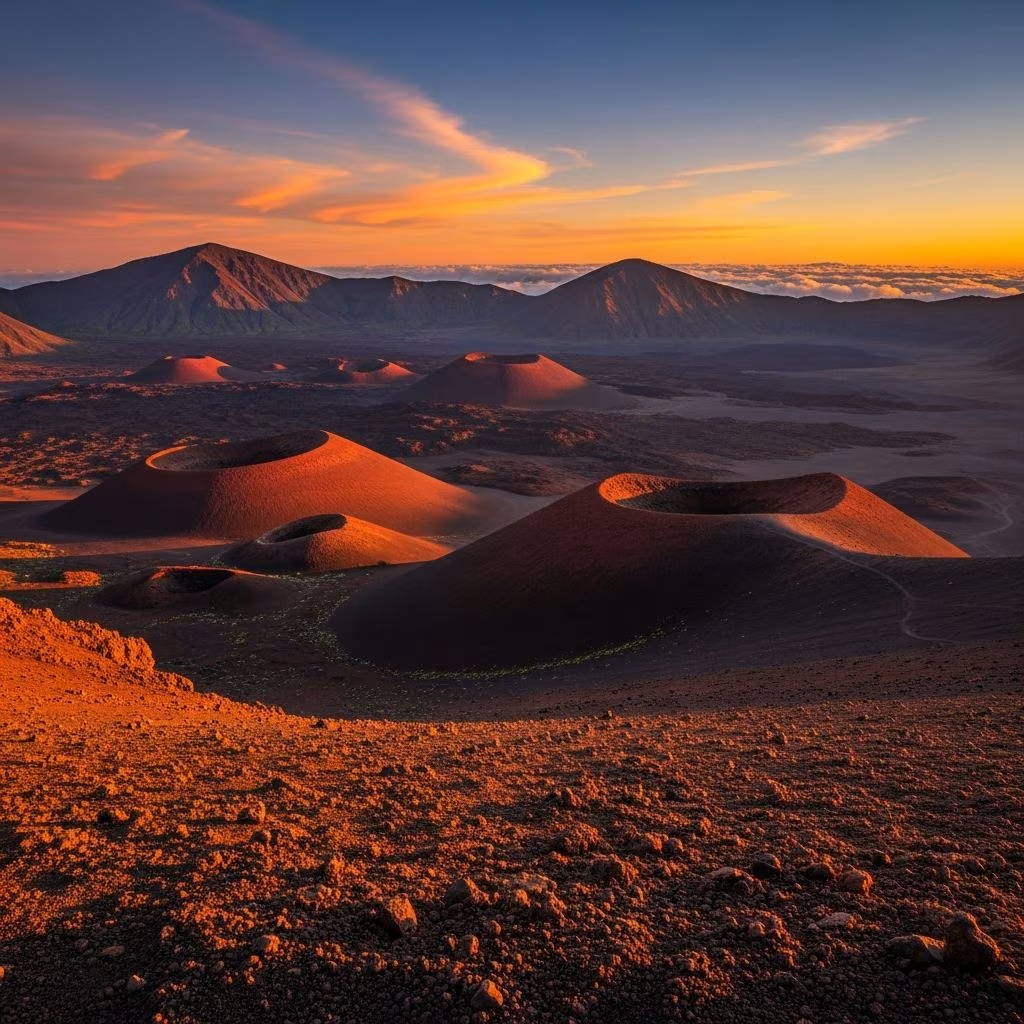
The Summit District represents the iconic volcanic crater experience. Accessible via Haleakalā Highway, this section features the massive dormant crater and high-altitude alpine terrain. Visitors ascending to the summit encounter dramatic elevation changes over approximately ten miles of winding roads, typically requiring 1.5 to 2.5 hours of driving from most Maui resort areas. The landscape here is stark and otherworldly, with volcanic cinders, sparse vegetation, and expansive views that seem to belong to another planet.
The Kipahulu District presents the park’s complete opposite. Located at sea level near the town of Hana, this section showcases tropical rainforests, cascading waterfalls, and freshwater pools where lush vegetation meets the Pacific Ocean. Access requires driving the famous Hana Highway, a 64-mile route known for its narrow curves and scenic beauty. The journey alone becomes part of the adventure, as travelers wind through northeast Maui’s spectacular coastal landscape.
Before entering Haleakalā National Park, all visitors must purchase a recreational use pass. These non-transferrable passes remain valid for three consecutive days, including the date of purchase. Understanding the fee structure helps with budgeting and determining the best pass option for your group.
| Vehicle Type | Pass Cost |
|---|---|
| Private vehicle | $30 |
| Motorcycle | $25 |
| Individual without vehicle (pedestrian) | $15 |
These fees grant access to both park districts, though visiting both requires exiting and re-entering separately since the regions cannot be accessed without leaving park boundaries.
Reaching the Summit District involves driving up Haleakalā Highway, which features slow-moving sections with numerous switchbacks and pullouts during the final ten miles to the summit. The road’s twisting nature necessitates careful driving and patience, especially during peak visitor times.
Accessing Kipahulu requires driving twelve miles beyond the town of Hana on the famous Hana Highway. Starting from the North Shore surf town of Pāʻia, this scenic route circumscribes the northeast coast of Maui. Travelers should depart early to avoid traffic congestion and budget additional time for stops, including roadside banana bread stands that are abundant along the route.
The Summit District has earned its reputation as possibly Maui’s premier sunrise destination. Visitors position themselves above the clouds at over 10,000 feet elevation to witness the sun emerging from below, creating an ethereal experience as light gradually illuminates the landscape. The summit’s high altitude and clear air create conditions ideal for both sunrise observation and evening sunset viewing.
Sunset viewing offers an equally compelling alternative for those unable to wake before dawn. The same location provides golden hour photography opportunities and atmospheric conditions that transform the crater landscape into a canvas of warm colors.
The Summit District contains over 30 miles of hiking trails accommodating all fitness levels. These paths traverse diverse terrain and offer varying difficulty levels, ensuring options for casual walkers and experienced hikers alike.
Sliding Sands Trail represents the park’s most popular hiking route. Beginning at the summit and descending to the crater floor, this trail features an extraordinary sandy, dusty surface that creates a Mars-like appearance as hikers descend. The distinctive terrain and otherworldly vistas make this hike an unforgettable experience.
Halemaʻu Trail connects hikers to primitive wilderness campsites and offers alternative crater exploration routes. For those interested in multi-day adventures, this trail provides access to camping facilities within the crater itself.
The Keoneheʻehe’e Trail presents a more challenging option, leading to distant Paliku campsites through remote terrain. This 9.3-mile one-way hike traverses varied landscape and requires careful planning and preparation.
For shorter outings, the Pā Kaʻōao Trail spans only 0.2 miles and provides accessible viewing opportunities for visitors with limited time or mobility concerns.
The summit’s elevation and distance from light pollution create exceptional stargazing conditions. The park’s high altitude and clear night skies make celestial observation a major draw for astronomy enthusiasts and casual stargazers alike.
The Kipahulu District offers a completely different natural experience centered on water features and tropical vegetation. The dramatic contrast between the volcanic summit and coastal rainforest makes this section essential for visitors seeking comprehensive park exploration.
The Pipiwai Trail stands as the quintessential Kipahulu hike. This four-mile round-trip journey winds through distinctive bamboo forests where towering stalks create natural corridors. The trail passes multiple waterfall viewpoints before culminating at Waimoku Falls, a spectacular 400-foot cascade that justifies the moderate hiking effort. Ranger-led guided hikes are offered on Sundays at 10 a.m., with reservations available one week in advance by calling 808-248-7375.
The ʻOheʻo Gulch, commonly called the Seven Sacred Pools, features tiered pools and waterfalls fed by mountain streams. This site presents a striking contrast to the summit’s barren landscape, though swimming restrictions often apply due to safety and conservation concerns.
The Kuloa Point Trail allows self-guided exploration of culturally significant sites. Using the National Park Service App, visitors learn about plants brought by Polynesian voyagers and observe ancient Hawaiian structures called hale (houses) built by early inhabitants.
For visitors seeking immersive park experiences, camping options exist within the park boundaries. The park maintains two primitive wilderness campsites requiring reservations at $20 per night, with a maximum three-night stay limit.
Holua Campsite represents the more accessible option, located 3.7 miles one way down the Halemaʻu Trail. Relatively easier access makes this site suitable for hikers of moderate experience.
Paliku Campsite presents a more remote option accessible via the Keoneheʻehe’e Trail. The 9.3-mile one-way hike to reach this site requires significant fitness and determination, though the isolation and unique crater experience justify the effort.
Three visitor centers throughout the park provide educational resources and visitor support. All centers maintain wheelchair accessibility, ensuring information access for guests with mobility considerations. These facilities offer learning opportunities about Haleakalā’s native lore, mythology, native bird species, and the park’s remarkable flora.
The park hosts over 850 plant species, with more than 300 found nowhere else in the world. This extraordinary botanical diversity reflects the park’s unique position spanning multiple ecosystems from coastal to alpine environments.
While the park provides accessible visitor facilities, terrain and elevation create natural limitations for certain visitors. Short trails like Pā Kaʻōao accommodate those with mobility restrictions or limited time. Planning ahead and checking facility information ensures visitors can maximize their experience given their individual circumstances.
The broader Maui region near Haleakalā offers complementary experiences enhancing any national park visit. The journey along the Hana Highway itself provides spectacular coastal scenery, cultural sites, and local experiences integral to the overall adventure.
La Perouse Bay, located south of Wailea, offers excellent snorkel opportunities in nearby waters. Rental facilities provide necessary equipment including fins, goggles, and species identification cards. This location also marks the starting point for the Hoapili Trail, an ancient footpath created by King Piʻilani that once circumnavigated the entire island. The historic pathway provides cultural context and alternative hiking opportunities for interested visitors.
Sunrise viewing requires predawn departure from Maui lodging, though the experience’s uniqueness justifies the early wake-up call. Sunset viewing provides an alternative for those unable to accommodate early morning schedules while still offering remarkable atmospheric and photographic opportunities.
The Hana Highway journey warrants its own time allocation. Beyond reaching Kipahulu, the scenic route itself deserves appreciation through planned stops and unhurried exploration. Rushing through this famous drive diminishes the overall experience.
Understanding Haleakalā’s unique characteristics enables better visit planning. The park’s division into distinct ecosystems and the substantial time requirements for exploring each section necessitate realistic scheduling. Rather than attempting to maximize coverage, focusing on selected experiences typically results in more satisfying visits.
The combination of geological wonders, cultural heritage, ecological diversity, and outdoor recreation opportunities makes Haleakalā one of Hawaii’s most compelling destinations. Whether watching sunrise above clouds, traversing crater landscapes, or exploring tropical waterfalls, the park delivers transformative natural experiences that justify extended exploration time and careful advance planning.
