

 Travel Essentials
 Travel Essentials

Discover how Hanoi Train Street became a global attraction, plus the latest 2026 access rules, train times, and safety tips for visiting responsibly.
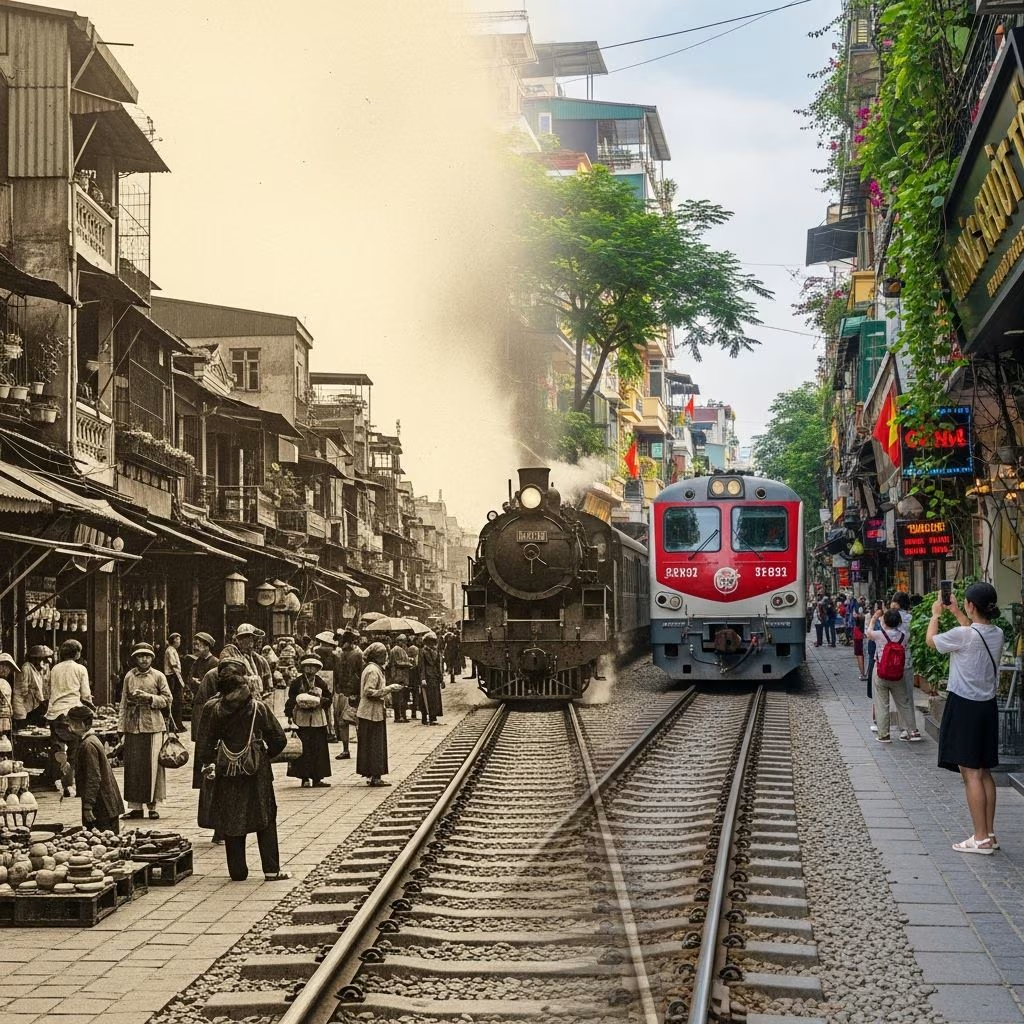 Travel Essentials
Hanoi Train Street has captivated travelers worldwide with its unique spectacle of trains roaring past cafes just inches away. Originally a quiet residential rail line, it exploded in popularity through social media, prompting safety measures and access restrictions by 2026. This guide details its journey, current rules, and practical advice for experiencing it responsibly.
Decades ago, the narrow tracks weaving through Hanoi’s Old Quarter served everyday commuters and locals, with trains passing unremarked amid daily life. Residential buildings flanked the line, and the area remained off most tourists’ radars. The shift began around 2013 when bloggers and photographers highlighted the thrill of sipping coffee as locomotives thundered by at close range.
Social platforms like Instagram amplified this allure, turning a functional railway into a must-see. Cafes sprouted along the tracks, offering elevated views and photo ops. By the late 2010s, crowds swelled, with visitors lining the rails for videos of the approaching trains. This organic buzz created an entire ecosystem of trackside eateries and shops, drawing millions of posts and transforming the neighborhood.
The intersection of Nam De and Tran Phu streets became ground zero for the frenzy, parallel to Phung Hung Street. Trains, operating on a standard schedule, passed multiple times daily, fueling repeat visits. Morning and evening runs drew the biggest throngs, especially at the track’s bend where cafes provided prime vantage points.
However, unchecked growth led to hazards: overcrowding blocked emergency access, litter accumulated, and near-misses with trains increased. Authorities responded with temporary closures, signaling the end of its wild phase.
In late 2019, Hanoi officials gated off sections citing public safety, halting the free-for-all access that defined its peak. Gates locked during non-train hours, and guards enforced rules. The COVID-19 pandemic provided a brief respite, but post-recovery crowds returned, prompting further action.
By March 2025, group guided tours faced a permanent ban due to persistent overcrowding. Individual visitors could still enter via licensed cafes, where purchasing a drink granted escorted access. This curbed mass tourism while preserving the experience for smaller groups. Recent 2026 updates confirm partial openings in the main Old Quarter stretch, with stricter enforcement.
| Timeline | Major Changes |
|---|---|
| Pre-2013 | Local rail line, minimal tourism |
| 2013-2019 | Social media boom, cafe explosion |
| Late 2019 | First full closures for safety |
| March 2025 | Group tour ban implemented |
| 2026 | Regulated access via cafes |
These measures prioritize pedestrian safety, as trains maintain full speed without halting.
Hanoi now features two primary Train Street areas along the same rail line, each with unique vibes. The northern Old Quarter section (Tran Phu to Phung Hung) remains the iconic, bustling hub but requires cafe invitations. The southern stretch near Le Duan Street and Hanoi Railway Station offers freer access and a more relaxed atmosphere.
Both remain free to visit, though supporting cafes sustains the scene. Wheelchair access is feasible on flat paths, but tight spaces limit mobility during peaks.
Trains run reliably but with minor variations; always verify locally upon arrival, as delays occur. Schedules differ by weekday versus weekend for optimal planning.
| Day | Approximate Times |
|---|---|
| Monday-Friday | 8:30 AM, 9:30 AM, 11:50 AM, 3:15 PM, 7:50 PM, 9:15 PM, 9:30 PM, 10:00 PM |
| Saturday-Sunday | 6:00 AM, 7:15 AM, 9:30 AM, 11:50 AM, 3:30 PM, 5:30 PM, 7:30 PM, 7:50 PM, 9:15 PM, 9:30 PM, 10:00 PM |
Mornings or early afternoons suit calmer visits; evenings pack energy but crowds. Allocate 1-2 hours, positioning at track bends or upper cafe levels for best shots. Weekdays beat weekends, and spring (March-April) or autumn (September-November) offer mild weather.
Prioritize safety: stay wallside when trains approach, heed cafe staff, and avoid tracks during passages. No drones or tripods near rails. Children must remain close to buildings.
Nearby stays include Sofitel Legend Metropole (north) or Hanoi La Siesta (south) for convenience.
Beyond the mains, Phung Hung’s murals pair art with rail views. For deeper immersion, consider trackside walks in less-touristy zones. The phenomenon inspired similar spots citywide, blending urban grit with adventure.
Local tours (non-group) provide insider schedules and stories, enhancing authenticity without the old chaos.
Regulations balance tourism with safety, ensuring longevity. As Hanoi modernizes, expect refined access like timed entries or expanded cafe licensing. The street’s spirit—raw energy meeting rail history—persists, evolving for sustainable appeal.
Yes, partially with cafe-based access in the main section and fully open in the south. Group tours are banned.
Approach via licensed cafes in the north or freely in Le Duan south; purchase a drink for escorted entry.
Weekdays evenings (7-10 PM) or mornings; check local schedules as they vary.
No entrance fee, but buy from cafes to support and gain access.
Suitable with supervision; keep kids near walls during passes.
Le Duan Street south for a calmer, authentic vibe.
