

 Travel Essentials
 Travel Essentials

Comprehensive preparation guide covering climate, traffic, cultural heritage, and local experiences for first-time visitors to Vietnam's dynamic capital city.
 Travel Essentials
Hanoi, Vietnam’s vibrant capital, presents a unique blend of ancient traditions and contemporary energy that captivates millions of visitors annually. Before embarking on this transformative journey, understanding the city’s distinctive characteristics, climate patterns, and cultural nuances will significantly enhance your experience and help you navigate this dynamic metropolis with confidence and appreciation.
Hanoi experiences four distinct seasons, each presenting different conditions and challenges for travelers. Unlike popular misconceptions about tropical Vietnam, Hanoi’s weather varies considerably throughout the year, requiring thoughtful packing strategies and activity planning.
The summer months from June through August transform Hanoi into an intensely hot environment, with temperatures regularly exceeding 38°C (100°F). During this period, afternoon thunderstorms frequently develop, adding humidity and occasional flooding to the equation. Visitors during these months should prioritize lightweight, breathable fabrics such as cotton and linen, always wear protective headgear and sunglasses, and apply consistent sunscreen protection. Hydration becomes critical, and scheduling strenuous activities for early morning or evening hours, avoiding the peak heat between 11am and 3pm, will preserve your energy and comfort.
The cooler months offer a more comfortable environment for exploration, though temperatures still remain mild compared to many northern hemisphere locations. Planning your visit during shoulder seasons—spring (March to May) or autumn (September to November)—provides optimal conditions for walking tours and extended outdoor activities. Each season carries distinct advantages, so your activity preferences should inform your travel timing decisions.
Hanoi’s traffic presents one of the most immediately striking aspects of the city. With over five million motorcycles operating within the urban area, the streets pulse with constant motion and apparent chaos. This density of two-wheeled vehicles creates an environment that demands respect, awareness, and adaptive strategies from pedestrians.
Crossing streets requires fundamental mental adjustments. Rather than waiting for traffic to completely clear, experienced visitors move with deliberate, steady pace through the flow of motorcycles and vehicles. Sudden stops or hesitation often prove more dangerous than consistent forward motion. The key principle involves making yourself predictable and visible to drivers who have learned to navigate around pedestrians moving at constant speeds.
An additional consideration involves sidewalk usage. Unlike many Western cities where sidewalks provide refuge from traffic, Hanoi’s sidewalks serve multiple functions beyond pedestrian passage. Motorcycles utilize these spaces for parking, and residents conduct commercial activities and casual socializing on these narrow strips. This reality means pedestrians often find themselves sharing street space with vehicular traffic, requiring continuous environmental awareness. The sidewalk congestion has become such an established practice that it represents normalized urban behavior rather than exceptional circumstances.
The city’s cultural landscape reflects centuries of external influences integrated with deeply rooted Vietnamese identity. French colonial architecture coexists alongside ancient temples and modern developments, creating visual complexity that tells stories of historical transformation. This architectural palimpsest—where different eras overlay one another—distinguishes Hanoi from many other Asian capitals.
Beyond the physical structures, Hanoi maintains approximately 1350 craft villages in surrounding areas, with 337 officially recognized villages specializing in traditional production. These communities continue centuries-old techniques in pottery (Bat Trang), silk weaving (Van Phuc), and conical hat manufacturing (Chuong), preserving knowledge systems that date back generations. This commitment to traditional craftsmanship extends beyond cultural nostalgia; younger generations increasingly pursue formal apprenticeships with master artisans, seeking to reconnect with inherited cultural practices.
Traditional performance arts maintain presence throughout the urban landscape. Water puppetry and ca trù singing performances occur not only in formal theater venues but also on streets within and around the Old Quarter, making these art forms accessible to casual observers rather than confined to controlled cultural institutions.
The Old Quarter represents Hanoi’s historical and cultural epicenter, with continuous trading activities spanning more than eleven centuries. This densely populated neighborhood functions as both tourist destination and genuine residential and commercial hub where daily life unfolds regardless of visitor presence.
The quarter’s street naming system reflects its mercantile heritage. Originally comprising 36 famous streets—a designation dating back more than 200 years—each street historically specialized in particular products. Contemporary examples include Hang Duong (Sugar Street), where confectioners still operate, and Hang Gai (Hemp Street), now featuring textile merchants and backpack retailers. Walking through these narrow lanes reveals active commerce in household appliances, handicrafts, prepared foods, and raw ingredients, creating an immersive market experience.
The architecture showcases distinctive Vietnamese residential design: narrow tube houses that occupy minimal street frontage but extend deep into blocks, creating labyrinthine passages and unexpected courtyards. These structures—often four or five stories tall but only one window wide facing the street—reflect historical property tax systems based on street frontage rather than total area.
Hanoi’s gastronomic reputation extends far beyond casual tourist experiences; the city represents a sophisticated food culture where preparation methods, ingredient selection, and presentation reflect deep historical and familial traditions. Street food vendors often operate from identical locations across decades, with recipes passed through multiple generations of family members.
Phở—the iconic noodle soup featuring broth infused with aromatic spices and tender meat—reaches particular refinement in Hanoi’s street stalls and establishments. Beyond this famous dish, visitors should explore specialized preparations including cha ca (turmeric fish with dill), banh cuon (rolled rice cakes), banh goi (fried dumplings), and bun cha (grilled pork with noodles). The Vietnamese sandwich banh mi, considered by some culinary authorities to represent sandwich excellence globally, originated from French colonial influences adapted through Vietnamese ingredients and techniques.
The dining approach emphasizes exploration and cultural connection rather than sanitization standards common in Western establishments. Many celebrated dishes originate from street vendors and casual eateries rather than formal restaurants, reflecting the democratization of cuisine throughout Vietnamese culture.
Beyond the Old Quarter’s organic exploration, specific sites warrant dedicated visits for cultural understanding and historical context. The Temple of Literature, constructed in 1070 and dedicated to Confucius, functioned as Vietnam’s first national university. Despite considerable foot traffic, visitors find surprising tranquility in shaded courtyards and hidden garden areas where small artisan markets operate beneath trees, offering locally produced artistic works rather than mass-produced souvenirs.
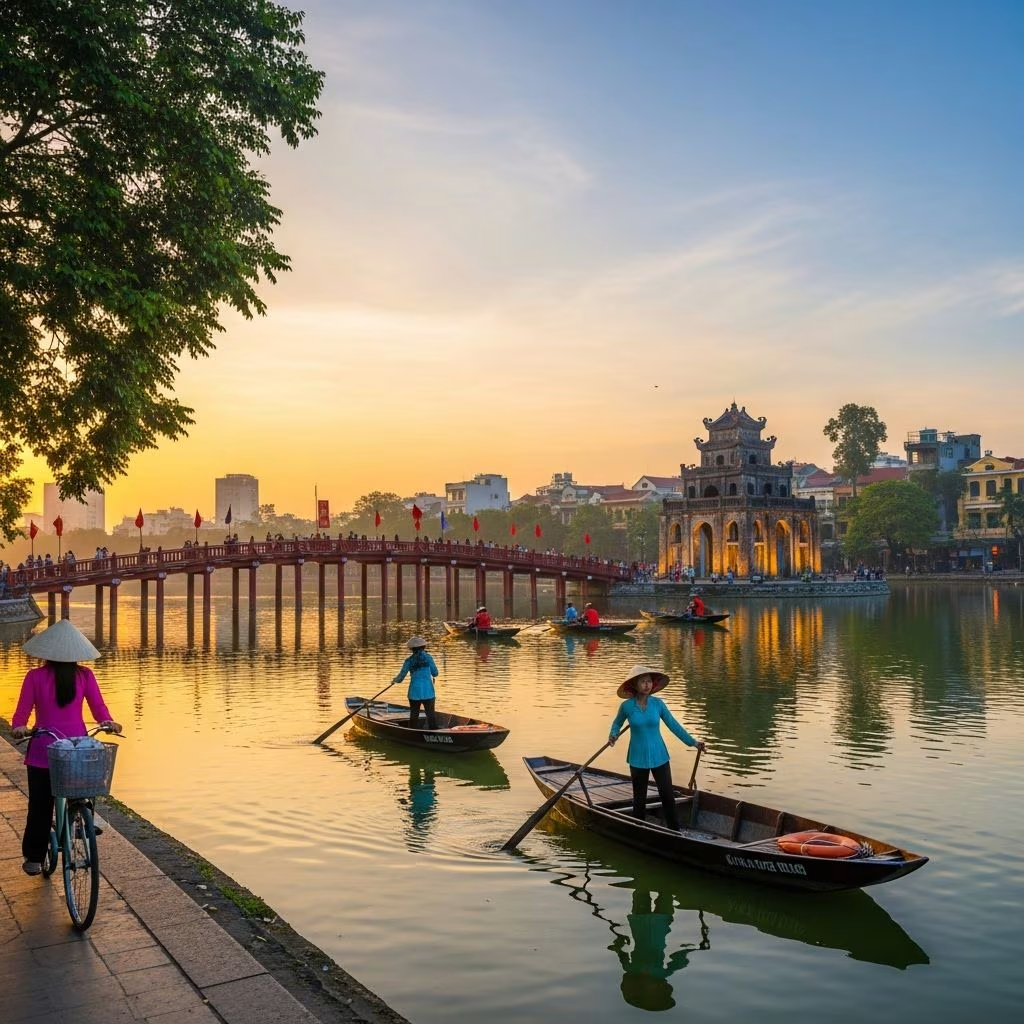
Hoan Kiem Lake provides visual respite and recreational space. The small island at the lake’s center contains Ngoc Son Temple (Temple of Jade Mountain), accessible via the striking red Huc Bridge that becomes particularly atmospheric when illuminated at night. A modest entrance fee (approximately £1 or 30,000 Vietnamese Dong) grants access to the island sanctuary.
Additional significant sites include the Ho Chi Minh Mausoleum complex, St. Joseph’s Cathedral featuring French Gothic architecture, Tran Quoc Pagoda with its riverside location, and Hoa Lo Prison (The Hanoi Hilton), which preserves historical narratives through architectural remains and interpretive displays.
While Hanoi maintains general safety for visitors, petty theft and minor scams concentrate around airports, prominent tourist attractions, and crowded street intersections. Standard precautions—keeping valuables secured, avoiding displays of expensive equipment, maintaining awareness in crowded spaces—provide adequate protection for most travelers. Larger security concerns rarely affect tourists who exercise situational awareness and follow local guidance.
Hanoi’s primary international gateway, Nội Bài International Airport, lies approximately 45 minutes from the Old Quarter, making ground transportation arrangements essential for arrival logistics. Taxi services, ride-sharing applications, and airport shuttle buses provide options with varying cost and convenience profiles. Planning this leg beforehand reduces arrival confusion and expense.
The Old Quarter provides immersive cultural experience but involves continuous sensory input and street-level activity that some visitors find overwhelming. Alternative neighborhoods offer different atmospheres—quieter residential areas, French colonial districts with wider boulevards, or contemporary commercial zones—depending on personal preferences for activity level and cultural intensity.
Wandering without predetermined routes frequently yields the most meaningful discoveries. Narrow alleyways, hidden courtyards, and unexpected architectural details populate the cityscape. Taking time to move slowly through neighborhoods, stopping for meals at casual establishments, and observing daily life patterns reveals dimensions that formal tourism itineraries cannot replicate.
Despite Vietnamese pride in maintaining cultural distinctiveness despite historical foreign influences, visitors should approach traditions with genuine curiosity rather than superficial consumption. This mindset transforms interactions from transactional tourism to cultural exchange. Learning basic Vietnamese phrases, showing interest in artisans’ techniques, and asking permission before photographing people demonstrates respect that creates more authentic connections.
Young Hanoi residents increasingly lead movements preserving ancient scripts, restoring traditional costumes, and reviving historical craft knowledge, often collaborating with foreign visitors interested in genuine cultural transmission. Participating in these efforts—whether through craft workshops, language exchanges, or apprenticeships—enriches your visit while supporting cultural preservation initiatives.
Spring (March to May) and autumn (September to November) offer optimal conditions with moderate temperatures and minimal rainfall. Summer months bring excessive heat and afternoon thunderstorms, while winter can be unexpectedly cool and occasionally damp. Your preferences for crowd levels, specific activities, and weather tolerance should inform timing decisions.
Move with steady, predictable pace through traffic rather than hesitating or stopping suddenly. Make eye contact with drivers when possible. Avoid running or erratic movement patterns. Many experienced visitors find that moving with the traffic flow—rather than against it—provides safer passage than waiting for complete clearance.
Vietnam’s currency is the Vietnamese Dong (VND). ATMs widely accept international cards throughout the city, making currency exchange at arrival unnecessary. Credit cards receive acceptance in formal establishments, but street vendors and casual eateries operate primarily on cash basis. Carrying moderate amounts of cash alongside ATM access provides optimal flexibility.
English proficiency concentrates among tourism industry workers and younger urban residents. Older generations and vendors in residential neighborhoods typically speak limited English. Learning basic phrases and downloading offline translation applications significantly reduces communication challenges.
Hanoi rewards visitors who approach the city with flexibility, patience, and genuine curiosity about Vietnamese culture and contemporary urban life. The combination of historical depth, culinary sophistication, and chaotic dynamism creates an environment unlike many global destinations. By understanding climate realities, traffic navigation strategies, cultural preservation efforts, and neighborhood characteristics before arrival, you position yourself to engage meaningfully with this remarkable capital city. The transformation that many visitors experience—from initial overwhelm to genuine affection for Hanoi’s particular combination of tradition and modernity—frequently stems from this informed, respectful approach to cultural engagement and urban exploration.
