

 Travel Essentials
 Travel Essentials

Explore the contrasts between Vietnam's capital and its economic hub. Learn which city suits your travel style, from cultural immersion to modern experiences.
 Travel Essentials
Vietnam’s two largest metropolitan areas represent distinctly different expressions of the nation’s character. The northern capital and the southern economic powerhouse each offer compelling reasons to visit, yet cater to fundamentally different travel preferences and interests. Understanding their unique qualities helps travelers make informed decisions about where to invest their time and resources.
Vietnam’s urban geography presents an intriguing duality. The nation’s capital in the north and Ho Chi Minh City in the south form the primary anchors of Vietnamese tourism and commerce. While official population figures suggest Ho Chi Minh City’s 9 million inhabitants nearly double those of the northern capital at approximately 5 million, both cities function as sprawling metropolitan regions extending far beyond their administrative centers. This distinction matters for travelers, as the actual experience of navigating each city varies considerably depending on which neighborhoods you explore.
The distance between these two cities—roughly 1,200 kilometers—means that visiting both requires intentional planning. Most travelers choose one as their primary base or split their time between them. International flight connectivity differs markedly, with Ho Chi Minh City’s larger airport typically offering more direct international routes and frequently cheaper fares from abroad. However, once you’ve arrived in Vietnam, traveling between cities remains affordable and straightforward.
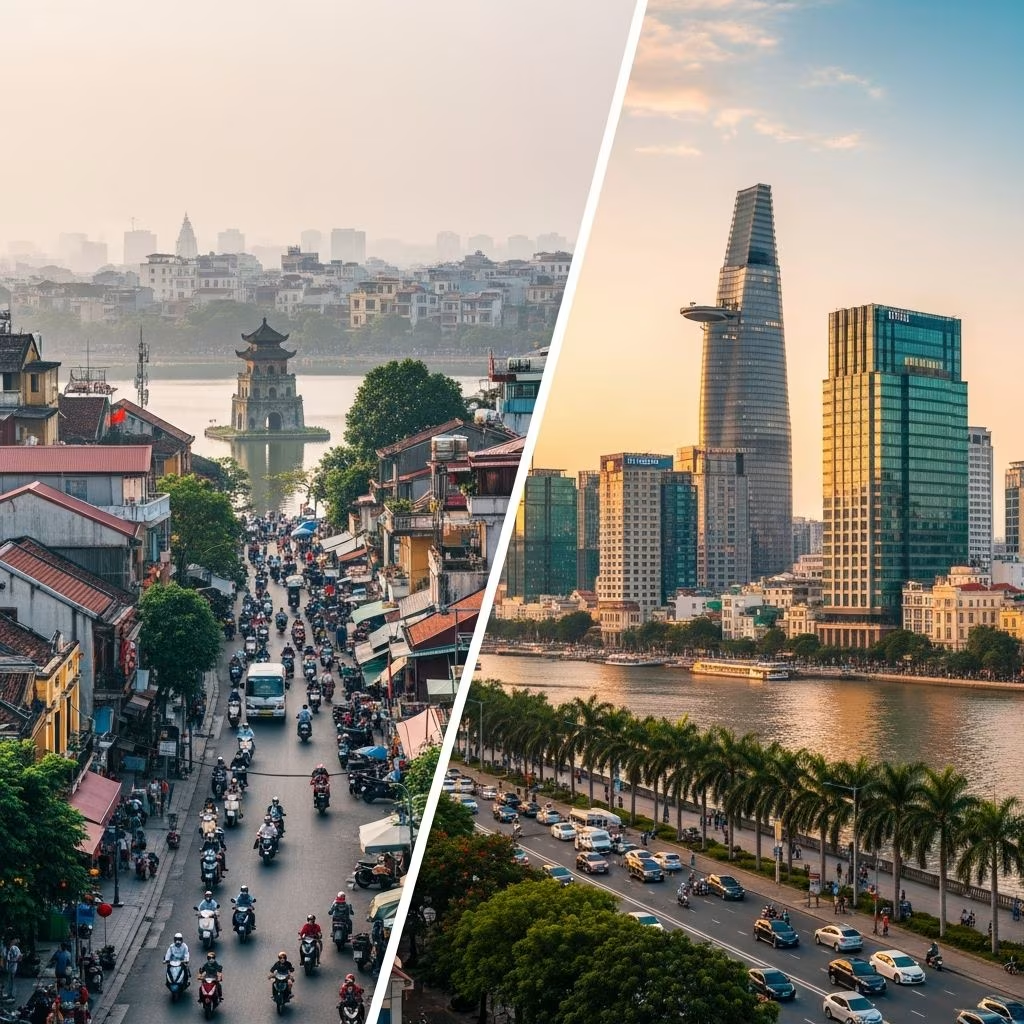
Perhaps the most immediately striking difference between these cities involves their fundamental pace and character. The northern capital embodies a slower, more introspective rhythm despite its enormous size. Tree-lined streets, ancient temples, and traditional shophouses create an atmosphere where history feels tangible at every corner. Visitors frequently describe wandering through the Old Quarter as stepping back in time—narrow lanes wind between centuries-old buildings housing artisan workshops, family-run restaurants, and textile vendors.
Ho Chi Minh City, by contrast, projects an unmistakably contemporary energy. Modern skyscrapers punctuate the skyline, international brand stores occupy prime real estate, and a palpable sense of rapid development permeates the city. The streets feel wider, the traffic more organized (relatively speaking), and the overall atmosphere decidedly more cosmopolitan. Western influences are more visible here—international cuisine, upscale shopping malls, and modern amenities cater to both domestic and foreign visitors accustomed to contemporary urban standards.
Neither atmosphere is inherently superior; they appeal to different traveler temperaments. Those seeking cultural immersion and historical context gravitate toward the northern capital’s contemplative character. Travelers craving modern conveniences, contemporary dining experiences, and a sense of urban dynamism prefer the southern metropolis.
Vietnam’s capital holds the distinction of being the nation’s cultural repository. The Old Quarter’s 36 historic streets represent one of Southeast Asia’s most intact traditional urban neighborhoods. Beyond the Old Quarter itself, significant cultural landmarks punctuate the city. The Temple of Literature housed Vietnam’s first national university, while iconic Buddhist structures like the One Pillar Pagoda represent centuries of spiritual heritage. Hoan Kiem Lake, translating to “The Lake of the Restored Sword,” serves as the city’s heart—a place where locals gather for tai chi at dawn and evening strolls remain a cherished tradition.
Ho Chi Minh City’s historical narrative follows a different trajectory, centered on Vietnam’s modern struggle and contemporary transformation. The War Remnants Museum provides unflinching documentation of the Vietnam War from a Vietnamese perspective, offering insights rarely encountered in Western educational contexts. The Reunification Palace stands as a powerful symbol of Vietnam’s historical turning point. For those interested in military history, the Cu Chi Tunnels present an extraordinary opportunity to explore the underground networks utilized during wartime conflicts.
The distinction matters significantly: the northern capital emphasizes ancient, continuous cultural traditions spanning centuries, while the southern city focuses on recent historical events and their ongoing reverberations. Both narratives prove essential for comprehensive understanding of Vietnam.
Vietnamese cuisine differs subtly between north and south, and each city showcases these regional variations distinctly. Northern culinary traditions tend toward subtlety and sophistication, with flavors building in complexity rather than dominating the palate immediately. Street food vendors in the capital’s Old Quarter specialize in traditional dishes passed down through generations, often from family recipes spanning decades.
Ho Chi Minh City’s food scene reflects its role as the economic center and cosmopolitan hub. Fine-dining restaurants featuring international cuisine sit alongside traditional Vietnamese establishments. Rooftop bars serve creative cocktails with panoramic city views, offering an entirely different dining experience than what the capital typically provides. The southern city caters to diverse culinary expectations—from upscale fusion restaurants to humble street stalls—with generally more options at every price point and cuisine type.
Both cities excel at street food, though the northern capital arguably maintains stronger connections to traditional preparation methods and time-honored recipes. If culinary authenticity represents your priority, the capital edges ahead. If you prefer variety and contemporary dining innovation, Ho Chi Minh City delivers more options.
The shopping experience in each city reflects broader urban differences. The northern capital’s commercial landscape centers on traditional markets, particularly in the Old Quarter. Vendors sell textiles, handicrafts, souvenirs, and artisan goods from shophouses that have occupied the same locations for generations. Haggling occurs, though vendors expect less negotiation than in some other Southeast Asian markets. The shopping experience feels intimate and tied to authentic Vietnamese commerce rather than tourist-oriented transactions.
Ho Chi Minh City presents a dramatically different commercial environment. Modern shopping malls feature international brands alongside domestic retailers. Ben Thanh Market, while traditional in concept, functions more as a tourist-oriented bazaar where vendors expect and welcome haggling for everything from souvenirs to clothing. Higher-end shopping districts offer contemporary retail experiences comparable to modern cities worldwide. For those seeking Western convenience and familiar brand names, Ho Chi Minh City provides substantially more options.
| Shopping Aspect | Northern Capital | Ho Chi Minh City |
|---|---|---|
| Market Style | Traditional, family-operated | Tourist-oriented, modern malls |
| Haggling Culture | Limited negotiation expected | Extensive haggling encouraged |
| Authenticity | Higher traditional Vietnamese goods | Mixed traditional and international |
| Modern Retail | Limited high-end shopping | Extensive contemporary retailers |
| Price Range | Budget to mid-range | Budget to luxury |
The entertainment scenes in these cities cater to distinctly different preferences. The northern capital’s nightlife emphasizes intimate, low-key venues. Speakeasies and traditional beer halls where locals gather predominate over large-scale clubs. Evening activities often center on cultural experiences—temple visits at sunset, cyclo rides through historic streets, or lakeside strolls becoming priorities over dancing and clubbing.
Ho Chi Minh City’s nightlife scene reflects its cosmopolitan character. Rooftop bars with panoramic city views dominate the entertainment landscape. Creative cocktails, live music venues, and late-night clubs cater to those seeking vibrant social scenes. The nightlife operates on a decidedly larger scale, with more international tourists, expats, and domestic visitors seeking contemporary entertainment options.
The northern capital benefits from proximity to extraordinary natural sites. Halong Bay, one of Southeast Asia’s most celebrated destinations, lies within reasonable traveling distance. Ninh Binh’s dramatic karst landscapes present another accessible day trip. Within the city itself, Hoan Kiem Lake provides serene natural beauty amidst urban density. The surrounding countryside remains relatively accessible for those seeking green spaces and natural experiences.
Ho Chi Minh City’s natural advantages center on the Mekong Delta—accessible via short trips south. This region of lush rice paddies, floating markets, and waterways offers distinctive natural and cultural experiences unavailable from the northern capital. Within the city, Tao Dan Park provides green respite, though natural beauty remains less abundant than in the north’s immediate surroundings.
Several practical factors influence city selection. International flight accessibility favors Ho Chi Minh City, where larger airports typically offer more direct routes and competitive fares. Once in Vietnam, domestic travel between cities remains affordable through flights, buses, or trains. Accommodation costs in both cities remain extraordinarily reasonable by international standards, though the northern capital generally offers slightly lower prices.
Tourist infrastructure in Ho Chi Minh City caters to a broader range of expectations—more English speakers, more Western-style accommodations, and more restaurants catering to international dietary preferences. The northern capital, while increasingly tourist-friendly, maintains fewer concessions to international convenience. This represents either an advantage (for cultural immersion) or disadvantage (for those seeking familiar comforts), depending on traveler preferences.
Consider the northern capital if your priorities include cultural immersion, historical exploration, traditional Vietnamese experiences, intimate atmosphere, and authentic local life. This destination suits travelers with flexible schedules who embrace slower-paced exploration and appreciate historical depth.
Choose Ho Chi Minh City if you prefer modern amenities, diverse dining options, contemporary entertainment, convenient infrastructure, or if your visit follows international business travel. This city works well for shorter visits requiring efficiency and familiarity.
Ideally, both cities deserve visits. Many travelers spend 3-4 days in each, gaining comprehensive exposure to Vietnam’s diversity. However, if time constraints force difficult choices, matching the city to your travel philosophy ensures greater satisfaction.
Both cities maintain comparable safety records for tourists. Standard urban precautions apply—avoiding isolated areas at night and securing valuables—but petty crime targeting travelers remains minimal in established tourist areas. Both provide secure, welcoming environments for responsible travelers.
Three to four days per city allows reasonable exploration without rushing. The northern capital benefits from slower-paced wandering and multiple day trips, while Ho Chi Minh City can be experienced more efficiently in 3 days if you prioritize major attractions.
Absolutely. The cities connect via affordable domestic flights (roughly 2 hours), trains, or buses. A 10-14 day itinerary accommodating both cities comfortably balances exploration with travel time.
Both excel in different ways. The northern capital offers more authentic, traditional cuisine reflecting regional specialties. Ho Chi Minh City provides greater variety—mixing traditional Vietnamese, international, and fusion options. Food quality in both remains exceptional and affordable.
October through April provides the most comfortable weather in both cities. Summer months bring heat and humidity. Northern winter months (December-February) occasionally require light jackets. Both cities operate year-round, but cooler seasons offer superior comfort.
Vietnam’s two metropolitan centers represent complementary rather than competing destinations. Each embodies distinct aspects of Vietnamese character—one rooted in enduring traditions, the other embracing contemporary transformation. Rather than viewing them as an either-or proposition, travelers benefit most from experiencing both, gaining fuller understanding of this complex, dynamic nation. Your personal travel preferences ultimately determine which city deserves priority, but ideally both merit inclusion in meaningful Vietnamese itineraries.
