

 Travel Essentials
 Travel Essentials

Explore the origins, cultural impact, and worldwide rise of Havaianas, Brazil's iconic flip-flops that unite people from Rio beaches to international fashion scenes.
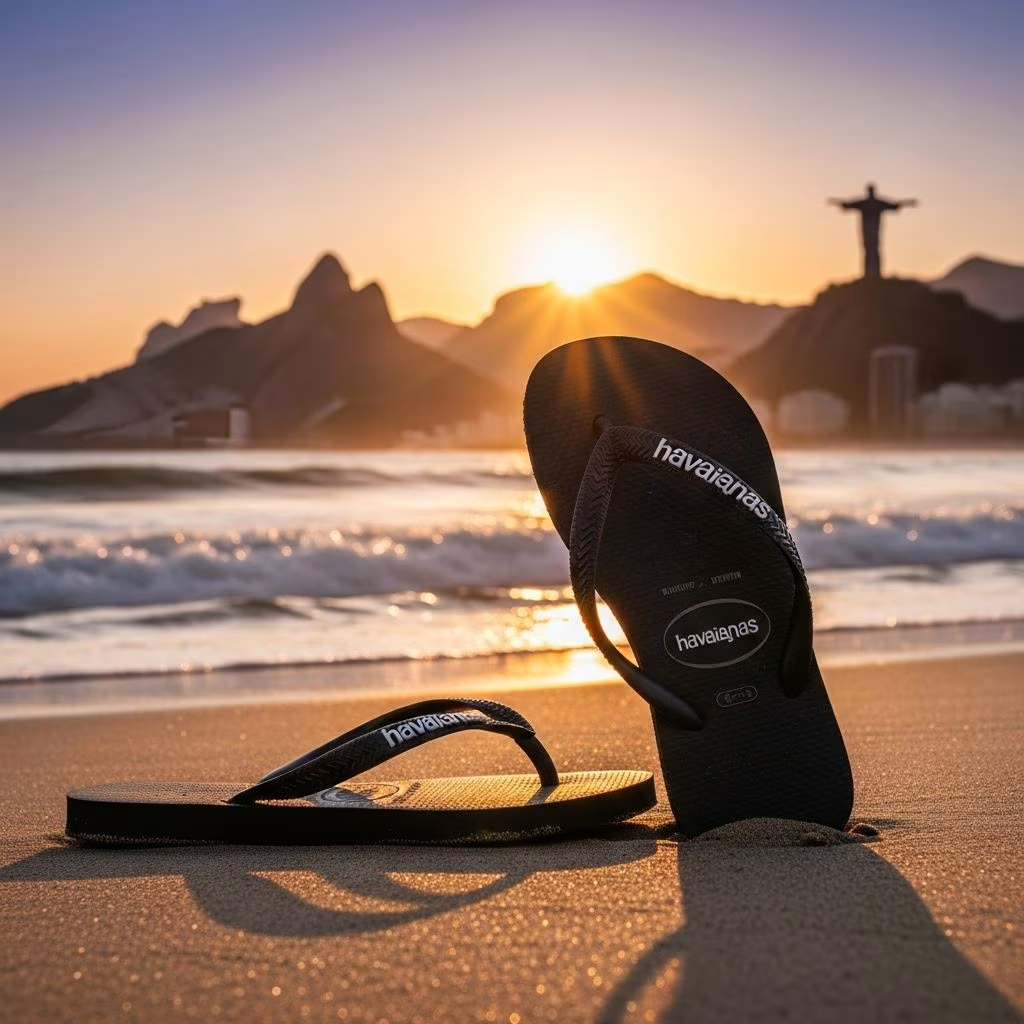 Travel Essentials
These unassuming rubber sandals have transcended their utilitarian roots to become a cornerstone of Brazilian identity, spotted on sun-kissed beaches, bustling city streets, and even high-fashion runways worldwide. Havaianas represent more than footwear; they encapsulate the carefree ethos, creativity, and communal spirit of Brazil.
In the early 1960s, Brazil’s footwear industry sought affordable, durable options for the masses. Drawing from Japanese zori sandals—traditional open-toed designs with stabilizing straps and straw soles—local manufacturers adapted the concept using readily available rubber. This pivot created the first Havaianas in 1962, named after the exotic allure of Hawaii to evoke paradise and leisure.
Produced by Alpargatas S.A., a prominent Brazilian textiles firm, the initial ‘Tradi’ model featured a white sole and blue straps, mirroring Brazil’s national flag colors subconsciously. Affordable at mere cents per pair, they flooded markets via street vendors driving vans across the country. Within years, production ramped up dramatically, cementing their place in everyday Brazilian life.
The timing was perfect amid Brazil’s mid-20th-century economic growth and expanding middle class. These sandals offered practicality in a tropical climate—resistant to water, sand, and heat—while symbolizing accessibility for all socioeconomic layers.
In a nation marked by stark social divides, Havaianas serve as a rare equalizer. From favela residents to affluent urbanites, everyone slips into these flip-flops. Their ubiquity fosters a sense of shared identity, embodying Brazil’s ‘jeitinho’—the resourceful, laid-back approach to life.
Beaches like Copacabana in Rio de Janeiro or the promenades of Florianópolis teem with colorful Havaianas, blending into the vibrant tapestry of street life, festivals, and daily commutes. They appear at samba parties, soccer matches, and family barbecues, underscoring Brazil’s love for communal joy and physical ease.
While the original white-and-blue remains iconic, Havaianas has evolved into a design powerhouse. Post-1990s, vibrant hues, patterns, and collaborations expanded the lineup, transforming them from ‘poor man’s shoes’ to fashion statements.
Today, collections feature glitter, metallic finishes, printed motifs inspired by Brazilian fauna, flora, and landmarks—like the Amazon rainforest or Christ the Redeemer. Limited editions tie into cultural moments, such as soccer-themed prints or artist partnerships.
| Era | Key Designs | Cultural Tie-In |
|---|---|---|
| 1960s-1980s | White sole, blue straps (Tradi) | Everyday affordability, national colors |
| 1990s | Flag-strapped models | 1998 World Cup fervor |
| 2000s-Present | Multicolor, themed prints, luxury collabs | Fashion weeks, celebrity endorsements |
Soccer icons like Ronaldo and Ronaldinho boosted visibility, with slogans like ‘Trazemos o Brasil no peito / Peito do pé’ (We carry Brazil in our chest / The instep) linking footwear to national passion.
By the 1990s, exports surged, fueled by Brazil’s 1998 World Cup near-victory and flag-adorned editions that flew off shelves internationally. What began as domestic dominance—over 100 million pairs annually—morphed into a billion-pair milestone by the 2000s.
Europeans embraced them for summer vibes, Americans for casual chic, and Asians for tropical utility. Fashion houses featured them in Paris shows, while tourists returned home as brand evangelists. Havaianas now symbolize Brazil’s exportable charm: resilience from humble origins, infused with joy and style.
Sustainability efforts, like recycled rubber initiatives, align with global trends, supporting local communities and reinforcing ethical appeal.
Their success stems from layered appeal. Functionally superior—lightweight, flexible, odor-resistant—they excel in heat. Emotionally, they evoke Brazil’s ‘garota de Ipanema’ sensuality and soccer-fueled unity. As a social leveler, they bridge classes, projecting approachability.
Visitors spot them everywhere: vendors hawk pairs at R$20 (~$4 USD) in markets, flagship stores dazzle in São Paulo’s Avenida Paulista. Customize yours at pop-ups or hunt vintage classics in beach towns.
Top Spots:
Pro Tip: Size up for swelling in heat; they’re unisex and forgiving.
Havaianas commits to eco-materials, recycling programs, and community upliftment, mirroring Brazil’s environmental stewardship ethos. Future collections may integrate tech like antimicrobial soles, but the core—simple, joyful rubber—endures.
As Brazil’s economy grows, so does Havaianas’ footprint, blending tradition with modernity.
Japanese zori sandals, adapted with rubber soles for Brazil’s needs.
No, they’re versatile for streets, homes, and casual outings across climates.
They symbolize unity, national pride, and the carefree ‘Brazilian way of life’.
Official stores, major retailers, or online via Alpargatas—avoid fakes.
The classic Tradi, with flag editions close behind from World Cup fame.
