

 Travel Essentials
 Travel Essentials

Discover Havana's rich sports heritage, from baseball's iconic role to emerging athletic pursuits, and experience the city's competitive spirit firsthand.
 Travel Essentials
Havana stands as one of the Caribbean’s most dynamic sporting destinations, where athletics permeates daily life and serves as a cornerstone of the city’s identity. The relationship between sports and Cuban society runs extraordinarily deep, extending far beyond casual recreation into the fabric of cultural expression, national pride, and community engagement. This sporting culture reflects centuries of historical development, from colonial influences to revolutionary transformation, creating a unique athletic landscape that distinguishes Havana from other Caribbean metropolises.
The city’s sporting character emerged through waves of cultural exchange, economic development, and political evolution. Understanding contemporary athletic pursuits in Havana requires recognizing how historical forces shaped modern sporting infrastructure and community participation patterns. Sports in the capital represent not merely physical competition but rather a multifaceted expression of Cuban values, social organization, and international standing.
Baseball established itself as Cuba’s dominant sport during the mid-19th century, following introduction by American influences. The first documented organized baseball competition in Cuba occurred on December 27, 1874, between teams representing Matanzas and Havana, establishing the foundation for what would become the nation’s most beloved athletic pursuit. The Havana Baseball Club’s formal organization in 1878 marked an institutional milestone, transforming baseball from informal recreation into organized competition. This early sporting infrastructure created pathways for athletic development that persisted through subsequent decades of political and social transformation.
Beyond baseball, Cuba’s sporting traditions encompassed diverse athletic pursuits reflecting social stratification. Elite classes participated in activities such as sailing, equestrianism, hunting, tennis, and fencing, reserving these pursuits for wealthy populations of Spanish descent. Conversely, boxing gained substantial popularity among working-class and urban populations, particularly among individuals of African descent, becoming an accessible avenue for athletic participation across socioeconomic boundaries. These divergent sporting traditions illustrated broader patterns of social organization before revolutionary changes restructured Cuban society and athletics.
The 1959 revolution fundamentally restructured Cuba’s relationship with athletics, redirecting sports from commercialized entertainment toward state-sponsored development and international competition. Castro’s revolutionary government, recognizing sports’ potential for asserting national sovereignty and demonstrating socialist achievement, banned professional sports while simultaneously establishing comprehensive athletic programs accessible to all citizens. This strategic reorientation transformed how Havana residents encountered athletic competition, creating decentralized participation structures distinct from earlier professional models.
The Cuban Baseball Series, inaugurated in 1960 as an amateur competition, replaced the earlier professional Cuban League and became the nation’s most prominent sporting spectacle. Unlike its professional predecessor, this reorganized competition emphasized grassroots participation and provincial representation. The league expanded from four original teams to sixteen teams representing provinces and municipalities throughout Cuba, with Havana’s Industriales emerging as the competition’s most successful franchise, accumulating twelve championships through decades of competition. This structural transformation democratized baseball access while maintaining competitive excellence.
Havana’s sporting infrastructure reflects decades of prioritization emphasizing accessibility and community participation. The city contains specialized facilities dedicated to diverse athletic pursuits, though certain constraints inherent to urban development have shaped sporting geography. Baseball fields remain relatively concentrated in surrounding regions rather than central urban areas, reflecting land availability patterns and historical development priorities. Consequently, baseball players frequently originate from more rural areas surrounding Havana, traveling into the city for competitions and training opportunities.
University of Havana athletic programs demonstrate how educational institutions facilitate sporting engagement among younger populations. The university’s basketball team, gymnastics program, karate instruction, and chess competition provide diverse athletic pathways for student athletes. Notably, the university maintains no baseball team despite baseball’s cultural prominence, illustrating how spatial constraints in densely populated urban environments require alternative athletic arrangements and creative accommodation of sporting traditions.
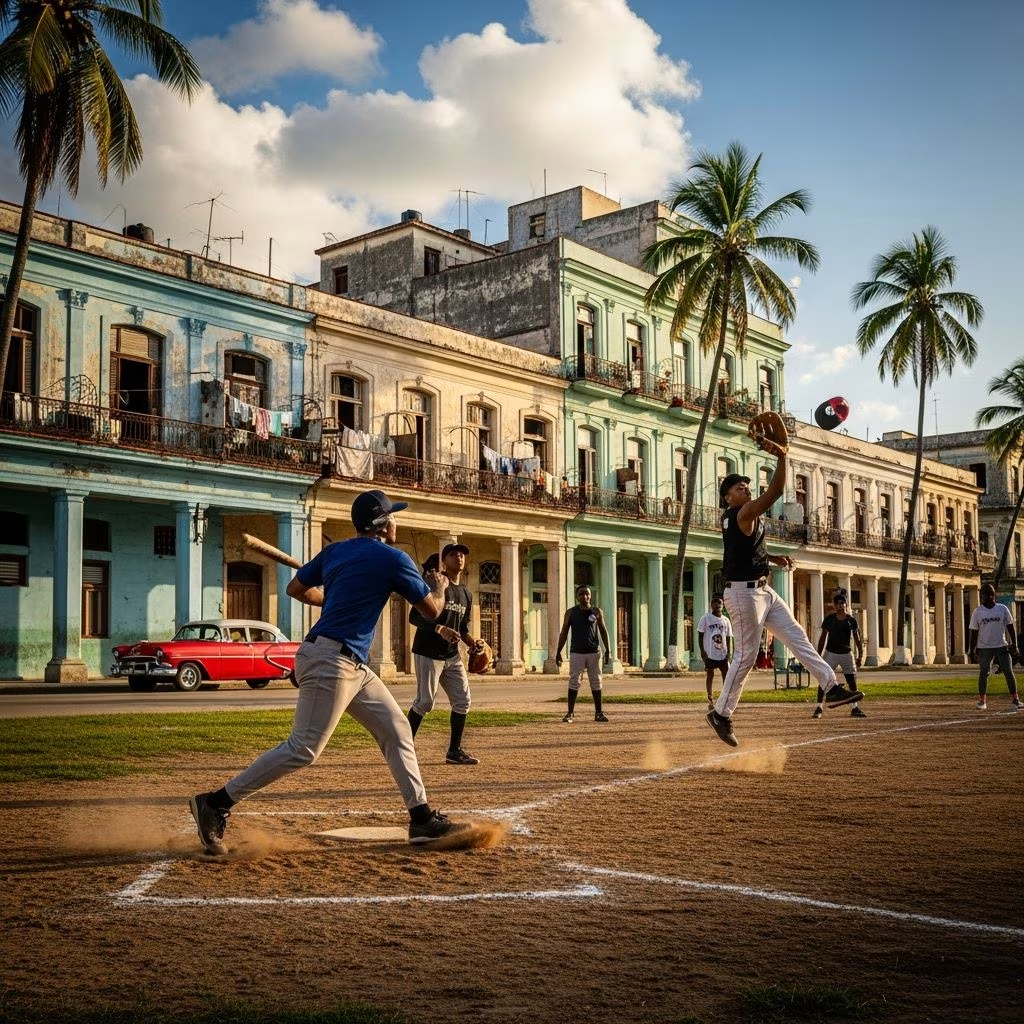
Beyond institutionalized athletic structures, Havana’s residents engage in spontaneous sporting activities adapted to urban environments. Children frequently claim residential streets as improvised playing spaces, creating informal competitions that circumvent limitations of formal athletic infrastructure. These grassroots sporting activities represent authentic expressions of athletic enthusiasm unconstrained by official programming or facility access requirements. Urban youngsters develop sporting skills through unstructured play, establishing fundamental athletic capabilities before potential advancement toward formal competitive participation.
This informal sporting culture demonstrates resilience and adaptability characteristic of Caribbean urban communities. When structured facilities remain inaccessible or geographically distant, residents create alternative spaces for athletic expression. The resulting urban palimpsest of play reflects constant negotiation between adult concerns regarding space utilization and children’s fundamental desires for movement, competition, and recreational enjoyment. Such informal sporting landscapes constitute essential components of Havana’s overall athletic culture despite existing outside official institutional frameworks.
No sporting endeavor commands greater emotional investment or cultural importance within Havana than baseball. The sport’s integration into Cuban consciousness occurred through progressive processes beginning in the nineteenth century and accelerating through the twentieth century. Baseball represented a vehicle for social mobility, cultural expression, and national identity formation, attracting participation across demographic boundaries in ways that few other activities could achieve.
The Cuban Baseball League demonstrated pioneering racial progressivism by accepting Afro-descendant players beginning in the early twentieth century, decades before American professional baseball confronted similar integration imperatives. This early inclusivity created pathways for athletic advancement independent of racial classification, distinguishing Cuban baseball from segregated American sporting traditions. Such progressive policies reflected broader Cuban social dynamics while simultaneously establishing baseball as a genuinely democratic sporting pursuit accessible regardless of ethnic background.
Contemporary baseball enthusiasm in Havana remains extraordinarily intense, with provincial rivalries generating passionate fan engagement and sustained competitive excellence. Western and eastern teams generate particularly fierce competitive encounters, with Havana’s Industriales maintaining dominant performance records throughout decades of competition. These rivalries extend beyond sporting outcomes, reflecting regional identities and provincial pride expressed through athletic competition.
While baseball commands primary sporting attention, basketball has established itself as a meaningful competitive pursuit within Havana’s athletic landscape. University basketball programs attract dedicated athletes and generate appreciative audiences among student populations and general enthusiasts. The sport’s development reflects basketball’s global expansion and Cuba’s commitment to fostering excellence across diverse athletic disciplines beyond traditionally dominant pursuits.
Emerging sporting interests including gymnastics, karate, and chess competitions indicate Cuba’s systematic approach toward athletic development spanning multiple disciplines. This diversified sporting infrastructure reflects socialist sports philosophy emphasizing comprehensive athletic development rather than specialization within single pursuits. Such diversification creates opportunities for athletes with varied talents and interests, maximizing participation possibilities across broader population segments.
Cuba’s development as an international sporting power represented a deliberate strategic objective pursued through systematic athletic investment and organizational prioritization. Before revolutionary transformation, Cuba possessed minimal international sporting prominence or Olympic recognition. The revolutionary government established athletics as a mechanism for demonstrating socialist system superiority and asserting national independence on the global stage. This strategic orientation transformed sporting achievement into expressions of national sovereignty and ideological success.
Cuban athletes achieved remarkable international prominence through this systematic approach, with the nation capturing bronze medals at Olympic competitions and accumulating thousands of medals through Caribbean Games and Pan-American competitions. Such achievements represented far more than individual athletic accomplishment; they symbolized successful implementation of socialist sports philosophy and demonstrated Cuba’s capacity for excellence despite international isolation and resource constraints. Sporting success constituted evidence of Cuban capability and national determination visible to worldwide audiences.
Visitors to Havana can engage with the city’s athletic culture through multiple pathways accommodating diverse interests and travel preferences:
Cuba’s revolutionary sports transformation established athletics as genuinely democratic pursuits accessible regardless of socioeconomic status or family background. Athletes demonstrating promise through school-based programs received selection for high-level training, equipment, and professional coaching, creating genuine meritocratic advancement pathways. This systematic approach eliminated historical patterns wherein sporting participation remained restricted to wealthy populations capable of financing athletic training and competition fees.
The resulting racial equality within Cuban athletics represented significant advancement relative to pre-revolutionary conditions when darker-skinned Cubans and ethnic minorities faced severe exploitation if permitted sporting participation under exploitative contractual arrangements. Socialist sports reorganization deliberately eliminated such discriminatory patterns, establishing athletics as venues for authentic equal opportunity and achievement recognition based purely upon capability.
Contemporary Havana sports culture confronts ongoing challenges related to infrastructure maintenance, economic constraints, and competing demands upon limited urban space. Facility availability remains somewhat restricted in densely populated urban areas where land scarcity necessitates difficult prioritization decisions affecting sporting infrastructure development. Such constraints shape athlete development patterns and recreational participation possibilities, requiring creative adaptations and alternative arrangements accommodating sporting interests within existing environmental limitations.
Havana’s athletic culture extends far beyond formal competitions and official programming. The city breathes sports enthusiasm through casual street conversations, passionate fan discussions, and spontaneous recreational activity visible throughout neighborhoods. Understanding Havana requires recognizing how athletic pursuits permeate daily existence, shaping social interactions and community identity formation. Whether attending professional competitions, observing informal recreation, or conversing with local enthusiasts, visitors encounter authentic expressions of Havana’s enduring commitment toward athletics as central components of cultural expression and community life.
The Cuban Baseball Series follows seasonal scheduling patterns, generally commencing in November and extending through April, accommodating Cuba’s tropical climate and agricultural calendars. Competition structures and specific scheduling details may vary seasonally, so prospective visitors should verify current competition dates before planning trips.
Yes, international visitors can typically attend Cuban Baseball Series matches, though specific regulations and ticketing procedures may vary. Advance research regarding current policies and ticket availability proves essential before planning attendance.
Historical stadiums, museums celebrating athletic heritage, and contemporary competition venues welcome visitors. El Palmar de Junco Stadium and dedicated baseball museums provide comprehensive historical context enriching sporting tourism experiences.
Cuban athletics emphasize grassroots accessibility and systematic development across diverse populations, contrasting with historically commercialized American sports traditions. Cuba’s revolutionary sports reorganization eliminated professional sporting structures while establishing meritocratic advancement pathways independent of socioeconomic status or family resources.
