

 Travel Essentials
 Travel Essentials

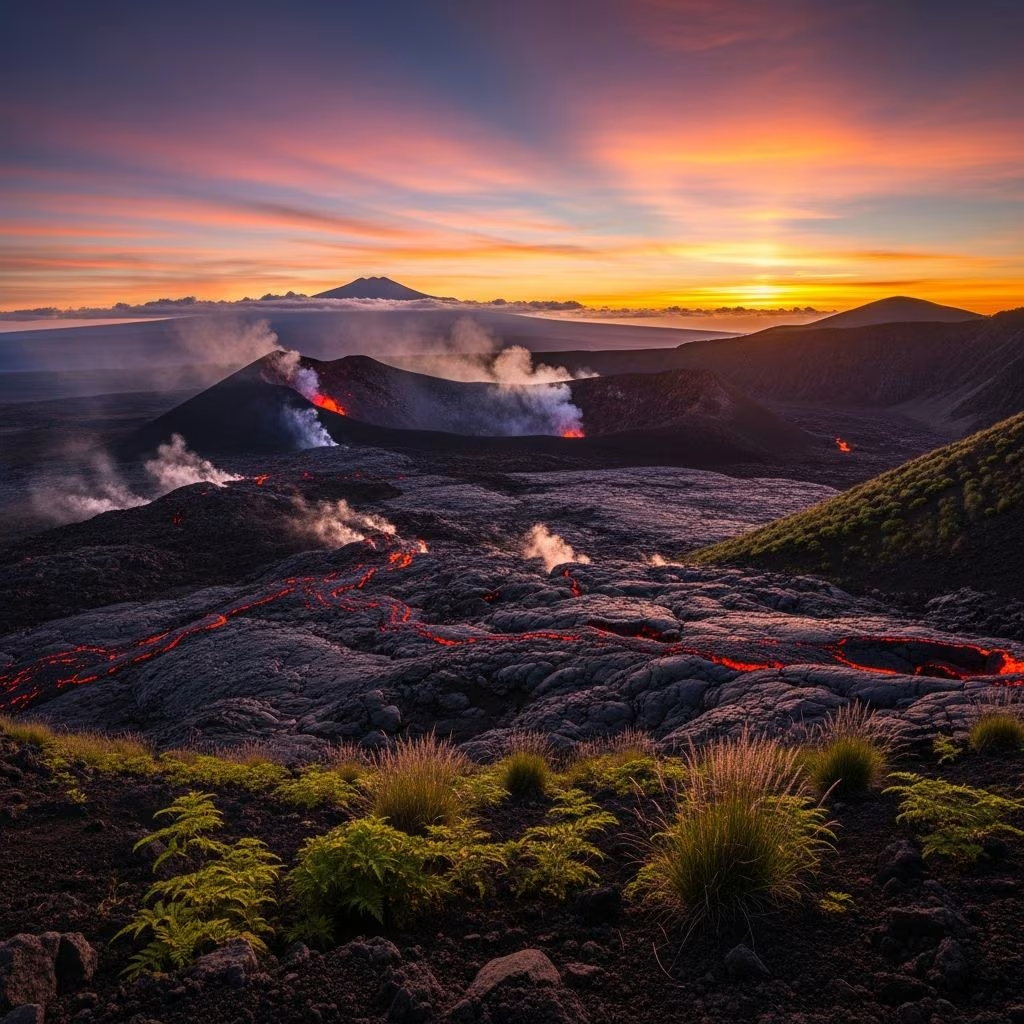
Explore Hawaiʻi Volcanoes National Park: home to active volcanoes Kīlauea and Mauna Loa, UNESCO site with stunning hikes, lava tubes, and Hawaiian heritage. Essential visitor tips included.
 Travel Essentials
Home to two of the world’s most dynamic volcanoes, **Hawaiʻi Volcanoes National Park** offers an unparalleled glimpse into Earth’s fiery core. Spanning 505 square miles on the Big Island of Hawaiʻi, this UNESCO World Heritage Site showcases ongoing geological drama alongside lush ecosystems and deep cultural roots.
At the heart of the park lie **Kīlauea** and **Mauna Loa**, shield volcanoes that define the Hawaiian Islands’ formation. Kīlauea, one of the most active volcanoes globally, sits at a lower elevation with its summit caldera, Halemaʻumaʻu, revered in Hawaiian lore as the home of the volcano goddess Pele. Recent activity includes the 2018 east rift zone eruptions, which opened fissures, released lava flows, and produced ash plumes up to 30,000 feet high, reshaping landscapes and neighborhoods.
Mauna Loa, the largest volcano on Earth by volume, towers from the ocean floor to 13,680 feet above sea level. Its massive shield shape results from fluid basaltic lava flows over millennia. The volcano’s summit caldera measures about 2 by 3 miles and reaches 600 feet deep, with eruptions documented since 1843—over three dozen in total. The most recent in 2022 followed seismic swarms, underscoring its intermittent power.
These volcanoes illustrate 70 million years of the Hawaiian Island-Emperor Seamount chain’s volcanism, where molten lava builds land from the sea.
Beyond barren lava fields, the park hosts seven ecological zones: seacoast, lowland forest, mid-elevation woodland, rainforest, upland forest, subalpine, and alpine. These range from primeval rainforests with giant ferns to stark alpine deserts, supporting endangered species like the nēnē (Hawaiian goose) and Hawaii honeycreeper.
Lava flows create fertile ground for pioneering life. Plants and animals arrive via wind, water, or birds, adapting in isolation. Polynesian and European arrivals introduced invasives, challenging native flora and fauna. Park efforts include feral animal fencing, pig removal, and weed control to restore habitats.
Visitors can witness live geology at spots like steam vents, petroglyph fields, and ancient lava tubes. Chain of Craters Road descends 19 miles from Kīlauea’s rim to the ocean, crossing recent lava flows where molten rock once met the sea.
| Attraction | Description | Highlights |
|---|---|---|
| Halemaʻumaʻu Crater | Kīlauea’s fiery heart | Sacred site, glowing lava lake views (when active) |
| Thurston Lava Tube (Nāhuku) | Walkable underground passage | Fern-draped entrance, rainforest surroundings |
| Mauna Loa Summit | High-altitude caldera | Cabin access, panoramic vistas |
| Puʻu Loa Petroglyphs | Ancient Hawaiian carvings | 1,000+ rock etchings |
Steam vents at Sulphur Banks release geothermal gases, coloring rocks in vibrant yellows.
Trails cater to beginners and experts, from paved paths to multi-day treks. Always check for closures due to gas emissions or instability.
Hikers should carry water, wear sturdy shoes, and monitor volcanic gas levels via the NPS app.
The park is sacred ground, embodying Native Hawaiian cosmology. Pele, goddess of fire and creation, resides in Kīlauea, symbolizing renewal through destruction. Petroglyphs and heiau (temples) dot the landscape, linking past to present.
Polynesians navigated to Hawaiʻi around 300-800 CE, adapting to volcanic terrain. Today, rangers share oral histories, emphasizing aloha ʻāina—love for the land.
Entrance Fees: $30 per vehicle (7 days), $25 per motorcycle, $15 per person on foot/bike.
Hours: Open 24/7; visitor center 9 AM-5 PM.
Getting There: 30 miles from Hilo via Highway 11; no public transit—rent a car.
Lodging: Volcano House at crater rim; camping at Namahana; nearby B&Bs.
Pack layers for elevation changes (rainforest to alpine cold), rain gear, and sun protection. Gas up in Volcano village—none inside park.
Volcanic hazards include lava deltas collapsing into ocean, toxic vog (volcanic smog), and sudden eruptions. Stay on trails, avoid edges, heed ranger advice. 2018 events destroyed 700+ homes, highlighting risks.
The park is an International Biosphere Reserve, vital for studying volcanism and climate impacts. USGS monitors Kīlauea closely, aiding global predictions. Restoration targets invasives, protecting endemics.
Visitors contribute by following Leave No Trace principles.
One Day: Visitor center film, Kīlauea Overlook, Crater Rim Drive, Thurston Lava Tube, Steam Vents.
Two Days: Add Kīlauea Iki hike, Chain of Craters Road to sea arches, petroglyphs at dusk.
Multi-Day: Mauna Loa backpack, stargazing (minimal light pollution).
Combine with Hilo waterfalls or black-sand beaches.
Yes, if following closures; rangers ensure access to safe viewpoints.
Activity varies—check NPS alerts for live flows.
Yes, ranger programs free; after-dark programs highlight night glow.
No pets on trails; kennels in Hilo.
Year-round; drier May-Oct, fewer crowds weekdays.
This park blends adventure, education, and awe, inviting all to witness creation in action.
