

 Travel Essentials
 Travel Essentials

Discover top hikes, scenic drives, visitor tips, and cultural insights for Hawaiʻi Volcanoes National Park, home to Kīlauea and Mauna Loa volcanoes.
 Travel Essentials
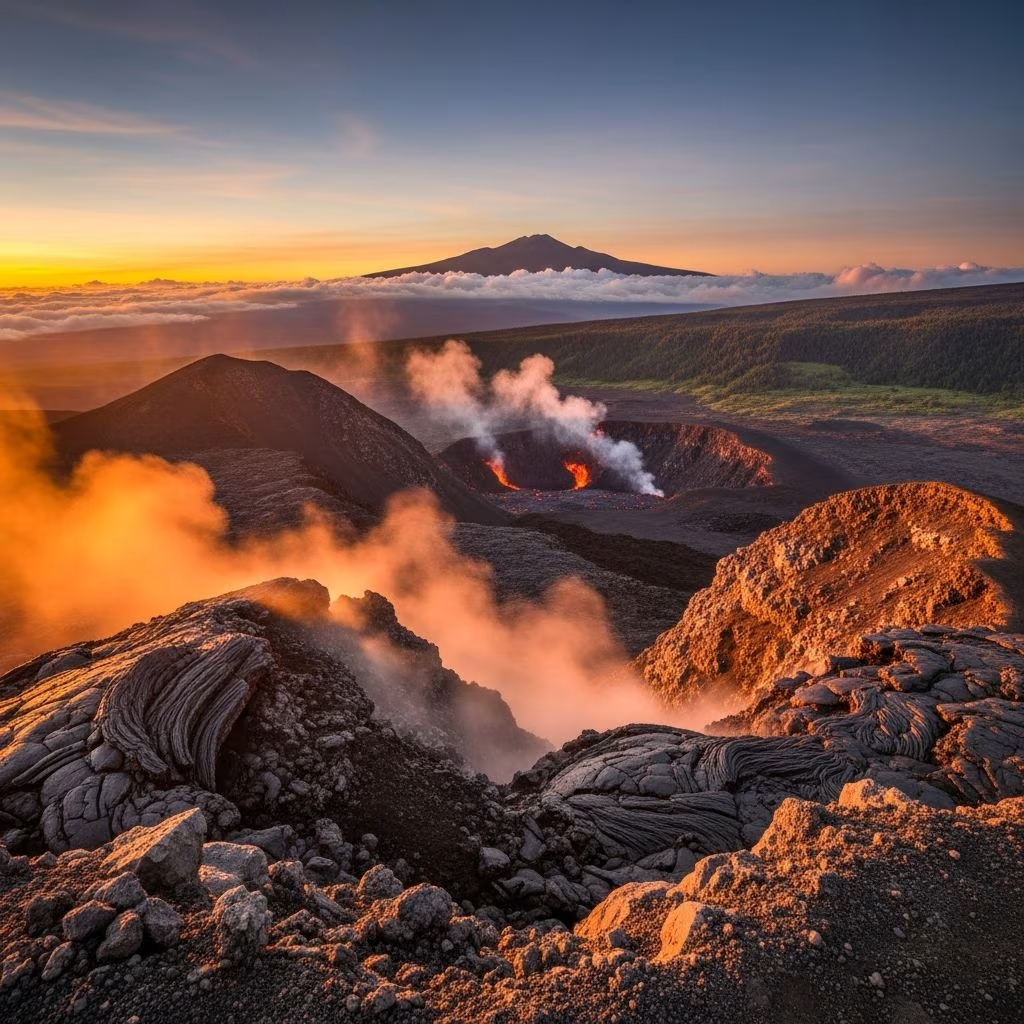
Home to two of the world’s most active volcanoes, Kīlauea and Mauna Loa, Hawaiʻi Volcanoes National Park offers an unparalleled opportunity to witness the raw power of Earth’s creation in action. Spanning diverse ecosystems from lush rainforests to barren lava fields, this Big Island gem draws adventurers eager to hike steaming craters, explore underground tubes, and drive along roads swallowed by recent flows.
The park’s dramatic landscape results from ongoing eruptions that shape and reshape the terrain. **Kīlauea**, one of the most active volcanoes globally, features a summit caldera and frequent lava activity, while **Mauna Loa** towers as a shield volcano rising nearly 14,000 feet above sea level. These forces have created unique features like vast craters, lava tubes, and kipukas—oases of forest surrounded by younger lava.
Volcanic activity fluctuates, with recent events including the 1959 Kīlauea Iki eruption that sent lava fountains over 1,900 feet high, forming a still-young crater floor hikers can cross today. Visitors should check current conditions via official apps or ranger stations, as eruptions can close areas but also create spectacular viewing opportunities.
Entry requires a $30 fee per private vehicle, valid for seven days, or use an America the Beautiful pass. The park spans over 354,000 acres, so prioritize based on fitness and time—most highlights cluster around Kīlauea summit, accessible year-round barring closures.
Download the free National Park Service app for offline maps, alerts, and self-guided tours before arrival. Expect crowds from 10 a.m. to 3 p.m., especially at popular spots; arrive early or visit after sunset for fewer people and potential glow views.
Dive into the park’s highlights, from short walks to full-day adventures.
Start at Kīlauea Visitor Center for exhibits, ranger talks, and current eruption updates. Nearby, the Halemaʻumaʻu Crater Overlook offers views into the fiery heart, often glowing at night from molten activity. Steam vents and sulfur deposits add to the eerie atmosphere.
This **4-mile round-trip** descends 400 feet through rainforest into a crater formed in 1959. Cross the frozen lava lake amid steam cracks and sparse vegetation regrowth—rainbow-hued pools form from minerals. Allow 2-3 hours; go counterclockwise for the best flow. For solitude, start from Devastation Trail parking for a longer 6-mile variant.
A quick 0.4-mile loop leads into a 600-foot tunnel carved by ancient flows. Emerge into fern-filled rainforest; watch for native birds like the ʻapapane honeycreeper. Wheelchair-accessible paths nearby enhance inclusivity.
The easy 0.5-mile paved Devastation Trail showcases cinder-covered landscapes from 1959, dotted with Pele’s Hair and Tears—volcanic glass formations. Adjacent Haʻakulamanu Trail reveals steaming banks yellow with sulfur crystals. Spot endangered nēnē geese but keep distance.
This 19-mile paved road descends 3,700 feet past vents and cones to the sea, ending under 1980s-1990s lava. Stop at Puʻu Loa Petroglyphs for ancient Hawaiian carvings—walk carefully on uneven terrain. A ranger station operates 10 a.m.-9 p.m. for info.
| Category | Details |
|---|---|
| Entrance & Hours | Open 24/7; entrance station 7 a.m.-7 p.m. (varies seasonally) |
| Parking | Limited at trailheads; carpool or use shuttles during peaks |
| What to Bring | Water, layers, sturdy shoes, flashlight for tubes, sunscreen, snacks |
| Connectivity | Spotty cell service; app essential for offline navigation |
Flexibility is key—have Plan B like the less-crowded Kahuku Unit (Thurs-Sun, 8 a.m.-4 p.m.), an hour south, featuring ranch ruins and forested hikes.
Volcanoes hold sacred status in Native Hawaiian culture as homes to Pele, goddess of fire. Respect by staying on trails, taking the Pono Pledge for mindful behavior, and silencing devices in quiet zones. Support cultural programs at the visitor center.
Leave no trace: pack out trash, avoid feeding wildlife, and report hazards. Hidden fissures and gases demand caution—closed areas protect lives.
Match hikes to your level; inform others of plans. Volcanic gases (vog) can irritate—those with respiratory issues check forecasts. Unstable ground near cliffs poses fall risks; eruptions bring flying debris.
Extend to 2-3 days for Mauna Loa or backcountry permits.
Yes, with rangers monitoring; follow closures and gas advisories.
Activity varies—check NPS site/app for real-time updates.
Ranger-led hikes daily; helicopter options outside park.
Pets restricted to cars/roads; many paved trails ADA-compliant.
Minimum half-day; ideal 2+ days for full immersion.
Nearby, explore Hilo’s rainforests or Puna’s black-sand beaches. Combine with stargazing atop Mauna Kea for cosmic contrast.
Hawaiʻi Volcanoes National Park transforms visitors, blending awe-inspiring geology with profound cultural reverence. Plan thoughtfully, tread lightly, and prepare for memories forged in fire.
