

 Travel Essentials
 Travel Essentials

Explore top hikes, scenic drives, visitor tips, and cultural insights for an unforgettable adventure at Hawaiʻi Volcanoes National Park.
 Travel Essentials
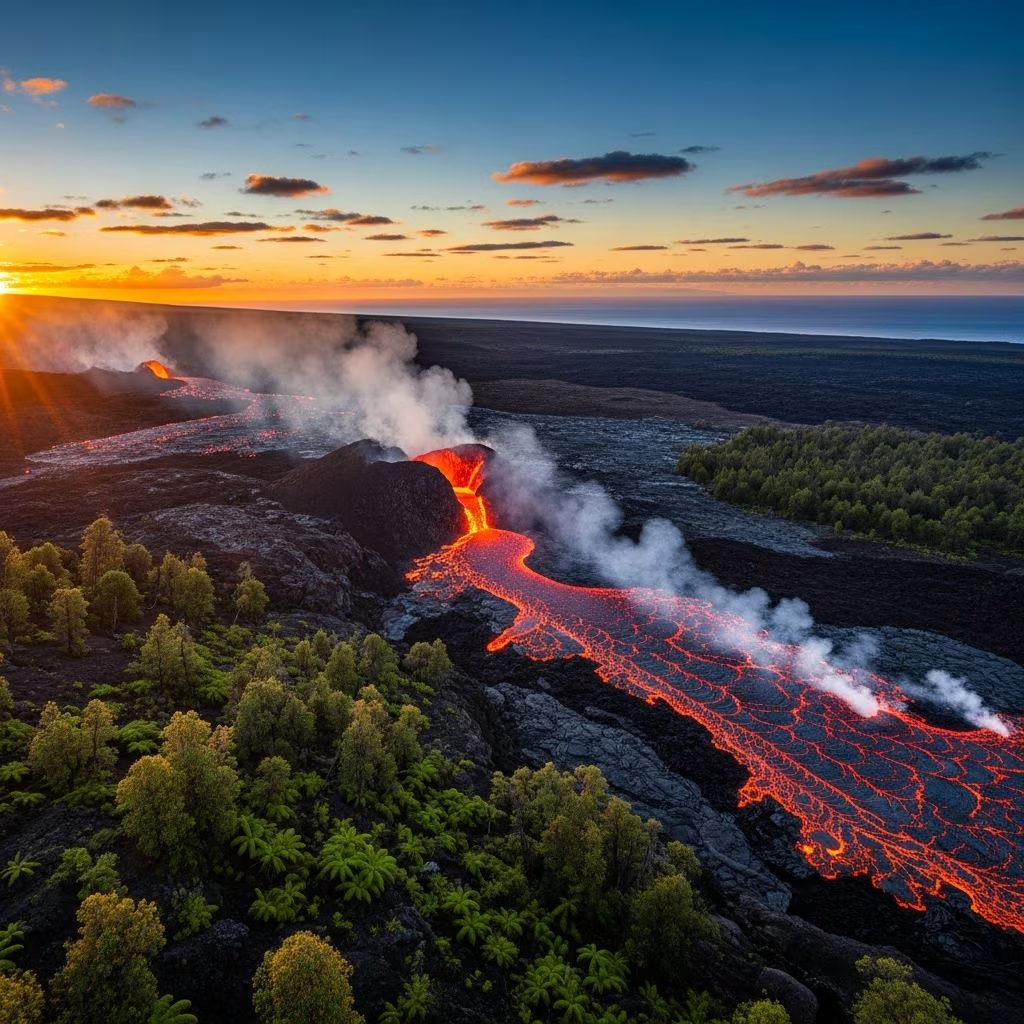
Nestled on the Big Island of Hawaiʻi, this national park spans over 354,000 acres and safeguards two of the world’s most dynamic volcanoes: Kīlauea and Mauna Loa. Home to ongoing eruptions, vast lava fields, and thriving native ecosystems, it offers visitors a front-row seat to Earth’s geological drama. Whether you’re descending into steaming craters or driving along roads swallowed by lava, the park blends adventure with profound natural beauty.
Kīlauea stands as one of the most active volcanoes globally, frequently showcasing lava flows and glowing craters that captivate scientists and tourists alike. Its summit caldera stretches wide, with Halemaʻumaʻu crater often emitting a spectral glow from subsurface activity. Mauna Loa, the park’s colossal counterpart, rises to nearly 14,000 feet, its massive shield shape formed by countless fluid lava eruptions over millennia. Together, these volcanoes illustrate the island-building process that defines the Hawaiian chain.
Recent activity, including the 1959 Kīlauea Iki eruption, reshaped the landscape dramatically, creating moon-like terrains still steaming today. Visitors can witness this power safely from designated overlooks, where the air carries whispers of sulfur and the ground subtly trembles underfoot.
Entry requires a $30 fee per private vehicle, valid for seven days, or $15 per person on foot or bike. The park operates 24/7, but key facilities like visitor centers run from 9 a.m. to 5 p.m. daily. Download the free NPS app for offline maps, eruption updates, and self-guided tours before arrival—crucial for navigating potential road closures due to activity.
Anticipate crowds from 10 a.m. to 3 p.m., especially at popular spots; arrive before sunrise or after sunset to dodge lines. Parking is limited, so carpooling or shuttles help. For current conditions, call park staff at 808-985-6011.
The park boasts over 150 miles of trails, from easy strolls to multi-day treks. Match your fitness level to avoid risks like unstable ground or toxic gases.
This 4-mile loop is a park highlight, dropping 400 feet into the 1959 eruption crater via switchbacks through rainforest of ʻōhiʻa trees and tree ferns. Cross the still-warm floor, dotted with fissures and new greenery, then climb out for panoramic caldera views. Allow 2-3 hours; start counterclockwise from Kīlauea Iki Overlook. For fewer crowds, begin at Devastation Trailhead for a longer 6-mile variant via Uēaloha Ledge.
A quick 0.4-mile paved loop leads into a 600-foot tube formed 500 years ago. Emerge into fern-shrouded rainforest; it’s stroller-accessible and perfect for all ages. Nearby, spot endangered nēnē geese—observe from afar.
Over 10 day hikes await, plus ranger-led options; check the park site for details.
This 19-mile paved road descends 3,700 feet from Kīlauea summit to the sea, passing craters, arches, and 1986-1996 lava that buried its end. Stop at pullouts for Holei Sea Arch and Puʻu Loa petroglyphs—ancient Hawaiian carvings. The drive takes 1-2 hours; a ranger station operates 10 a.m.–9 p.m. Expect dramatic vistas of Mauna Loa on clear days.
| Stop | Distance from Summit | Highlight |
|---|---|---|
| Devastation Trailhead | 2 miles | Cinder cone ruins |
| Kealakomo Overlook | 7 miles | Lava tree molds |
| Holei Sea Arch | 19 miles | Oceanfront lava cliff |
Volcanoes hold sacred status in Native Hawaiian culture, embodied by Pele, goddess of fire. Practice pono (righteousness) by staying on trails, silencing devices, and taking the Pono Pledge for safety and respect. Kahuku Unit, open Thu-Sun 8 a.m.–4 p.m., offers quieter cultural hikes amid ranch lands reshaped by Mauna Loa flows.
Volcanic gases (vog), unstable cliffs, and hidden cracks demand caution. Hike with a plan, share itineraries, pack water, layers, and flashlight. Avoid closed areas; check alerts for eruptions boosting crowds. Flexibility is key—have Plan B like Kahuku if summit roads close.
Year-round access shines, but May-Oct offers drier trails; winter brings rain-fed greenery. Avoid peak hours; sunrise reveals glows, nights amplify stars over craters.
Spot nēnē geese, ʻapapane honeycreepers, and ferns pioneering lava. Kīpukas—forest islands in flows—host rare birds. No feeding wildlife; tread lightly to protect fragile regrowth.
Yes, but areas may close; check NPS app or site for access.
At least one full day; 2-3 ideal for hikes and drives.
Yes, at visitor centers and Steam Vents; no full restaurants—pack picnic.
Depends on activity; Halemaʻumaʻu often glows at night.
Many short trails like Nāhuku and Devastation are paved.
