

 Travel Essentials
 Travel Essentials

A travel-related Zika case on Oahu revives concerns in Hawaii. Learn symptoms, prevention, risks for pregnant travelers, and health authority responses.
 Travel Essentials
The recent confirmation of a travel-related Zika virus case on Oahu marks Hawaii’s first such incident since 2019, prompting swift action from health authorities to prevent local spread. This development underscores the ongoing global presence of the virus and the need for heightened awareness among residents and visitors alike.
Hawaii Department of Health officials announced the case on May 27, 2025, involving an individual who contracted the virus abroad before returning to the Waialua/Haleiwa area on Oahu. Two additional people who may have been exposed are under monitoring, but no local transmission has been confirmed to date. Vector control teams are actively treating potential mosquito breeding sites in the affected zones to mitigate risks during peak tourism season.
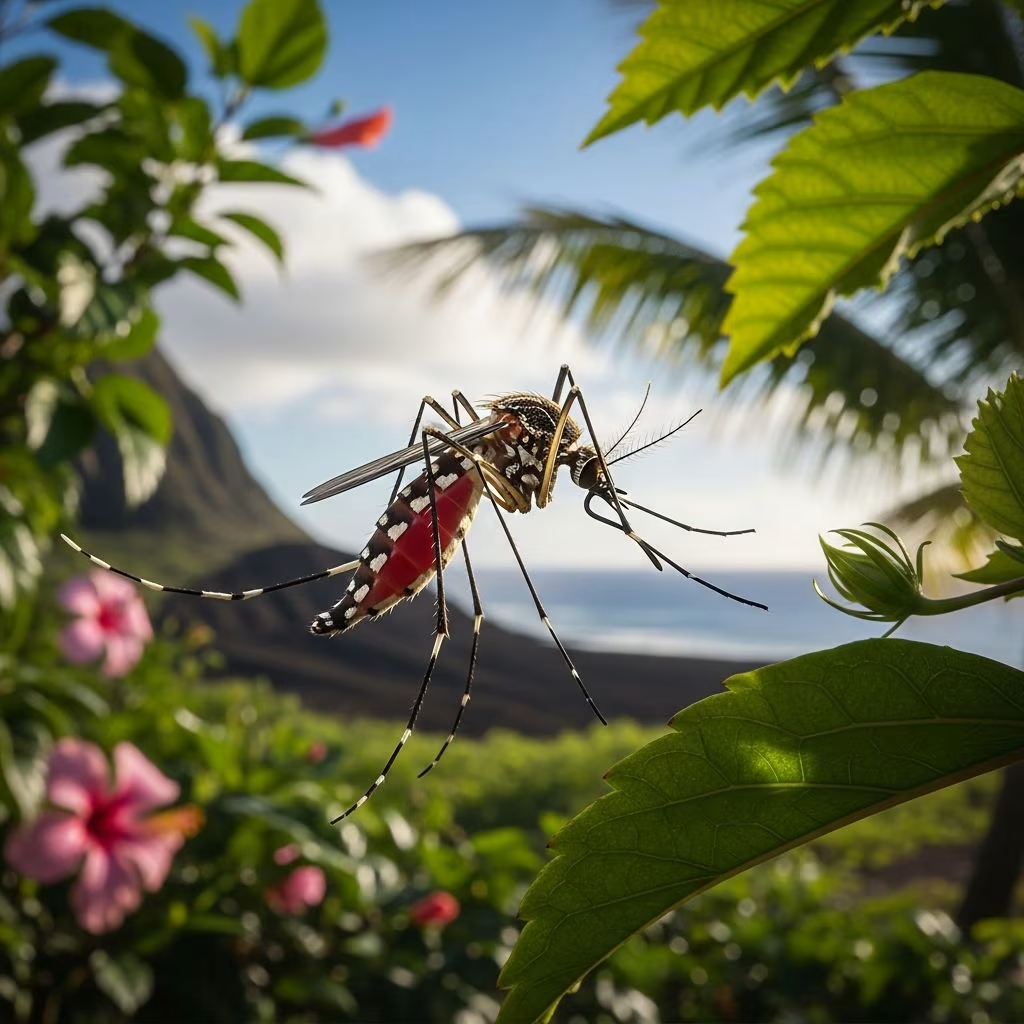
This event echoes Hawaii’s history with Zika, where travel-related cases peaked at 25 in 2017 amid a worldwide outbreak. Notably, no mosquito-borne acquisitions have ever occurred within the state, thanks to vigilant surveillance. The islands’ Aedes mosquito populations, capable of transmitting the virus, necessitate proactive measures like eliminating standing water and applying repellents, especially at dawn and dusk.
Zika virus (ZIKV), a flavivirus from the Flaviviridae family, primarily spreads through bites from infected Aedes mosquitoes, such as Ae. aegypti and Ae. albopictus. These daytime-biters thrive in tropical climates, making regions like Hawaii particularly vigilant.
Beyond mosquitoes, Zika transmits sexually via semen, vaginal fluids, saliva, urine, and breast milk from infected individuals. This non-vector route heightens risks for close contacts of travelers. Unlike some viruses, Zika has no animal reservoir in humans, relying on human-mosquito-human cycles for propagation.
Most Zika infections produce mild or no symptoms, lasting 2-7 days. When present, signs include fever, rash, joint pain, conjunctivitis (red eyes), muscle pain, and headache—mirroring dengue or chikungunya, complicating self-diagnosis.
Only about 20% of infected individuals notice symptoms, per Cleveland Clinic data cited in reports. Healthcare providers must use lab tests like PCR or serology for confirmation, especially for at-risk groups. Pregnant women require immediate evaluation due to fetal risks.
| Symptom | Frequency | Duration |
|---|---|---|
| Fever | Common | 2-7 days |
| Rash | Common | 2-7 days |
| Joint Pain | Common | 2-7 days |
| Red Eyes | Common | 2-7 days |
| Muscle Pain/Headache | Less Common | 2-7 days |
Zika’s gravest threat lies in congenital Zika syndrome (CZS), linking maternal infection—particularly in the first trimester—to microcephaly, brain calcification, limb contractures, and eye abnormalities in infants. Hawaii reported the U.S.’s first CZS case in 2016 from a Brazil traveler.
A January 2025 study revealed children with severe CZS face 13-fold higher mortality risks among 11.4 million tracked cases. Guillain-Barré syndrome, causing temporary paralysis, affects some adults post-infection. No specific treatment exists; management is supportive.
Hawaii’s first travel-related Zika case emerged in October 2015 on Hawaii Island. By 2016, retrospective studies hinted at pre-2015 circulation via antibodies in microcephaly cases from 2009-2012, though unconfirmed.
The state mandates reporting suspect cases to the Disease Outbreak Control Division. Proactive mosquito surveillance, modeled on Florida’s 2016 response, remains key. No local U.S. continental transmission persists, and Hawaii/Alaska report none. Globally, 2025 saw over 12,600 Americas cases, including Puerto Rico surges.
Without a vaccine—none FDA-approved as of June 2025—prevention hinges on mosquito control and safe behaviors.
Returning travelers should self-monitor for 3 weeks and prevent bites to avoid seeding local outbreaks.
Post-2015-2016 pandemics, Zika persists in the Americas, Southeast Asia, and Africa. U.S. territories reported no cases since 2019, with continental U.S. free of local mosquito transmission. Hawaii’s position as a travel hub amplifies imported case risks, mirroring its early H1N1 detection.
Currently limited to a travel-related case, but vigilance is essential due to competent mosquito vectors.
Yes, via bodily fluids; precautions advised for 3 months post-exposure.
Consult healthcare providers; use strict bite prevention. No local risk, but global travel context matters.
No approved vaccine exists; focus on prevention.
Vector control, site investigations, public alerts, and exposure monitoring.
Hawaii’s response exemplifies integrated surveillance: rapid case confirmation, contact tracing, and community education. As climate change expands Aedes ranges, sustained funding for traps, larvicides, and public campaigns is vital. Travelers embody the frontline; informed choices curb importation.
For pregnant individuals, the specter of CZS demands caution. Recent mortality data reinforces urgency: early intervention for CZS infants improves outcomes, though challenges persist.
Health departments urge reporting symptoms promptly. By blending personal protection with systemic efforts, Hawaii can sustain its zero local transmission record amid evolving threats.
