

Food & Culture Stays Travel Essentials Travel Guides Trip Ideas
Categories
From the Blog
Remy’s Ratatouille Adventure at EPCOT: Ride Review, Tips & 2D Update
Travel Essentials

Hawaii Flood Travel Guide: Safety, Updates, and Ways to Help

Navigate Hawaii's recovery from March 2026 Kona Low floods: check travel advisories, avoid damaged zones, and contribute through trusted nonprofits and volunteering.
Travel Essentials

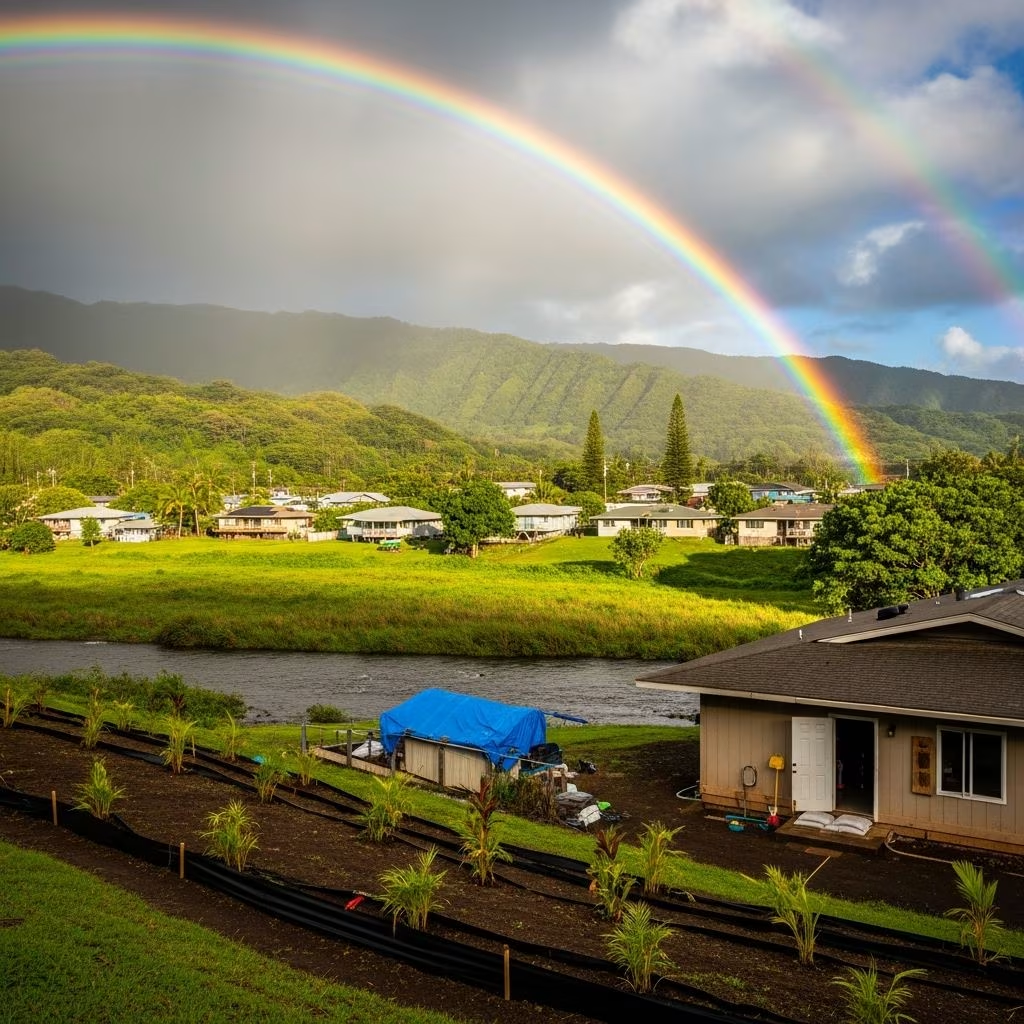
Recent devastating floods from the March 2026 Kona Low storm system have reshaped parts of Hawaii, prompting travelers to reassess plans while communities rally for recovery. This guide equips you with current safety details, travel adjustments, and actionable support options grounded in official updates.

Understanding the Kona Low Flood Impact

The Kona Low storm brought torrential rains and flash flooding to multiple islands, including Oʻahu, Hawaiʻi Island, and Molokaʻi, causing widespread infrastructure damage, home displacements, and agricultural losses. Statewide assessments show debris clearance and utility restorations ongoing, with some schools and roads still limited.

  • Key Affected Areas: Oʻahu’s north shore regions like Waialua faced severe inundation; Hawaiʻi Island saw farmland devastation; Molokaʻi campuses remain closed for safety.
  • Current Status: Most state offices have reopened, but localized access issues persist. National Guard supports evacuations and sheltering.

Government crews prioritize debris removal and green waste facilities expansion, urging residents to use designated drop-off points.

Is It Safe to Travel to Hawaii Now?

Travel remains viable for most visitors, but caution is essential in recovery zones. Official sources confirm no statewide bans, yet advisories highlight risks like unstable roads and contaminated waters.

IslandStatusTravel Tips
OʻahuPartial closures north shoreAvoid Waialua; check ready.hawaii.gov for alerts
Hawaiʻi IslandSchool closures, farm damageSteer clear of rural flooded zones; confirm accommodations
MolokaʻiCampus safety issuesLimited access; monitor local updates
Other IslandsMinimal impactNormal operations; ideal for visits

Prioritize mainland flights to unaffected airports; rental cars should avoid junk vehicle clutter zones.

Safety Protocols During Your Visit

Flash floods pose ongoing threats in Hawaii’s terrain. Preparedness saves lives amid recovery efforts.

Pre-Travel Preparations

  • Enroll in emergency alerts via ready.hawaii.gov/alerts for real-time warnings.
  • Secure flood insurance separately, as standard policies exclude it.
  • Pack emergency kits: water, non-perishables, power banks, and documentation photos.

On-the-Ground Precautions

Avoid flooded paths—6 inches of moving water can sweep vehicles away. Skip hikes, surfing, or snorkeling in murky post-flood waters contaminated by sewage.

  • Do: Stay indoors during warnings; monitor news; climb to high ground if trapped.
  • Don’t: Drive through floods; approach waterfalls; ignore tetanus risks during debris contact—update vaccinations.

Health officials stress wound cleaning and tetanus shots for cleanup exposure.

Airports operate normally, but ground travel requires checks. City services aid with ID replacements and junk vehicle removal to clear roads.

  • Roads: Use apps for closures; transfer stations open for debris.
  • Housing: Department of Housing offers city properties; confirm bookings avoid damaged sites.
  • Utilities: Free Wi-Fi/charging at Waialua centers; BWS handles billing queries.

Responsible Tourism: Boosting Local Recovery

Visitors can aid by choosing ethical stays and activities. Book directly with resorts supporting locals; dine at unaffected eateries to sustain jobs.

Steer from volunteer tourism unless skilled—official channels train locals first.

Effective Ways to Provide Aid

Monetary donations outperform supplies for flexibility. Verified nonprofits lead efforts.

Top Organizations for Donations

OrganizationFocusHow to Contribute
Hawaii Community FoundationStatewide resilience fundDonate to Stronger Hawaiʻi Fund online
American Red CrossShelter, mealsCall 1-800-RED-CROSS or text REDCROSS to 90999
Hawaii Food BankFood assistanceDonate/volunteer online
Salvation Army HawaiʻiSupplies, aidOnline donations
Hawaiian Humane SocietyPet supportFunds or Amazon wishlist
Hawaii Farmers Union UnitedAgricultural recoveryHawaii Flood Response Fund

Volunteering Opportunities

No experience needed for sheltering/community care—Red Cross offers rapid training. On-site: Community Assistance Centers like Waialua Sugar Mill distribute supplies.

  • Sign up via organization sites; bring ID and cords for charging stations.
  • Local needs: Debris sorting, pet reunions (call 808-356-2250 for microchips).

Government and Community Resources

Honolulu DEM coordinates multi-agency help: DPP for permits, OER for businesses, DCS for kūpuna aid.

  • Assistance Centers: Food, financial support, utility fixes at key sites.
  • Business/Farm Aid: Economic Revitalization Office provides targeted relief.

Frequently Asked Questions (FAQs)

Are Hawaii resorts open post-floods?

Most are operational, especially away from north shores. Verify with properties.

Can I volunteer as a tourist?

Yes, via Red Cross or Food Bank—no experience required, but coordinate to avoid burdening resources.

What if my flight is affected?

Monitor ready.hawaii.gov; airports functional but prepare for delays.

Is tap water safe?

Boil or use bottled in impacted zones until BWS clears.

How to help farmers?

Donate to Hawaii Farmers Union United’s fund for rural restoration.

Long-Term Resilience Building

Beyond immediate aid, support mitigation: property elevations, drain clearances, and insurance advocacy strengthen Hawaii against future Kona Lows.

Travelers play a role—your visits fund recovery when spent locally.

References

  1. What to Know About Hawaii’s Catastrophic Flooding, and How to Help — TIME. 2026-03-23. https://time.com/article/2026/03/23/hawaii-flooding-storms-damage-how-to-help/
  2. Storm Recovery Information — City and County of Honolulu Department of Emergency Management. 2026. https://www.honolulu.gov/dem/storm-recovery-information/
  3. Flash Flooding — Hawai’i Emergency Management Agency. 2026. https://dod.hawaii.gov/hiema/flood/
  4. Supporting Relief Efforts for Kona Low Flood Victims in Hawaii — Orange County Community Foundation. 2026. https://www.oc-cf.org/supporting-relief-efforts-for-kona-low-flood-victims-in-hawaii/
  5. Flash Flood Hawaii – What to do and what NOT to do! LIFE SAVING! — Daniel Hawaii Vacation Blog. 2026. https://danielshawaii.com/hawaii-vacation-blog/flash-flood-hawaii-what-to-do-and-what-not-to-do-life-saving/
ME
medha deb
Medha Deb is an editor with…

Medha Deb is an editor with a master's degree in Applied Linguistics from the University of Hyderabad. She believes that her qualification has helped her develop a deep understanding of language and its application in various contexts. Medha specializes in the areas of beauty, health, sports, and wellness and is committed to ensuring that the content on the website is of the highest quality.Medha's passion for writing and editing began early in life when she joined a book writer's club with her mother. It was there that she discovered her love for the written word and the power it holds to inform, inspire, and transform lives. Since then, she has honed her skills as a writer and editor, working with a variety of clients and publications to produce compelling and informative content. Currently, she writes and edits for CultureTreker.She is also an ardent animal lover and dedicates her time and resources to the foster care of neonatal kittens, providing them with the love and attention they need to thrive. Her commitment to animal welfare is a testament to her compassion and empathy, and it underscores her belief in the importance of caring for the most vulnerable members of our society.

← Previous
Mérida Travel Guide 2026: Best Things to Do, Eat & See
‹›
