

 Travel Essentials
 Travel Essentials

Explore Hawaii's 8 national parks, from active volcanoes and historic battlefields to ancient trails and sacred sites, offering unparalleled adventures.
 Travel Essentials
Hawaii, an archipelago forged by fire and sea, hosts eight remarkable national parks managed by the U.S. National Park Service. These protected areas span volcanic craters, lush rainforests, sacred historical sites, and WWII memorials, blending natural spectacle with deep cultural significance. From the erupting giants of the Big Island to the somber waters of Pearl Harbor, each park reveals a unique facet of the islands’ dynamic history and geology.
The National Park Service oversees diverse units across Oahu, Maui, the Big Island, and beyond, totaling eight sites that preserve over 300,000 acres of land and sea. Established to safeguard geological wonders, endangered species, and Native Hawaiian heritage, these parks attract millions annually for hiking, stargazing, cultural tours, and reflection.
Key themes include active volcanism, ancient Polynesian trails, royal heiaus (temples), and pivotal 20th-century events. Visitors must respect strict entry rules, cultural protocols, and environmental protections to maintain these sacred spaces.
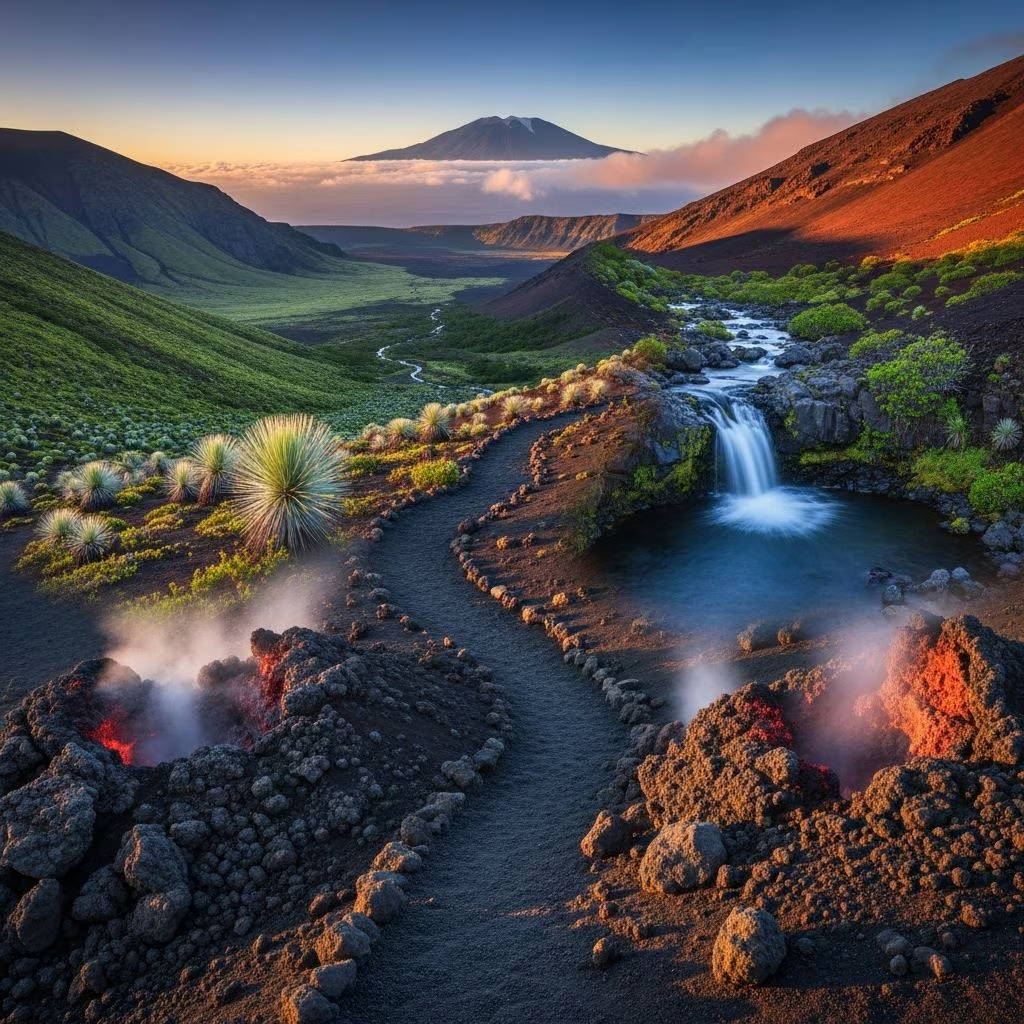
Spanning 354,000 acres on Hawaii Island’s southeast flank, this park encircles the summits of Kīlauea and Mauna Loa, two of Earth’s most active volcanoes. Designated a UNESCO World Heritage Site and International Biosphere Reserve, it showcases ongoing eruptions, lava tubes, and rare ecosystems from sea level to 13,680 feet.
Highlights include the Kīlauea Caldera, a 12×13-mile depression glowing with molten activity; Chain of Craters Road, a 19-mile drive past 50+ fissures; and Thurston Lava Tube, a walkable 500-foot tunnel. Nighttime lava viewing at Halemaʻumaʻu crater offers mesmerizing red glows, while day hikes reveal ʻōhiʻa lehua trees pioneering new land.
On Maui’s eastern slopes, Haleakalā rises 10,023 feet, cradling a massive volcanic depression larger than Manhattan. Known for epic sunrises where the sun appears to emerge from the ocean, the park protects cinder cones, rare silversword plants, and bamboo forests.
The Sliding Sands Trail descends 2,000 feet into the colorful crater, passing rainbow-hued cinder hills and hardy nēnē geese. At night, the summit becomes one of America’s best stargazing spots due to minimal light pollution. The Kīpahulu District offers coastal waterfalls and ancient trails.
| Trail | Length | Difficulty | Highlights |
|---|---|---|---|
| Keoneheʻeheʻe (Sliding Sands) | 11 miles RT | Strenuous | Cinder cones, silverswords |
| Pipiwai | 4 miles RT | Moderate | Bamboo forest, 400-ft Waimoku Falls |
| Halemauʻu | 7 miles RT | Moderate | Volcanic ridges, Hosmer Grove |
Reservations required for sunrise ($1/person); general entry $30/vehicle.
On Oahu, this poignant site commemorates the 1941 Japanese attack that propelled the U.S. into WWII. Centered on the USS Arizona Memorial, it honors 2,403 lives lost, with oil still leaking from the sunken battleship—a haunting “black tears” symbol.
Free tickets book via recreation.gov; explore the USS Missouri (surrender site), USS Oklahoma Memorial, and aviation museums. Submarine tours and road to Hana connections add depth.
This Big Island park preserves 1,160 acres of ancient Hawaiian aquaculture, petroglyphs, and heiau along Kealakekua Bay. Fishponds like ʻAimakapā demonstrate sophisticated stone engineering for trapping mullet and awa.
Hale o Papa visitor center explains ahupuaʻa land systems. Snorkel with green sea turtles at Honokōhau Beach; spot humpbacks in season. Free entry, ideal for cultural immersion without crowds.
Also on the Big Island, this 182-acre site was a sanctuary for kapu (taboo) breakers and war defeated. Reconstructed kiʻi (wooden gods) guard the puʻuhonua wall; royal grounds feature Hale o Keave, Kamehameha’s home.
Dive into history via ranger demos of poi pounding and hukilau fishing. Coastal trails reveal lava arches and turtles. $20/vehicle; cultural festivals in summer.
On Molokaʻi’s remote peninsula, this park honors 8,000+ leprosy patients exiled here from 1866-1969. Father Damien’s church and Molokaʻi History Museum tell tales of resilience.
Access via mule ride, hike, or small plane; permits required. Respect living residents; no swimming.
Big Island’s northern Kohala honors Kamehameha I’s 1791 unification temple, built with 10,000+ stones. Overlooks man-eating shark legends; annual Makahiki festival revives traditions.
Short trails to petroglyphs; free entry.
Oahu’s newest unit preserves a 180-acre internment camp for Japanese, German, and Okinawan residents (1943-1946). Barracks foundations and guard towers evoke forgotten injustices.
Guided tours by reservation; ties to broader Asian American history.
This 175-mile network connects Big Island sites from ahupuaʻa to wahi pana. Hike segments past anchialine ponds, heiau, and beaches used for 1,000+ years.
Free; integrate with other parks for epic journeys.
Target three islands: Big Island (3 parks), Maui, Oahu. Inter-island flights via Hawaiian Airlines; rent cars for flexibility. Best season: April-May or Sept-Oct for mild weather, fewer crowds.
| Park | Island | Entry Fee | Crowds |
|---|---|---|---|
| Hawaiʻi Volcanoes | Big Island | $30/veh | High |
| Haleakalā | Maui | $30/veh | Very High (sunrise) |
| Pearl Harbor | Oahu | Free (timed tickets) | Very High |
Pack reef-safe sunscreen, sturdy shoes, water; follow Leave No Trace. Accessibility varies—check nps.gov/hi for details.
Threats include invasive species, climate change eroding coastlines, and overtourism. Parks fund nēnē recovery (from 30 to 3,000 birds) and lava monitoring. Support via donations or volunteering.
Hawaiʻi Volcanoes National Park features Kīlauea and Mauna Loa, with frequent eruptions viewable safely from designated areas.
Yes, book 60 days ahead via recreation.gov for $1/person; arrive 2 hours early.
No—most charge $20-30/vehicle (7-day pass); Pearl Harbor and historic sites often free with reservations.
Absolutely—short trails, junior ranger programs, and beaches suit families; supervise near edges.
Weekdays post-10am or shoulder seasons; Pearl Harbor books out fast.
