

 Travel Essentials
 Travel Essentials

Compare Hawaii and Caribbean vacations across cost, activities, accessibility, and travel logistics to find your ideal tropical destination.
 Travel Essentials
When planning a warm-weather escape, travelers often find themselves torn between two iconic tropical destinations: the Hawaiian Islands and the expansive Caribbean region. Both offer pristine beaches, vibrant cultures, and unforgettable experiences—but they serve fundamentally different vacation styles. With 65 major Caribbean islands and 6 Hawaiian islands to consider, the decision can feel overwhelming. Understanding the distinct characteristics of each destination will help you select the location that truly aligns with your travel preferences, financial constraints, and available time.
Your starting location plays a crucial role in determining which destination makes practical sense. Geographic proximity should influence your initial considerations, as it affects both travel time and overall vacation duration.
For East Coast residents, the Caribbean holds a significant advantage. Flights from major northeastern hubs like New York, Boston, and Washington, D.C. typically take three to four hours to reach popular Caribbean islands such as the Bahamas or Puerto Rico. This relatively short flight time makes extended weekend getaways entirely feasible, allowing travelers to maximize limited vacation days by minimizing transit time.
Conversely, Hawaii requires a substantially longer commitment from East Coast travelers. The transpacific journey from the Atlantic seaboard to the Hawaiian Islands typically spans eight to ten hours with connections, making it a more demanding travel experience. West Coast residents enjoy a significant advantage, with flights from California to Honolulu taking approximately five to six hours. For these travelers, Hawaii becomes logistically comparable to Caribbean destinations for East Coasters.
The practical implication is straightforward: East Coasters should prioritize Caribbean destinations for efficient travel, while West Coast residents find Hawaii more convenient. Midwest travelers may find the travel times relatively equivalent, making other factors more decisive in their choice.
An often-overlooked factor in destination selection involves passport requirements and documentation needs. Travel documentation can significantly streamline vacation planning and eliminate logistical barriers.
Hawaii maintains a distinctive advantage for American citizens: no passport is required. As a U.S. state, Hawaii functions as domestic travel for U.S. citizens, allowing those without valid passports to travel freely. This convenience cannot be overstated for travelers whose passport applications may be pending or expired.
However, the Caribbean offers several passport-free alternatives for American citizens. Puerto Rico, the U.S. Virgin Islands, and Key West accommodate U.S. travelers without passport requirements since these territories operate under U.S. jurisdiction. Beyond these exceptions, Caribbean travel to destinations like Turks and Caicos, Barbados, or the Bahamas requires valid passports.
For international travelers, both destinations involve standard passport procedures, though entry requirements vary by specific island and nationality. The distinction primarily benefits American citizens without current passports who can freely choose Hawaii or specific Caribbean territories.
Financial considerations fundamentally shape vacation decisions. Daily expenses and overall trip costs vary significantly between these destinations, affecting which location fits different budgets.
Hawaii typically demands higher daily expenditures. Couples visiting Hawaii generally budget between $250 and $300 daily for accommodations, meals, and activities. These costs reflect Hawaii’s status as a premium destination with limited land area and high demand. À la carte dining and resort pricing accumulate quickly, and attractions often carry entrance fees. Even budget-conscious travelers find Hawaii more expensive than comparable mainland U.S. destinations.
The Caribbean offers greater financial flexibility and numerous budget options. Daily costs range from approximately $180 to $280 depending on the selected island, season, and accommodation type. Certain islands like Puerto Rico and the Bahamas present particularly affordable options, especially when booking during off-season periods. The Caribbean’s all-inclusive resort model provides significant cost predictability and savings, as meals, drinks, and many activities are bundled into single pricing structures.
| Factor | Hawaii | Caribbean |
|---|---|---|
| Daily Couple Budget | $250-$300 | $180-$280 |
| Accommodation Type | À la carte pricing | All-inclusive resorts common |
| Most Affordable Islands | Limited options | Puerto Rico, Bahamas |
Interisland travel costs also differentiate the destinations. In Hawaii, inter-island flights typically cost $150-$200 per person each way, though they remain relatively affordable and frequent. Caribbean island-hopping varies dramatically by location; some islands feature ferry connections, while others require expensive flights. This inconsistency makes Caribbean island exploration less predictable budget-wise.
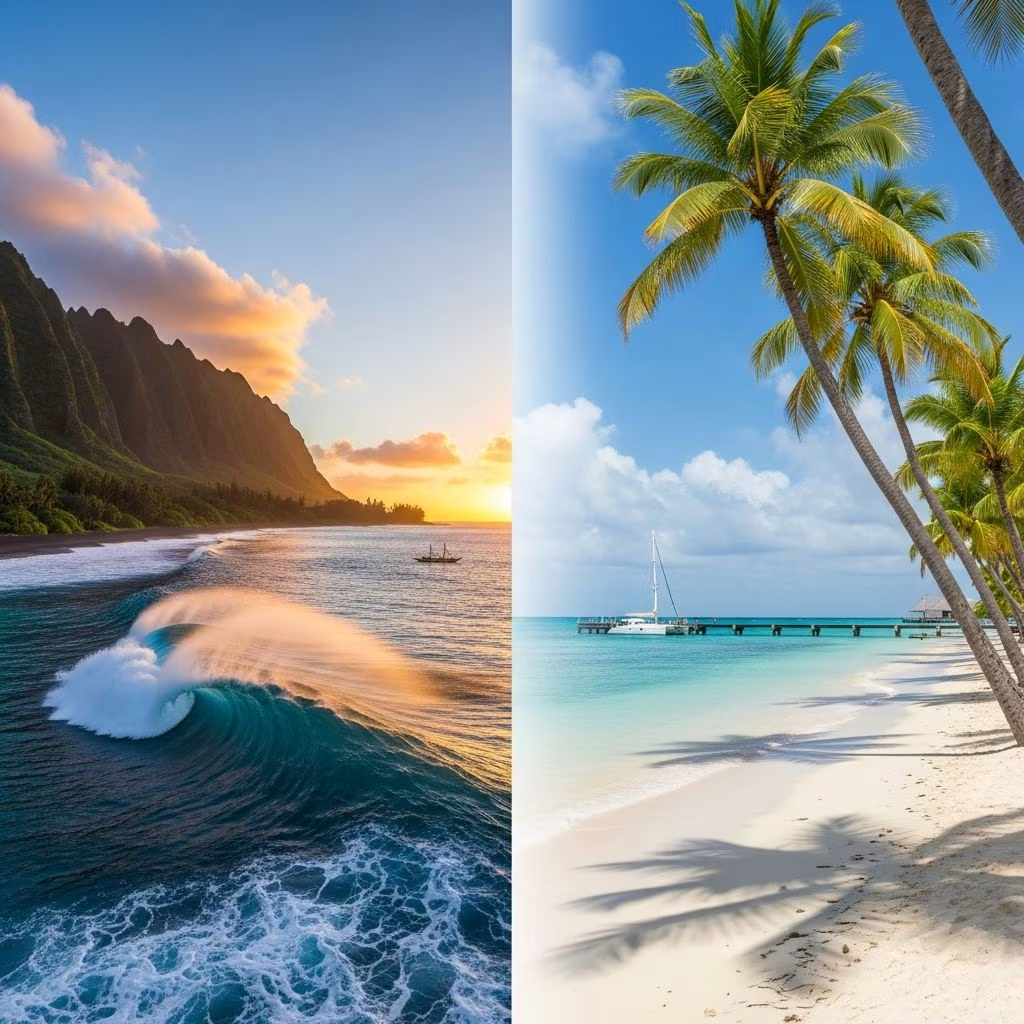
Beach experiences differ substantially, catering to distinct vacation philosophies. Ocean conditions and sand composition define the fundamental beach experience in each destination.
Hawaiian beaches showcase dramatic volcanic geology and varied natural features. Black sand beaches, red sand formations, and dramatic cliffsides create visually striking landscapes. Ocean conditions often feature stronger waves and more robust surf, appealing to adventurous swimmers and surfing enthusiasts. However, volcanic sand can feel coarser underfoot, and certain beaches present challenging swimming conditions due to currents and wave action.
Caribbean beaches embody tropical postcard imagery: powdery white sand, crystalline turquoise water, and calm conditions ideal for extended beach days. The serene ocean environment accommodates swimmers of all abilities, families with young children, and those seeking pure relaxation. Snorkeling directly from shore often provides immediate access to coral reefs and marine life without boat transportation.
The choice between these beach experiences reflects broader vacation objectives. Visitors seeking dramatic natural landscapes and active engagement with powerful ocean environments prefer Hawaii. Those prioritizing beach relaxation, swimming comfort, and classic tropical aesthetics choose the Caribbean.
Each destination appeals to different activity preferences. Available recreational opportunities should align with your vacation priorities.
Hawaii excels for land-based adventure tourism. Volcanic landscapes invite hiking exploration, waterfalls cascade throughout multiple islands, and diverse ecosystems support outdoor activities. Surfing represents a defining Hawaiian experience, with world-class breaks attracting enthusiasts worldwide. Whale watching occurs seasonally (November through May, peaking January through March) when humpback whales migrate to Hawaiian waters. The archipelago’s dramatic topography enables activities like zip-lining, helicopter tours, and exploration of protected natural areas.
Caribbean activities center on water-based recreation. Snorkeling from shore accesses vibrant coral reefs immediately adjacent to many beaches. Sailing, diving, and boat excursions form the activity foundation. While surfing opportunities exist in certain Caribbean locations, they don’t match Hawaii’s established surf culture. The Caribbean emphasizes accessibility and ease—activities require minimal preparation and equipment.
Temporal factors significantly influence destination selection. Hurricane season and peak travel periods create distinct seasonal dynamics in each location.
Caribbean hurricane season spans June through November, with August through October representing peak risk months. This extended seasonal vulnerability affects pricing, crowd levels, and travel security. However, certain islands like Barbados and Trinidad sit outside traditional hurricane zones, offering safer alternatives during these months. Conversely, Caribbean winter (December through March) attracts massive crowds during American holidays and spring break periods, driving up prices substantially.
Hawaii experiences tropical cyclones during the same June-through-November window, though severe storms occur less frequently than in the Caribbean. Hawaiian weather remains relatively stable year-round, with winter serving as the peak tourist season and spring/fall offering quieter, equally pleasant conditions. This consistency provides greater predictability for travelers seeking reliable weather.
Tourism intensity varies significantly between destinations. Traveler distribution and crowd levels affect the vacation experience substantially.
Hawaii concentrates significant tourism at specific famous locations. Iconic beaches and popular hiking trails experience substantial crowding, particularly during peak seasons. The relatively small island count means popular destinations become congested easily. Visitors seeking solitude must venture beyond well-known attractions or travel during shoulder seasons.
The Caribbean distributes visitors across 65 major islands and countless smaller ones, naturally spreading tourism more diffusely. Travelers can discover quiet, uncrowded islands while remaining within the Caribbean region. This geographic diversity enables experiencing authentic Caribbean culture with significantly fewer tourists, even during peak seasons. Budget-conscious travelers particularly benefit from fewer crowds driving down accommodation and service costs.
Beyond beaches and weather, cultural exposure differs meaningfully. Local culture and vacation atmosphere shape the overall experience.
Hawaii maintains strong indigenous Hawaiian culture alongside American influences. Visitors encounter distinct Hawaiian traditions, language elements, and values throughout the islands. The destination conveys a sense of adventure and cultural education, appealing to travelers seeking meaningful engagement with local heritage.
Caribbean destinations present diverse cultural expressions across multiple islands. Each island possesses distinct cultural traditions, colonial histories, and local characteristics. This variety enables customized cultural experiences but requires research to identify specific cultural attractions. The Caribbean vacation typically emphasizes relaxation and escape rather than cultural immersion, though opportunities exist for culturally-engaged travelers.
Getting around each destination involves different approaches. Local transportation logistics affect vacation convenience and spontaneity.
Hawaii requires strategic transportation planning. Many locations necessitate rental cars for independent exploration, though staying exclusively in Waikiki eliminates this requirement. Inter-island flights enable hopping between islands but carry significant per-person costs ($150-$200 each way). The established flight network makes island-hopping straightforward for those budgeting accordingly. Public transportation exists in limited capacity, generally requiring rental vehicles for flexibility.
Caribbean transportation varies by island. Some destinations like Puerto Rico benefit from rental cars, while smaller islands like Turks and Caicos manage adequately with resort shuttles and taxis. Ferry services connect certain islands, though these operate inconsistently. Generally, Caribbean islands prove smaller than Hawaiian islands, making complete exploration feasible without vehicle rentals at many destinations.
Cruise vacationers face different opportunities in each region. Cruise availability and accessibility matter significantly for cruise-focused travelers.
Caribbean dominates cruise tourism, with hundreds of ships calling on ports annually. Multiple cruise lines maintain private islands exclusively for passenger use, and the region offers diverse itineraries accommodating different voyage lengths. Seven-night Caribbean cruises depart regularly from major ports, representing one of travel’s most accessible vacation formats.
Hawaiian cruise options remain limited, with only approximately six ships regularly visiting Hawaiian ports. The Pride of America and Safari Explorer provide multi-day Hawaiian itineraries, but options pale compared to Caribbean alternatives. Cruising between Hawaiian islands remains possible but impractical for most travelers relative to inter-island flights.
Hawaii suits travelers who:
The Caribbean suits travelers who:
The Caribbean generally offers better value, particularly with all-inclusive resorts. Daily costs range $180-$280 versus Hawaii’s consistent $250-$300. Puerto Rico and the Bahamas specifically provide budget-friendly Caribbean options.
Yes, for both destinations. Hawaii never requires passports for U.S. citizens. Caribbean territories including Puerto Rico, U.S. Virgin Islands, and Key West also accommodate passport-free U.S. travel.
The Caribbean’s calm waters and all-inclusive resorts simplify family travel, particularly for first-time vacationers with children. Hawaii offers more diverse activities once families develop travel experience, though it requires more logistical planning.
Both destinations benefit from advance booking, particularly during peak seasons (December-March). Caribbean trips can sometimes be booked last-minute for better deals during off-season months.
Hawaii offers more predictable year-round weather. The Caribbean experiences hurricane season (June-November) but provides consistently warm temperatures outside storm months. Certain Caribbean islands like Barbados remain relatively storm-safe year-round.
