

 Travel Essentials
 Travel Essentials

Explore Orkney's Heart of Neolithic Orkney: Skara Brae village, Maeshowe tomb, Stones of Stenness, and Ring of Brodgar. Uncover rituals, daily life, and astronomical alignments from 5,000 years ago.
 Travel Essentials
The Orkney Islands, perched off Scotland’s northern coast, harbor some of the world’s most remarkable prehistoric sites. Dating back approximately 5,000 years, these stone-built structures offer a window into the Neolithic era, a time when early farming communities constructed monumental architecture for living, burial, and ceremonies. Collectively known as the Heart of Neolithic Orkney, this UNESCO World Heritage Site includes four core monuments: Skara Brae, Maeshowe, the Stones of Stenness, and the Ring of Brodgar. These sites, along with surrounding archaeological riches, illustrate a sophisticated society with advanced engineering, astronomical knowledge, and cultural exchanges across northwest Europe.
Orkney’s Neolithic period flourished roughly between 4000 BC and 2500 BC, following the retreat of the last Ice Age. Mesolithic hunter-gatherers arrived around 6000 BC, but by 3000 BC, communities had shifted to agriculture, domesticating cattle, sheep, and crops like barley and wheat. Abundant stone resources on the treeless islands led to sturdy constructions that have endured millennia. This era’s monuments reflect not just survival but a vibrant culture marked by ritual practices, trade networks evidenced by imported flint and pottery, and social organization without signs of conflict or fortifications.
The islands’ landscape, dotted with cairns, settlements, and henges, forms a prehistoric cultural tapestry. Sites like the Ness of Brodgar, though not formally part of the World Heritage designation, enhance understanding through discoveries of ornate slabs, massive walls, and a grand central building likened to a Neolithic temple.
Nestled on the Bay of Skaill, Skara Brae stands as Europe’s most complete Neolithic village, uncovered by a violent storm in 1850. Occupied from about 3100 to 2500 BC, its 10 clustered stone houses feature innovative designs: central hearths, stone dressers, beds, and box-beds connected by underground passages. Preserved organic materials reveal skilled craftsmanship in bone beads, antler tools, and whalebone items. Diets included fish, meat, and grains, with grooved ware pottery suggesting communal feasting and trade links.
Visitors can wander covered passages, evoking the sensation of stepping into a 5,000-year-old dwelling. Skara Brae’s intact state surpasses other sites, providing tangible evidence of social structures and material culture.
Dominating the landscape, Maeshowe is a masterful chambered cairn built around 2800 BC. This 35-meter-wide grassy mound conceals a passage grave with a corbelled central chamber. Its ingenuity shines in precise dry-stone corbelling and the winter solstice alignment: sunset rays penetrate the entrance, dramatically illuminating the back wall for weeks around the solstice. Human bones, artifacts, and later Viking runes adorn its interiors, blending Neolithic sanctity with medieval mischief.
Excavations uncovered over 30 individuals interred here, underscoring communal burial rites. Maeshowe exemplifies Neolithic tomb architecture, comparable to Newgrange in Ireland, and highlights astronomical sophistication in prehistoric Scotland.
The Standing Stones of Stenness form part of a henge complex dating to around 3100 BC, predating Stonehenge and the Egyptian pyramids. Only four megaliths remain of an original circle— the tallest at 6 meters—within a 30-meter diameter enclosure marked by stumps and modern indicators. A central hearth hints at feasting and ceremonies, possibly seasonal gatherings or rites of passage.
Associated monoliths like the Watch Stone and Barnhouse Stone framed approaches, suggesting processional paths. This site’s scale and solitude evoke the mystery of Neolithic spirituality, intertwined with lunar and solar cycles.
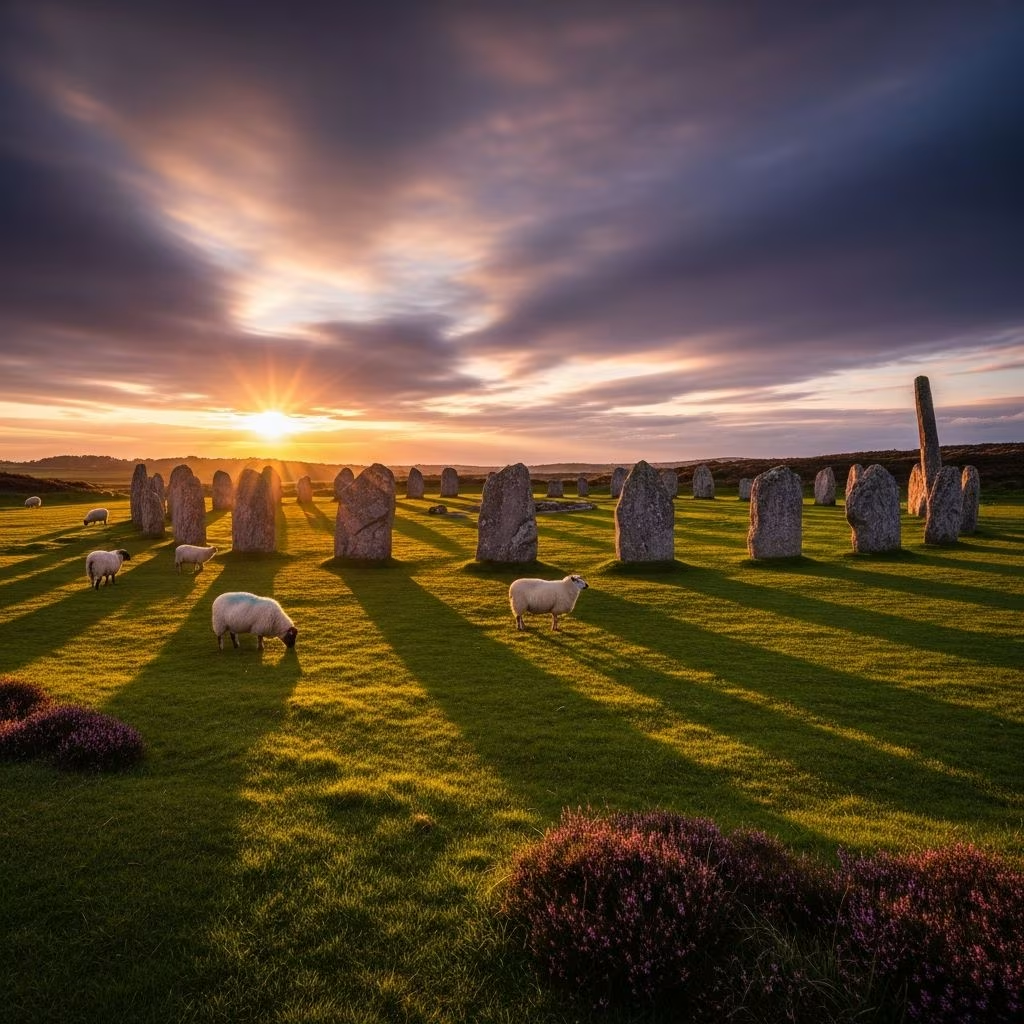
Nearby, the Ring of Brodgar captivates with its vast 104-meter diameter, enclosing about 60 stones from 2500 BC. Roughly 27 uprights and stumps persist amid a henge ditch. Aligned to celestial events, it served ritual purposes, linking to Stenness via the Ness of Brodgar’s discoveries of temples and art. The circle’s exposed position withstands fierce Orkney winds, symbolizing endurance.
| Site | Diameter | Stones Surviving | Key Feature |
|---|---|---|---|
| Stones of Stenness | 30m | 4 + stumps | Central hearth |
| Ring of Brodgar | 104m | 27 + stumps | Henge ditch, alignments |
Beyond the core four, Orkney teems with treasures: Wideford Hill’s 229-meter-long cairn, Unstan ware tombs, and the Links of Noltland’s figurines. The Ness of Brodgar, excavated since 2003, yields structured deposits, altars, and a monumental building, revolutionizing views of Neolithic complexity. This ‘cathedral-like’ structure and artistic grooved ware indicate centralized rituals and feasting for hundreds.
Orkney’s sites parallel global wonders—Stonehenge, Avebury, Carnac—demonstrating cultural exchanges. UNESCO recognizes their testimony to a vanished society’s beliefs, architecture, and farming prowess.
Precision alignments permeate Orkney: Maeshowe’s solstice beam, Brodgar’s midsummer sunset, Stenness’ lunar orientations. These suggest deep astronomical knowledge, likely tied to calendars, fertility rites, and seasonal cycles vital for agriculture. Equinoxes and solstices drew pilgrims across the archipelago.
Accessible via ferry from Scrabster or flights to Kirkwall, Orkney’s Mainland hosts clustered sites ideal for day trips. Historic Environment Scotland manages access; pre-book timed tickets for Skara Brae and Maeshowe, especially summer. Expect wind, pack layers. Guided tours unveil secrets; cycle paths connect monuments. Stay in Kirkwall or Stromness for B&Bs amid modern Orcadian life.
Climate change erodes coastal Skara Brae; coastal erosion and visitor numbers threaten. Conservation uses digital scanning (CyArk) for 3D models. Ongoing digs at Ness promise revelations about society, gender roles, and trade.
A UNESCO site comprising Skara Brae, Maeshowe, Stones of Stenness, and Ring of Brodgar, showcasing 5,000-year-old life.
Primarily 3100-2500 BC, with some from 4000 BC.
Yes, they cluster on Mainland; allow 4-6 hours with transport.
Maeshowe offers solstice tours via lottery; observe alignments year-round.
Absolutely; interactive exhibits at visitor centers engage kids.
