

 Travel Essentials
 Travel Essentials

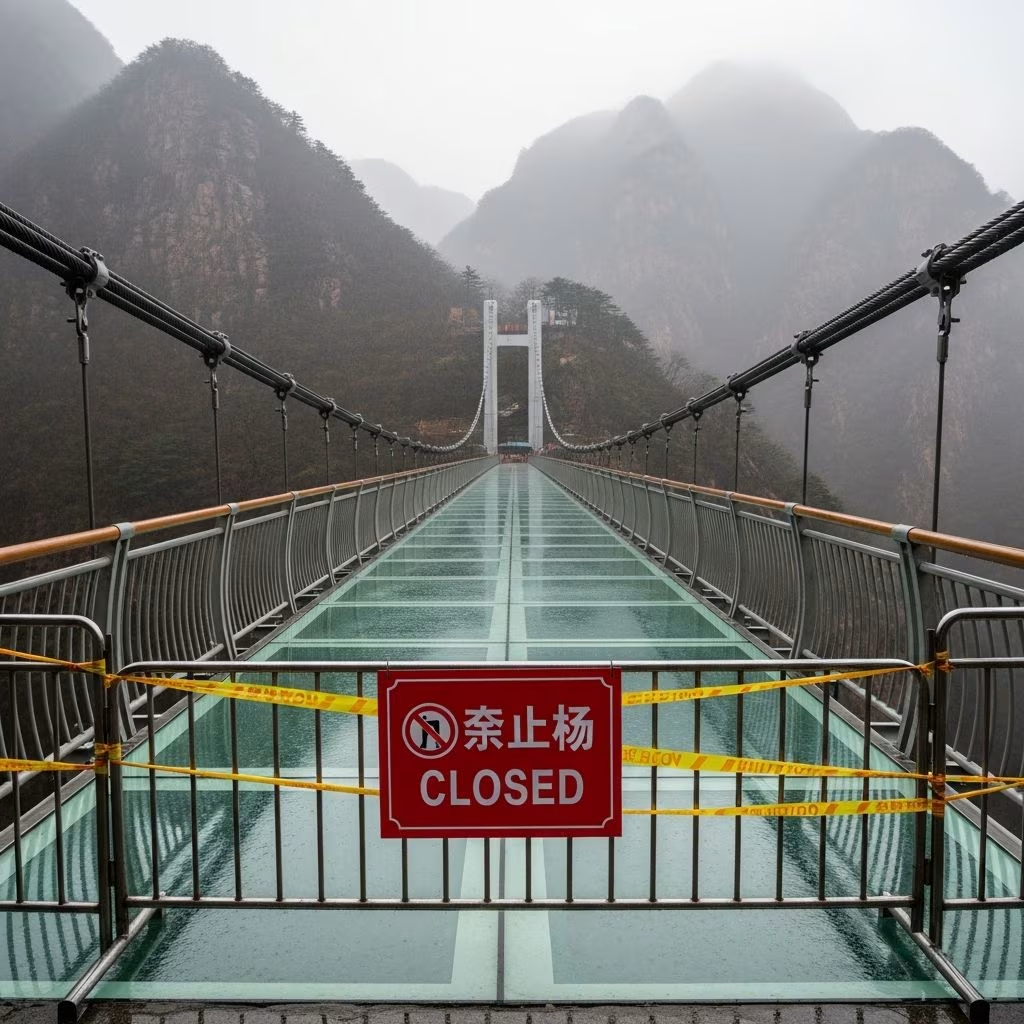
Hebei has closed all 32 of its glass bridges and viewing platforms after accidents and safety concerns triggered regional inspections.
 Travel Essentials
China’s mountainous Hebei province has taken decisive action by closing all 32 of its glass-bottomed bridges, walkways, and viewing platforms amid growing concerns over structural failures and visitor accidents. These closures, spanning the past 18 months, mark a significant shift in a tourism trend that has captivated millions with heart-pounding views from transparent walkways suspended high above dramatic landscapes.
Glass bridges emerged as a sensation in Chinese tourism around 2015, transforming remote scenic areas into adrenaline-fueled hotspots. Engineered from multi-layered tempered glass, these structures allow visitors to peer straight down at dizzying heights, often spanning gorges or clinging to sheer cliffs. Hebei’s Hongyagu Bridge, stretching 1,600 feet, held the title of the world’s longest until recently surpassed by competitors. Nationally, over 2,300 such bridges exist, alongside countless glass slides and platforms, fueling a boom in rural economies through ticket sales and visitor spending.
The appeal lies in the psychological thrill: walking on what appears to be fragile panes over vast drops. Some designs incorporate illusions, like the East Taihang Glasswalk in Hebei, where floors simulate cracking underfoot via special effects, amplifying the terror for selfie-snapping crowds. This craze has spread beyond Hebei to provinces like Hubei and Guangxi, drawing international attention and social media buzz.
Behind the glamour lurk real hazards. A spate of incidents exposed vulnerabilities in these attractions. In Guangxi, heavy rain turned a glass slide treacherous, causing a rider to slam into railings and plummet to his death from head trauma. Other reports detail shattered panels sending shards flying, slips leading to falls, and structural groans under crowds exceeding design limits.
These events weren’t isolated. Nationwide, at least two fatalities and multiple injuries prompted Beijing to mandate comprehensive safety audits across all glass facilities. Hebei acted first, implementing regional standards on materials, designs, and crowd capacities amid a vacuum of national regulations.
Building glass bridges demands precision. Panels typically comprise 3-5 layers of 12-52mm-thick tempered glass, bonded with polymers to withstand winds, temperatures, and human weight—often certified for 800kg per square meter. Yet, shortcuts in construction, poor maintenance, or overloading have led to failures. Without uniform standards, variations in quality proliferate.
| Factor | Risk | Mitigation Attempted |
|---|---|---|
| Weather Exposure | Rain-slicked surfaces, thermal expansion cracks | Anti-slip coatings, drainage systems |
| Crowd Overload | Excess weight stressing bonds | Visitor limits (often ignored) |
| Material Fatigue | Repeated impacts weakening layers | Regular inspections (inconsistent) |
| Design Flaws | Inadequate supports in high winds | Regional guidelines in Hebei |
Hebei’s proactive closures reflect lessons from these pitfalls, prioritizing audits over revenue.
The central government urged local officials to evaluate every glass structure, a monumental task given the 2,300+ bridges and undefined walkways/slides. Hebei pioneered by enforcing construction norms, setting a template others may follow. This could reshape tourism: safer designs might emerge, but hasty rebuilds risk repeating errors.
Economically, closures hit hard. These sites generated millions, boosting hotels, vendors, and jobs in impoverished areas. Operators now face refunds, lost seasons, and retrofit costs. Tourists, meanwhile, seek alternatives like Vietnam’s bamboo bridges or Switzerland’s via ferratas.
China’s saga mirrors worldwide daredevil attractions. The U.S. Grand Canyon’s Skywalk faced lawsuits over safety; Dubai’s glass floors spark debates. Common threads: innovation outpacing regulation, hype overriding caution. Lessons from Hebei could inform global standards, emphasizing engineering certifications and load testing.
Reopenings hinge on passing rigorous checks. Hebei mandates advanced materials and capacity controls, potentially pioneering safer models. Innovations like hybrid glass-composite panels or AI-monitored stress sensors loom. Yet, the thrill’s essence—perceived danger—complicates balances between excitement and security.
Tourists should monitor updates; many sites remain closed as of recent reports. This pause underscores tourism’s evolution: from unchecked booms to responsible adventures.
Safety concerns from accidents, including deaths, led to closures of 32 sites over 18 months for inspections and upgrades.
Over 2,300 bridges, plus numerous walkways and slides, per state media.
No, only Hebei’s 32; nationwide audits are ongoing.
Pending safety assessments; no firm dates announced.
Consider cliff walks in Europe or canyon skywalks elsewhere while China resolves issues.
