

 Travel Essentials
 Travel Essentials

A comprehensive travel guide to Heidelberg and the Neckar Valley, featuring historic sites, river activities, cultural attractions, and practical travel tips for visitors.
 Travel Essentials
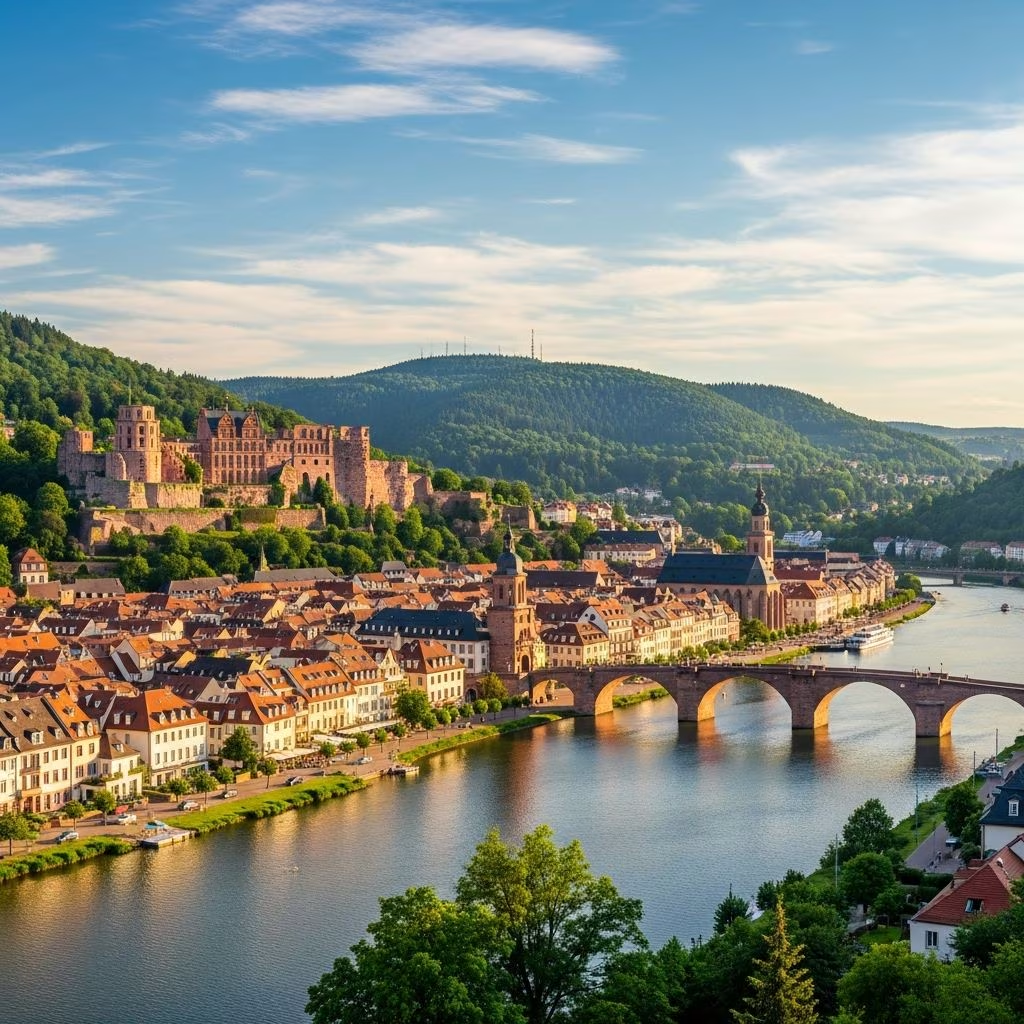
Nestled along Germany’s scenic Neckar River, Heidelberg stands as one of central Europe’s most captivating destinations, drawing visitors with its blend of academic prestige, architectural splendor, and romantic riverside setting. The surrounding Neckar Valley extends this charm far beyond the city limits, offering a landscape dotted with medieval fortifications, quaint villages, and natural beauty that has inspired artists and writers for centuries.
Heidelberg holds a unique position in German history as the nation’s oldest university town, established in 1386. This distinction has shaped the city’s character and cultural identity throughout the centuries. The city has experienced remarkable transformations, particularly following its destruction during the 1690s by French military forces. Rather than remaining a ruin, Heidelberg underwent extensive reconstruction during the 18th century, eventually emerging as a beacon of intellectual and artistic endeavor.
What makes Heidelberg’s story particularly remarkable is its fortunate survival during World War II, when much of Germany faced devastating destruction. This preservation allowed the city to maintain its authentic medieval and Renaissance architecture, creating an open-air museum of European history. The combination of scholarly tradition and architectural heritage has made Heidelberg a muse for countless creative minds throughout history, from the German Romantic poet Johann Wolfgang von Goethe to English landscape painter William Turner and American author Mark Twain.
The Altstadt, or Old Town, represents the geographic and cultural heart of Heidelberg. This district captures the essence of medieval German urban planning with its narrow, winding alleyways, vibrant public squares, and buildings painted in warm pastel tones. Walking through these streets provides an immersive experience of centuries-old European city life.
The Hauptstraße serves as the Old Town’s primary artery and holds the distinction of being Europe’s longest pedestrian walkway, stretching over a mile in length. This traffic-free boulevard runs parallel to the Neckar River and functions as the commercial and social hub of Heidelberg. Along its length, visitors encounter an extensive array of independent shops, traditional restaurants, historic cafés, and cultural institutions that showcase both contemporary and heritage attractions.
For optimal viewing of the Old Town’s character, many travelers recommend visiting during sunset hours. From vantage points like Bismarckplatz, the interplay of fading light with historic church spires and the verdant hills beyond creates a quintessentially romantic German landscape. The combination of architectural details and natural backdrop explains Heidelberg’s enduring appeal to visitors from around the world.
The Church of the Holy Spirit stands as one of the Old Town’s most prominent structures, its distinctive spire visible from numerous vantage points throughout the city. Additional religious architecture includes the late-Gothic Church of Saint George, which features stained glass windows and tower views spanning the entire cityscape. The remarkably yellow Hölderlin Tower, visible from across the river, offers another distinctive architectural reference point.
Civic administration historically centered on the striking City Hall, dating to the 15th century. The building’s painted façade and astronomical clock remain notable features of the urban landscape. These structures collectively document the city’s progression from medieval times through the modern era.
Commissioned during the 18th century by Prince Karl Theodor, the Alte Brücke, or Old Bridge, represents both a functional transportation link and an architectural statement. Constructed from locally-quarried Neckar Valley sandstone, the bridge connects the Old Town to the Neuenheim district on the river’s eastern bank. This stone bridge replaced a succession of wooden bridges that had repeatedly succumbed to flooding and military destruction.
The bridge’s historical significance extends beyond its engineering achievement. It serves as a symbolic gateway between the old city and newer developments, and from its span, visitors enjoy unobstructed views of the castle perched on the hillside above. The bridge itself has become one of Heidelberg’s most photographed locations and remains a favorite gathering point for both residents and tourists.
Crowning the hillside above the city, Hohentübingen Castle dominates Heidelberg’s skyline with its turreted silhouette. This imposing structure served historical purposes as a royal residence and now functions as a repository of cultural treasures. The castle grounds are freely accessible for exploration and photography, though interior access requires paid admission.
Guided tours of the castle interior reveal architectural highlights including the English Wing, constructed in 1612 during the reign of Elector Friedrich V. The Renaissance courtyard demonstrates the refined taste of historical rulers, while grand chambers such as the Knight’s Hall and Imperial Hall showcase the wealth and power that once centered here. A notable curiosity resides in the cellar: the Grosses Fask, recognized as the world’s largest functioning wine barrel. This enormous wooden vessel, constructed from timber harvested from 130 oak trees, possesses a storage capacity exceeding 58,000 gallons.
Heidelberg’s role as a cultural center extends to its museum offerings. Notable institutions house collections spanning from antiquity to modern art movements. One significant repository features works by major 20th-century artists including Henri Matisse, whose “Back Series” and designs for the “Triadic Ballet” figurines demonstrate his influence on modern aesthetic thinking. The collection also includes Salvador Dalí’s “Raised Instant,” works by German Expressionist George Grosz, and Joan Miró’s “Bird with a Calm Look.”
A particularly noteworthy feature of certain museums involves interactive installations created by contemporary artists. The artist Joseph Beuys personally installed and designed a dedicated room within one institution, reflecting his commitment to integrating art into lived space. On designated days, typically Wednesdays, certain museums offer complimentary access to permanent collections, making cultural exploration accessible to budget-conscious travelers.
Visitors are advised to plan museum visits strategically, potentially incorporating guided tours to ensure comprehensive exposure to collections. Many institutions maintain cafés or restaurants, allowing cultural consumption to extend into gastronomic experiences.
Beyond the urban core, Heidelberg offers access to contemplative natural spaces that historically attracted scholars and creative thinkers. The Philosophenweg, or Philosopher’s Walk, traces a path along the Heiligenberg hillside on the Neckar River’s northern bank. Originally developed as a simple vineyard trail, this route has evolved into a curated walking experience featuring informational interpretive signage, maintained gardens, and strategically placed rest areas.
The walk’s trajectory provides expanding panoramic views encompassing the Neckar River below, the Old Town district, the castle complex, and the historic Old Bridge. This vantage point allows visitors to comprehend the city’s spatial organization and appreciate the natural amphitheater-like setting that has influenced Heidelberg’s development. The path represents roughly the same routes traversed by Romantic-era German intellectuals, creating a historical continuity between past and present.
The Neckar River functions as more than an aesthetic backdrop; it offers practical and experiential access to the region. Paved pedestrian pathways line both riverbanks, providing shaded walking routes with integrated rest areas and picnic zones. These riverside promenades offer an alternative perspective on the city compared to street-level urban exploration.
Commercial boat operations provide another dimension of river engagement. Operating during the warmer months from April through October, river cruises extend from Heidelberg southward to Neckarsteinach and return. Solar-powered vessels represent an increasingly common option, allowing visitors to glide across the water while minimizing environmental impact. Onboard bistro facilities enable combining sightseeing with dining experiences.
The famous American author Mark Twain spent considerable time on the Neckar and drew inspiration for his literary works from riverside observations. His experiences floating down the river purportedly influenced his creation of Huckleberry Finn, linking this geographic location to canonical American literature.
| Trip Type | Duration | Seasonal Availability | Highlights |
|---|---|---|---|
| Round-trip local cruises | 50 minutes | April to October | Castle views, Old Town perspective |
| Extended valley tours | Full day | April to October | Multiple castles, Neckarsteinach |
| Rhine Valley excursions | Extended | June to October | Rüdesheim, Worms, larger river views |
| Themed specialty cruises | Variable | Seasonal | Festival times, historical commemorations |
The Neckar Valley extends considerably beyond Heidelberg’s boundaries, stretching southeastward past medieval municipalities and contemporary industrial centers. This elongated geographic feature follows the Neckar River from its Heidelberg origins to Tübingen, encompassing approximately 200 kilometers of varied terrain and historical significance.
Despite modern commercial shipping access reaching as far as Stuttgart, much of the valley landscape has resisted excessive urbanization and development. Ancient castle ruins emerge from dense forests at seemingly random intervals, evidence of the region’s historical importance to German royal dynasties, particularly the Hohenstaufen and Hohenzollern families. Many of these fortifications have been repurposed as guest accommodations, offering overnight stays within historically significant structures.
Beyond Heidelberg, the valley shelters numerous settlements that preserve traditional German character. The spa town of Bad Wimpfen exemplifies valley charm, with thermal springs and architectural heritage attracting wellness-focused visitors. The valley’s network of towns provides convenient bases for exploring the broader region through various transportation modes.
Traveling through the valley by train, bicycle, or automobile presents highlights in itself. Regional rail connections offer scenic routes incorporating multiple intermediate stops, while independent travelers with bicycles can navigate valley roads connecting disparate attractions. The journey passes through vineyard landscapes, forested areas, and pastoral countryside that collectively create the region’s distinctive character.
Heidelberg’s location approximately one hour south of Frankfurt via rail makes it accessible as either a primary destination or integration point within broader German itineraries. The city functions effectively as a regional hub for further exploration. Regional rail networks connect valley towns and villages, with Baden-Württemberg Tickets providing economical multi-transport options covering local transit throughout Heidelberg and connections to surrounding regions like Ludwigsburg.
Scenic routing options that traverse the Neckar Valley provide alternatives to direct transportation, trading journey time for visual rewards. These routes frequently incorporate intermediate stopovers at particularly notable settlements or castle locations. Automobile travelers should note the prevalence of speed monitoring equipment throughout valley roads, encouraging adherence to posted speed restrictions.
Valley experiences vary significantly by season. River cruises operate reliably during the April to October window, ensuring boat-based exploration requires spring through fall travel. The romantic aesthetic often associated with Heidelberg intensifies during warmer months when outdoor dining, riverside walks, and castle grounds exploration prove most pleasant. Winter months offer alternative advantages, including smaller crowds and the possibility of festive seasonal programming in the city center.
Spring through fall offers optimal conditions for outdoor exploration and river activities. Summer provides the most amenities but attracts larger crowds. Autumn delivers romantic lighting and manageable visitor numbers.
A minimum of two days allows comprehensive Heidelberg exploration. Adding additional days enables valley towns and castles investigation via day trips or extended stays.
While English is increasingly spoken in tourist areas, basic German phrases enhance interactions. Guided tours in English remain available at major attractions.
Options range from budget hostels to luxury hotels, with castle guest accommodations providing distinctive experiences. Advance booking proves advisable during peak season.
Castle interiors, museums, and guided tours typically require payment. Many outdoor areas and streets are freely accessible. Weekly free museum access often occurs on specific days.
