

 Travel Essentials
 Travel Essentials

Comprehensive travel guide to Heidelberg and the Neckar Valley, featuring must-see attractions, historical sites, and practical tips for visiting Germany's oldest university town.
 Travel Essentials
Nestled along the Neckar River in southwestern Germany, Heidelberg stands as one of Europe’s most enchanting destinations, blending intellectual heritage with natural beauty and romantic architecture. Founded in 1386, this venerable institution became Germany’s oldest university town, attracting scholars, artists, and travelers who have drawn inspiration from its timeless charm. From the majestic hilltop castle to the winding cobblestone streets of the historic center, Heidelberg offers visitors an immersive experience into centuries of German culture and history.
Heidelberg’s journey through time has shaped its distinctive character and cultural significance. The city experienced profound transformations across several centuries, particularly during the late 17th century when French military campaigns devastated much of the urban landscape. What emerged from these ruins during the 18th-century reconstruction period was a thoughtfully rebuilt community that preserved its medieval essence while incorporating new architectural elements.
The city’s remarkable resilience continued through the 20th century when it emerged virtually untouched from World War II’s widespread destruction, making it a rare repository of authentic German architectural heritage. This fortunate preservation has allowed contemporary visitors to walk through streets and squares much as they appeared centuries ago, creating an authentic window into European history that few cities can match.
Heidelberg’s intellectual prominence attracted some of history’s greatest minds. Literary figures including Johann Wolfgang von Goethe and Joseph von Eichendorff found inspiration in these streets, while American author Mark Twain spent considerable time here, with local lore suggesting the Neckar River voyage influenced his literary masterpiece. This convergence of creativity, scholarship, and natural beauty established Heidelberg as a cultural beacon that continues attracting visitors seeking authentic European experiences.
The heart of Heidelberg pulses within its Altstadt, or Old Town, a pedestrian-friendly area that invites leisurely exploration and discovery. This district represents one of Europe’s most successful urban preservation efforts, featuring authentic medieval and Renaissance structures interspersed with contemporary shops, galleries, and dining establishments that serve local and international visitors.
The defining feature of the Altstadt is the Hauptstraße, an impressive mile-long pedestrian thoroughfare that stretches east and west parallel to the Neckar River. This boulevard ranks as Europe’s longest pedestrian walkway, offering an extended journey through the city’s commercial and cultural heart. Lined with architectural variety ranging from Gothic facades to Baroque embellishments, the Hauptstraße provides constant visual interest while accommodating shops, restaurants, cafes, and galleries at street level.
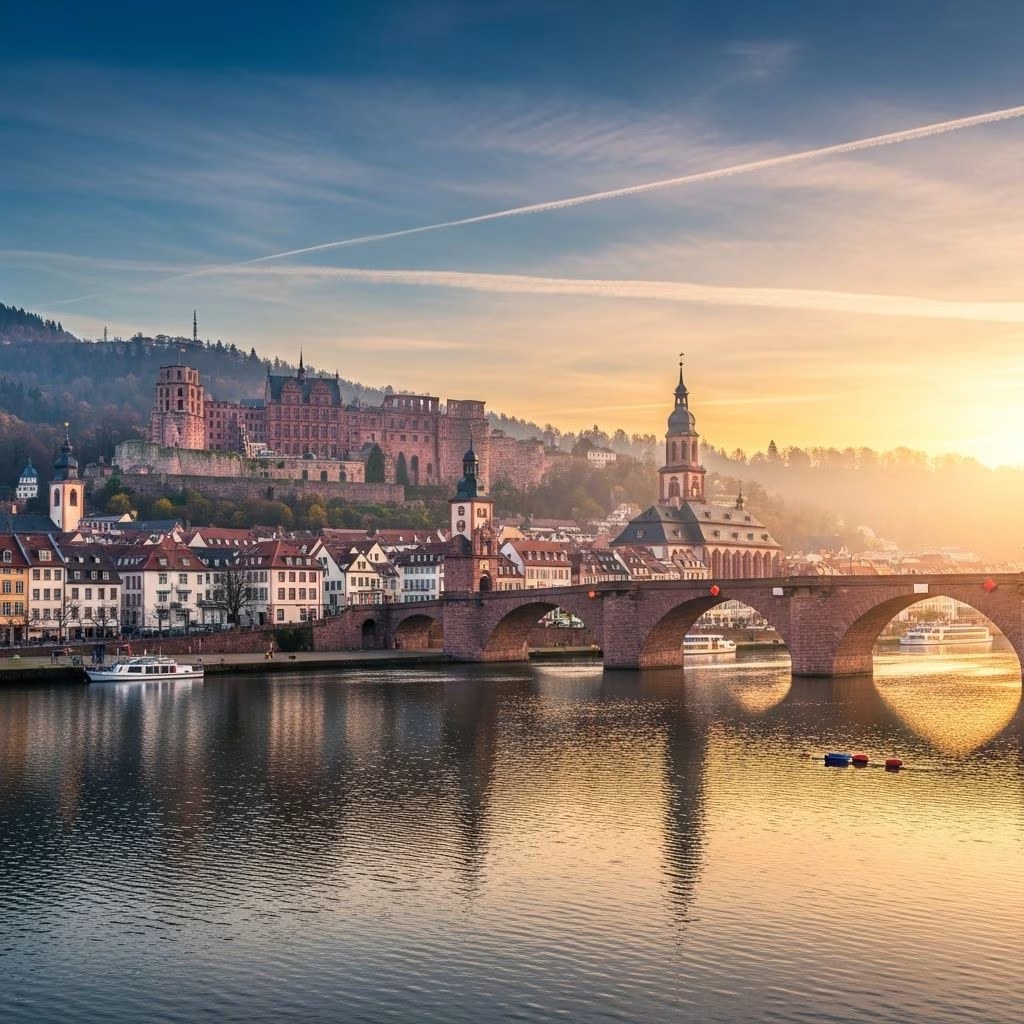
Strategic exploration of the Altstadt begins at Bismarckplatz, where visitors can orient themselves to the district’s geography and begin a westward journey toward the castle. The optimal viewing experience occurs during sunset hours, when golden light transforms church steeples into shimmering landmarks and illuminates the rolling forested hills beyond the city boundaries. This atmospheric quality has captivated visitors and artists for generations, contributing to Heidelberg’s reputation as one of Germany’s most photogenic destinations.
Beyond the main pedestrian artery, numerous narrow alleyways branch off the Hauptstraße, revealing hidden courtyards, intimate restaurants, and architectural treasures that escape the notice of casual visitors. These side streets reward curious exploration with discoveries of traditional brewing establishments, independent boutiques, and quiet squares perfect for reflection and people-watching.
Dominating Heidelberg’s skyline from its commanding hillside position, Heidelberg Castle represents one of Germany’s most iconic structures. This sprawling fortress showcases architectural evolution across centuries, with various sections reflecting Gothic, Renaissance, and medieval construction styles. The castle’s partial ruin status, resulting from 17th-century destruction and incomplete reconstruction efforts, paradoxically enhances its romantic appeal, creating the picturesque quality that captivates photographers and history enthusiasts worldwide.
Accessibility to the castle has been dramatically improved through modern infrastructure. A convenient funicular railway transports visitors directly from the city center to the castle entrance, eliminating the need for strenuous climbing while offering scenic views during the ascent. Once at the summit, guests can explore freely through gardens and exterior spaces at no cost, while interior exploration requires paid admission that grants access to historic chambers and exhibition spaces.
The castle’s interior preserves remarkable features that illuminate its historical significance. The Renaissance courtyard displays elegant proportions and architectural harmony characteristic of 16th-century design principles. The Knight’s Hall and Imperial Hall showcase the grandeur expected in royal residences, while specialized museum collections document the castle’s complex past and cultural importance.
One of the castle’s most distinctive features is the Grosses Fass, or Great Cask, housed in the wine cellar. This colossal wooden barrel, constructed from 130 individual oak trees, represents 18th-century craftsmanship and logistics at their most ambitious. With capacity exceeding 58,000 gallons, this functioning wine barrel remains the world’s largest, standing as both practical historical artifact and architectural marvel.
Beyond the main structures, castle grounds include an impressive pharmacy museum documenting historical medical practices and treatments. Manicured gardens provide peaceful retreats offering panoramic vistas across the Neckar Valley, combining horticultural beauty with strategic overlooks across the surrounding landscape.
The Alte Brücke, or Old Bridge, represents far more than simple infrastructure; it embodies centuries of engineering achievement and romantic iconography. Commissioned during the 18th century by Prince Karl Theodor, this stone bridge was constructed entirely from local Neckar Valley sandstone, creating aesthetic harmony with the surrounding landscape while showcasing regional materials and craftsmanship.
The bridge’s historical importance stems from its revolutionary stability compared to the wooden structures it replaced. Previous river crossings were frequently destroyed by floods and military conflicts, making reliable bridge construction a significant challenge in medieval and early modern periods. The Alte Brücke’s successful design established a durable crossing that connected the Old Town to the Neuenheim district, fundamentally improving urban accessibility and commerce.
Today, the bridge serves as both functional transportation link and primary tourist destination. Its arches frame spectacular views in both directions, creating photographers’ paradise during various lighting conditions and seasons. The bridge’s towers feature defensive architecture reflecting its strategic importance, while its overall proportions demonstrate the aesthetic principles of 18th-century engineering before pure function dominated design considerations.
Heidelberg’s intellectual and artistic heritage finds expression in several outstanding museums and galleries that preserve important collections. The city’s commitment to contemporary art extends beyond traditional historical documentation, encompassing modernist movements and avant-garde works that demonstrate Germany’s complex 20th-century cultural evolution.
Major museum collections feature works spanning centuries of artistic development, from classical sculpture to contemporary installations. Visitors encounter pieces by internationally recognized artists including Henri Matisse, Salvador Dalí, and Joan Miró, alongside significant German artistic figures. These institutions often offer guided tour options that provide contextual information and curatorial perspectives, significantly enriching visitor understanding and appreciation.
The city’s religious architecture contributes substantially to its cultural landscape. The Church of the Holy Spirit showcases late-Gothic design principles and commands attention within the urban fabric through its distinctive proportions and decorative elements. The striking 15th-century City Hall displays painted facades and incorporates an astronomical clock demonstrating the integration of scientific knowledge into civic architecture.
A notable feature within the Old Town is the Hölderlin Tower, painted in distinctive yellow that makes it immediately recognizable throughout the district. This structure offers remarkable views when photographed from across the Neckar River, providing photographers with compositional opportunities that have documented this landmark across generations. The tower’s reopening as a museum presents additional cultural engagement opportunities for interested visitors.
Stretching along the Heiligenberg hillside on the northern side of the Neckar River, the Philosopher’s Walk provides an experience that combines physical activity with intellectual contemplation. Originally developed as a rough vineyard path, this route has been systematically improved to accommodate contemporary visitors while preserving its essential character and natural surroundings.
The walk’s contemporary features include informational plaques providing historical and botanical context, carefully maintained gardens offering aesthetic pleasure, and strategically positioned benches inviting pause and reflection. The path’s elevation provides continuously evolving panoramic vistas encompassing the Neckar River, the Old Town’s architectural ensemble, Heidelberg Castle, and the Old Bridge, making this one of Germany’s most rewarding scenic walks.
This pathway’s historical importance extends beyond physical infrastructure. The route has attracted philosophers, poets, and contemplative visitors for generations seeking the intellectual and spiritual benefits of combining natural beauty with purposeful walking. The tradition of philosophical reflection during riverside walks reflects European intellectual history and continues as a meaningful visitor activity today.
The Neckar River has fundamentally shaped Heidelberg’s development, prosperity, and character throughout recorded history. As a major tributary of the Rhine, this waterway provided essential transportation for commerce, enabled water-powered industrial development, and created the scenic context that distinguishes the city from inland alternatives. The river’s valley extends considerably beyond Heidelberg itself, encompassing diverse landscapes and charming communities that together form a cohesive travel region.
Contemporary visitors can engage with the Neckar through multiple recreational options. Paved pedestrian pathways shadow the river’s course throughout the city, providing shaded walks beneath mature trees and opportunities for quiet riverside observation. Picnicking on wide-open lawns opposite the main bank combines relaxation with panoramic viewing of the romantic cityscape and its reflection in the water.
For visitors seeking water-based perspectives, solar-powered boat tours offer gentle gliding across the water’s surface, presenting the city and surrounding landscape from unconventional vantage points. These cruises, typically enhanced with onboard bistro services, provide comprehensive views of both urban and rural Neckar Valley scenery. Seasonal operations extending from spring through early autumn accommodate varying climate conditions and visitor schedules.
The Neckar Valley extends substantially beyond Heidelberg proper, encompassing medieval towns, ancient castle ruins, and charming villages that appeal to visitors seeking comprehensive regional experiences. This countryside represents a significant cultural and historical zone that remained relatively undiscovered by mass tourism, preserving authentic character and traditional community life.
The valley floor and surrounding hillsides host numerous fortifications reflecting centuries of regional power struggles and noble family histories. These castles, though sometimes appearing as ruins, communicate vivid narratives about medieval warfare, architectural adaptation, and the region’s strategic importance within the broader German political landscape.
Notable destinations within reasonable day-trip range include Bad Wimpfen, a spa town offering architectural charm and wellness traditions, and numerous smaller villages that showcase regional character and hospitality. The valley’s forest coverage and agricultural heritage create landscapes substantially different from urban Heidelberg, providing visitors variety within manageable traveling distances.
The Studentenkarzer, or student prison, represents one of Heidelberg’s most unusual historical attractions, reflecting the university’s historical authority to discipline students through incarceration. This institution operated within the framework of academic autonomy, allowing the university to maintain order among its scholarly population during periods when civil authorities had limited jurisdiction over academic matters.
Accessible by tram from the city center, this facility provides fascinating insights into student life across several centuries. The preserved prison chambers, decorated walls, and contemporary accounts document student experiences, disciplinary practices, and the culture of academic communities during various historical periods. This attraction appeals particularly to visitors interested in higher education history and the evolution of university systems across European societies.
Heidelberg’s location approximately one hour south of Frankfurt via rail connections positions it advantageously for visitors integrating multiple German destinations. The city’s compact historic core remains highly walkable, eliminating the necessity of vehicular transportation for most visitor activities. Public transportation including trams and local buses extends accessibility beyond walking distance for attractions positioned at greater distances from the city center.
Visitor experiences vary considerably based on seasonal timing. Spring and autumn offer moderate temperatures and manageable crowd densities, while summer months attract peak visitor concentrations that can overwhelm popular attractions. Winter visits present opportunities for atmospheric experiences with reduced tourism pressure, though cooler temperatures and occasional snow require appropriate preparation.
Visitors should verify museum operating schedules and admission requirements prior to planning specific visits. Several institutions offer free admission during designated time periods, such as Wednesday permanent collection access at major art museums, enabling budget-conscious travelers to optimize their engagement with cultural resources.
