

 Travel Essentials
 Travel Essentials

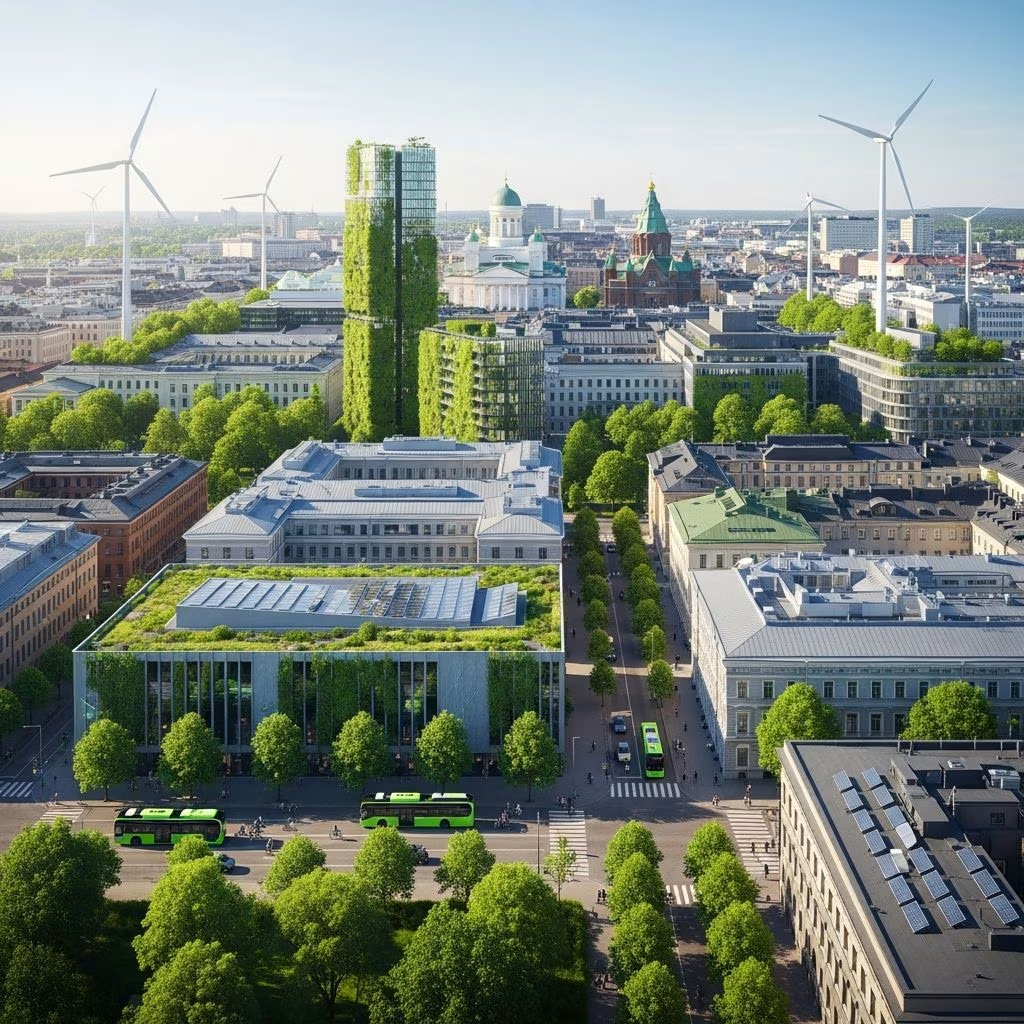
Explore Helsinki's path to carbon neutrality by 2030, featuring renewable energy, advanced recycling, green transport, and nature-integrated urban planning.
 Travel Essentials
Helsinki stands as a global leader in sustainable urban development, aggressively pursuing carbon neutrality by 2030 through renewable energy adoption, circular waste systems, and integrated green infrastructure.
The Finnish capital has accelerated its environmental ambitions, shifting its carbon neutrality goal from 2035 to 2030 as outlined in its updated City Strategy. This commitment includes a zero-carbon target by 2040, emphasizing reduced greenhouse gas emissions, biodiversity protection, and balanced urban growth. City leaders, including Deputy Mayor Anni Sinnemäki, highlight progress like a 60% per capita carbon footprint reduction, achieved by phasing out coal plants and investing in heat pumps and storage.
Helsinki’s strategy aligns with the UN’s 2030 Sustainable Development Goals (SDGs), with the city being Europe’s first to voluntarily report progress. Implementation varies across goals, with strong advances in ecological and social sustainability during the 2021–2025 period.
Over half of Helsinki’s energy derives from renewables, supporting district heating expansions and underground heat storage in repurposed oil caves by Helen, the city’s energy firm. These initiatives have enabled the closure of coal plants, with the last one slated for shutdown soon.
Helsinki’s waste systems exemplify circular economy principles, recycling over 50% of household waste and converting biowaste into biogas for buses. Non-recyclables become energy, keeping the city landfill-free. The Helsinki Region Environmental Services (HSY) targets a 60% household recycling rate by 2025, focusing on biowaste sorting and nutrient cycling.
| Waste Type | Handling Method | Outcome |
|---|---|---|
| Household Waste | Recycling & Sorting | Over 50% recycled |
| Biowaste | Anaerobic Digestion | Biogas for transport |
| Non-Recyclables | Energy Recovery | Zero landfill |
Public transport relies on renewables, with biogas buses common and nearly half of trips by foot or bike due to compact design. Investments in cycling infrastructure and potential low-emission zones address traffic emissions. This results in cleaner air and quieter streets.
Expansive parks, green roofs, and preserved natural areas enhance air quality and biodiversity. The City Strategy reconciles housing with nature, promoting green spaces amid development. These elements support resident wellbeing and ecological resilience.
Helsinki pioneered a binding CO2 emissions cap for residential buildings’ full lifecycle, influencing industry-wide changes. Early projects incorporate low-carbon materials and processes. University efforts mirror this with carbon neutrality roadmaps by 2030, focusing on energy-smart buildings.
HSY coordinates regional circular initiatives, integrating recovery into procurement and promoting sludge reuse. Goals include carbon-neutral services by 2030 and climate-resilient operations.
Helsinki tops sustainability indices like the GDS-Index due to innovation, community engagement, and policy execution. Voluntary SDG reporting and partnerships position it as a model. Visitors benefit from clean air, pure water, and eco-options.
With strategies extending to 2030 and beyond, Helsinki aims to be the world’s most sustainable urban area. Ongoing efforts in traffic, housing, and energy promise continued leadership.
Helsinki targets carbon neutrality by 2030, with zero-carbon by 2040.
Over 50% recycling, biowaste to biogas, non-recyclables to energy—no landfills.
Yes, powered by renewables like biogas; walking/cycling dominate trips.
Absolutely—use recycling, bikes, and green spaces to minimize impact.
Ambitious policies, renewable energy, circular systems, and SDG alignment.
