

 Travel Essentials
 Travel Essentials

Explore Bhutan's lesser-known regions like Bumthang, Phobjikha, and eastern frontiers, revealing cultural treasures, wildlife, and scenic hikes away from tourist crowds.
 Travel Essentials
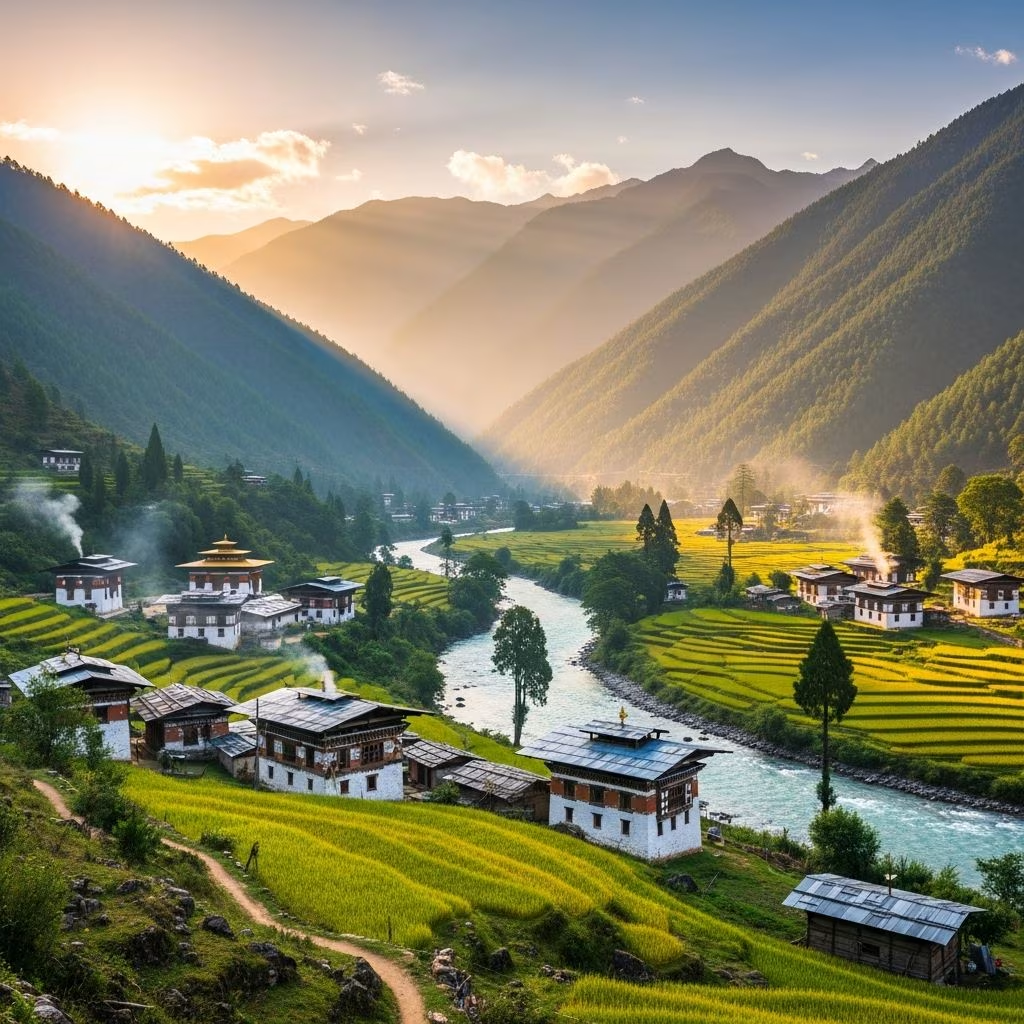
Bhutan, the Himalayan kingdom renowned for its Gross National Happiness philosophy, offers far more than its bustling capital of Thimphu and the iconic Paro Taktsang monastery. Tucked away in its rugged terrain are remote valleys, sacred sites, and ancient trails that provide profound cultural immersion and natural splendor. This guide takes you deep into these overlooked regions, where travelers can witness authentic Bhutanese life amid mist-shrouded peaks and lush forests.
While Thimphu pulses with modern Bhutanese energy and Paro welcomes international flights, the true essence of this land lies in its central and eastern provinces. These areas boast fertile farmlands, spiritual hubs, and biodiversity hotspots rarely touched by mass tourism. Journeying here rewards intrepid explorers with encounters with rare wildlife, like the elusive black-necked cranes in Phobjikha Valley, and glimpses into preserved traditions.
Traveling beyond the main gateways requires patience—winding roads and limited infrastructure demand multi-day itineraries—but the payoff is immersion in Bhutan’s spiritual core. Regions like Bumthang and Lhuentse preserve ancestral customs, weaving history with everyday rural rhythms.
Bumthang Valley stands as Bhutan’s cultural epicenter, comprising four interconnected valleys: Chokhor, Tang, Ura, and Prakhar. This high-altitude basin, at around 2,600 meters, is dotted with ancient lhakhangs (temples) and dzongs (fortresses), many linked to Guru Rinpoche, the 8th-century tantric master who introduced Buddhism to Bhutan.
Tang Valley, the most isolated of Bumthang’s quartet, captivates with its dense forests and the enigmatic Mebar Tsho, or Burning Lake. Legend holds that Pema Lingpa, Bhutan’s famed treasure revealer, dove into its dark waters in 1501 with a lit lamp, emerging unscathed with sacred relics—proving its mystical aura. Visitors can meditate by the lakeside, where the air hums with spiritual energy.
Nestled between Thimphu and Trongsa, Phobjikha Valley at 3,000 meters transforms into a birdwatcher’s paradise each winter. From October to March, over 300 black-necked cranes migrate here from Tibet, their trumpeting calls echoing through Gangtey Gompa’s meadows. This rare species, a Bhutanese national symbol, finds refuge in the valley’s glacial wetlands.
The Gangtey Nature Trail, a 5-kilometer loop, meanders past farmlands, forests, and the imposing Gangtey Monastery, offering prime crane-spotting opportunities. Eco-lodges like those in the area provide cozy stays with Bhutanese hospitality, blending comfort with conservation efforts.
| Phobjikha Highlights | Best Time to Visit | Activities |
|---|---|---|
| Black-necked Cranes | Nov-Feb | Birdwatching, Nature Walks |
| Gangtey Gompa | Year-round | Cultural Tours, Meditation |
| Valley Hikes | Spring/Fall | Trekking, Photography |
The journey from Paro to central Bhutan crosses the thrilling Cheli La Pass at 3,810 meters, Bhutan’s highest drivable point. In summer, rare Himalayan blue poppies carpet the slopes, while prayer flags flutter against snow-capped vistas. This serpentine route descends into Haa Valley, a secluded spot with nomadic herders and ancient chortens.
Southern Bhutan, bordering India, contrasts sharply with its northern highlands. Steamy districts like Samtse and Sarpang feature subtropical forests teeming with hornbills, elephants, and golden langurs. Royal Manas National Park here rivals any African safari for tiger and rhino sightings, though access requires permits and guided safaris.
The east unfolds over grueling roads from Thimphu via Bumthang, spanning 10-14 hours of hairpin turns through pine-clad ridges. Mongar Dzong, a windswept fortress, overlooks terraced lemon groves, while Lhuentse—cradle of Bhutan’s royal Wangchuck dynasty—clings to cliffs above the Kuri Chhu River.
This region’s sparse population and rugged terrain ensure untouched landscapes, where landslides occasionally close roads, adding to the adventure.
With nearly two-thirds of Bhutan roadless, foot travel unlocks its soul. Transformed trading routes now form world-class treks, from the easy 2-day Bumthang Cultural Trail linking hermitages to the arduous Snowman Trek, a 24-day high-alpine odyssey at 5,000+ meters.
Guides handle permits, porters, and camps, allowing focus on rhododendron blooms, glacial lakes, and remote goemba chants. Popular options include:
These paths foster deep connections with nature and locals, embodying Bhutan’s sustainable tourism ethos.
Bhutan mandates guided tours with a Sustainable Development Fee (currently $100/day, including lodging, meals, and transport). Plan 10-14 days for eastern forays; roads like those to Lhuentse demand sturdy vehicles and weather checks.
Overland from Paro or Thimphu via Bumthang; expect 2-3 days of scenic drives on winding roads.
Yes, short cultural hikes suit novices; high passes require fitness and acclimatization.
Black-necked cranes, golden langurs, takin (national animal), and birds like the satyr tragopan.
Homestays and eco-resorts offer authentic comfort; camping on treks is upscale with guides.
Bhutan caps daily visitors to protect its 72% forest cover and carbon-negative status. Choosing offbeat paths supports communities while minimizing impact—opt for low-volume operators committed to eco-tourism.
These secret valleys remind us why Bhutan remains the world’s last Shangri-La: a place where spirituality, nature, and tradition harmonize in breathtaking isolation.
