

 Travel Essentials
 Travel Essentials

Explore lesser-known Argentine regions featuring dramatic landscapes, ancient cultures, and authentic experiences that reveal the country's diverse natural wonders.
 Travel Essentials
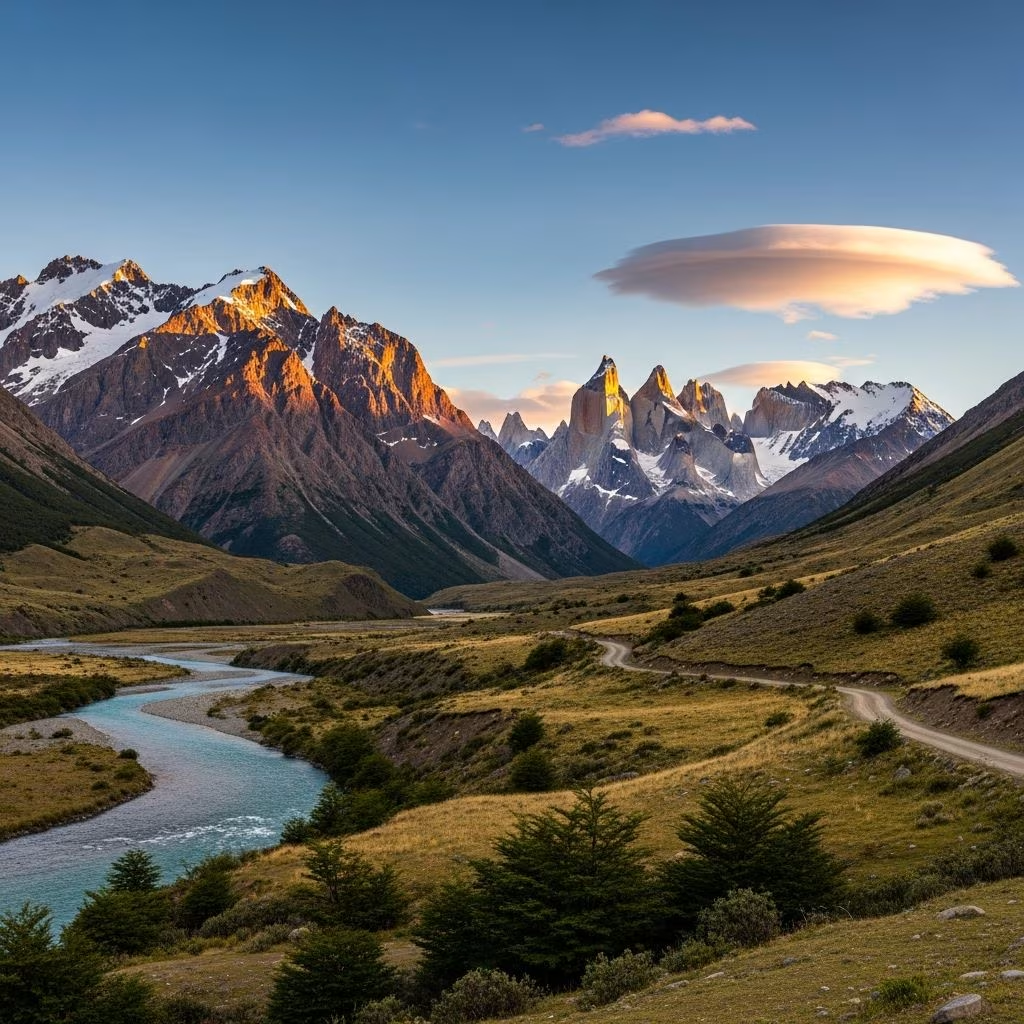
Argentina conjures images of tango dancers, gaucho culture, and the dramatic peaks of Patagonia. Yet beyond these well-established tourist destinations lies a landscape of extraordinary diversity that remains largely unexplored by international visitors. The country’s interior conceals dramatic canyons, windswept valleys, and untouched wilderness areas where adventurous travelers can experience authentic Argentina alongside those who know the land intimately. These lesser-known regions offer profound natural beauty, rich cultural heritage, and genuine encounters with local communities that define the true character of South America’s second-largest nation.
Stretching across northwestern Argentina for over 520 kilometers, the Calchaquí Valleys represent one of the country’s most visually striking yet underexplored regions. This mountain-and-valley system exhibits geological formations and color palettes that seem almost unnatural in their vivid intensity. The landscape combines deep ochre cliffs, emerald agricultural lands, and snow-laden peaks into a panorama that rivals more famous Argentine destinations while maintaining an atmosphere of peaceful solitude.
Small colonial villages dot this expansive valley system, each serving as a portal into Argentina’s pre-Hispanic heritage. These towns maintain their traditional architecture and local customs with minimal commercial development, allowing visitors to witness genuine community life rather than staged performances for tourists. The valleys’ unique microclimate supports traditional farming practices that have endured for centuries, with residents cultivating crops adapted to the region’s specific environmental conditions.
Cachi exemplifies the valley towns that define this region. Located approximately four hours north of Salta city, this sleepy settlement sits surrounded by massive snow-covered peaks known locally as nevados. The town itself preserves colonial-era structures and maintains a pace of life distinctly removed from modern tourism infrastructure. Here, visitors can witness how ancient civilizations shaped the landscape through terraced agriculture and water management systems that remain functional today.
The Quebrada de las Flechas canyon represents one of Argentina’s most photogenic geological formations yet remains relatively undiscovered by mainstream tourism. Situated between the towns of Cafayate and Angastaco in Salta Province, this natural monument features towering rock formations with otherworldly shapes and textures. The canyon’s designation as a protected natural area reflects its geological significance, though this protection has not transformed it into a crowded tourist attraction.
Traveling through Quebrada de las Flechas via Ruta 40 delivers an unforgettable road trip experience, with lunar-like landscapes that reward frequent stops for photography and contemplation. The canyon’s rock formations tell geological stories spanning millions of years, each layer revealing different periods of the region’s formation and transformation.
Further north in Salta Province lies an even more extraordinary geological curiosity: Cono de Arita. This naturally formed volcano rises approximately 400 feet from a bed of salt within the Salar de Arizaro, creating a landscape of remarkable uniqueness. Local legends describe the cone as a ceremonial site predating the Inca civilization, though reaching this remote location requires traversing rough roads through largely unpopulated terrain. The journey itself becomes part of the experience, as travelers traverse landscapes that few outsiders ever witness.
In Catamarca Province, Campo de Piedra Pomez translates literally to “Pumice Stone Field,” a name that fails to capture the visual spectacle awaiting visitors to this destination. Over 5,000 individual rock formations of varying sizes scatter across an area measuring just 25 kilometers in length and 10 kilometers in width. These geological formations combine with white rocks, towering dunes, and vividly colored hills to create landscapes that challenge conventional description.
Exploration of this region typically requires four-wheel-drive vehicles due to the terrain’s challenging nature, which naturally limits visitor numbers and preserves the area’s sense of isolation. The restricted access paradoxically serves to protect the environment while offering those who undertake the effort an experience of profound natural wonder largely unspoiled by tourism development.
Laguna Brava Nature Reserve in La Rioja Province protects one of Argentina’s most important wetland ecosystems while remaining virtually unknown to international travelers. This mountain-situated blue-colored lagoon serves as a crucial habitat for numerous bird species, particularly the flamingos that gather in spectacular flocks. The reserve, officially established in 1980 to preserve endangered species, encompasses multiple attractions including the Bermejo River, Quebrada de la Troya, and a distinctive rock formation called La Piramide.
Beyond flamingos, the reserve shelters populations of guanacos, vicunas, and eagles, making it a paradise for wildlife observation and nature photography. The reserve’s remote location and lack of mass tourism infrastructure mean that wildlife viewing remains authentic and undisturbed, with animals behaving according to natural patterns rather than human presence.
The Iberá Wetlands in northeastern Argentina represent one of South America’s largest wetland systems, yet despite recent recognition as one of Argentina’s “seven new natural wonders,” the area remains remarkably unexplored and wild. This paradox of official recognition coupled with genuine wildness creates an ideal environment for adventurous travelers seeking authentic ecological experiences. The wetlands’ vast expanses support diverse flora and fauna in largely pristine conditions, offering visitors encounters with untamed nature that grow increasingly rare in our developed world.
The Seven Lakes Route (Ruta de los Siete Lagos) in Neuquén Province represents one of Argentina’s most spectacular driving experiences, yet it attracts only a fraction of the visitors flowing toward more famous destinations. Stretching over 170 kilometers, this winding mountain road connects San Martín de los Andes with Villa La Angostura, passing through landscapes of breathtaking beauty at nearly every turn. The route traverses numerous lakes including Nahuel Huapi, Machonico, and Villarino, while waterfalls cascade down mountainsides at regular intervals.
Each curve in the road reveals vistas that challenge photographers to capture the full grandeur of the landscape. Unlike heavily touristed routes, this drive maintains an atmosphere of peaceful exploration rather than guided-tour congestion, allowing visitors to set their own pace and linger at particularly compelling viewpoints.
El Chaltén in Santa Cruz Province has evolved into Argentina’s premier hiking destination, yet it maintains the character of a small mountaineering village rather than a commercialized tourist center. This single-street town serves as the launching point for numerous trails leading into Patagonia’s most dramatic terrain. Hikers of all skill levels find appropriate challenges here, though the most iconic trail—Laguna de los Tres—demands significant fitness and determination from participants.
The Laguna de los Tres hike stretches 20 kilometers and culminates in strenuous final sections that test even experienced hikers. Those who persevere reach reward vistas of Los Tres Glacier, Cerro Madsen, and the iconic peak of Fitz Roy—views that justify the physical effort required. The optimal hiking season spans the austral summer months when alpine conditions permit safe passage and wildlife activity peaks.
Beyond the famous trails, El Chaltén serves as a base for exploring less-trafficked routes throughout the surrounding wilderness. The Cerro Torre Viewpoint and Laguna Torre trails offer remarkable scenery with fewer crowds than the most famous routes. Adventurous visitors can also explore the Río las Vueltas, which winds through surrounding mountains and provides perspectives on the massifs unavailable from land-based trails. These river journeys typically operate as small-group excursions, maintaining the intimate scale that preserves the area’s authentic character.
The Pinturas River Canyon, located 160 kilometers from Perito Moreno town in Santa Cruz Province, houses some of Argentina’s most significant archaeological treasures. This remote canyon, carved through millennia by river erosion across the steppe landscape, contains two major archaeological sites: Cueva de las Manos and Alero Charcamata. These locations preserve evidence of human habitation and artistic expression spanning 5,000 to 13,000 years of continuous occupation.
The hand motifs adorning the cave walls represent some of South America’s earliest artistic expressions, offering tangible connection to pre-Columbian civilizations that inhabited this harsh landscape. Visitors can explore these sites through self-guided walks or organized excursions on foot or horseback, with the remote location ensuring that archaeological tourism remains small-scale and minimally intrusive to the sites themselves.
This treasure along Route 40 epitomizes the hidden archaeological riches scattered throughout Argentina’s interior, accessible primarily to travelers willing to venture beyond conventional tourism circuits. The combination of extraordinary natural scenery and profound historical significance creates an experience that engages both the adventurous spirit and the contemplative mind.
While Mendoza dominates Argentina’s wine tourism reputation, the Calchaquí Valley region around Salta offers sophisticated wine experiences with minimal tourist infrastructure. This secondary wine region produces distinctive varieties adapted to the valley’s unique elevation and microclimate, creating flavors distinctly different from lower-altitude vineyards. Wine producers in this region maintain traditional production methods and smaller-scale operations that preserve craftsmanship often lost in larger commercial ventures.
Visitors can explore vineyards, meet producers personally, and taste wines in settings that feel authentic rather than scripted for tourist consumption. The Zonda Valley in San Juan Province similarly offers agricultural experiences centered on traditional viticulture, fruit orchards, and olive groves within a microclimate that creates an oasis in the surrounding desert landscape.
Exploring Argentina’s hidden destinations requires different preparation than visiting established tourist centers. Remote locations often lack developed tourism infrastructure, including hotels, restaurants, and services readily available in major cities. Travelers should plan extended stays in smaller towns to justify travel times and fully appreciate the landscapes and communities discovered. Four-wheel-drive vehicles become essential for accessing certain destinations, while standard rental cars suffice for route-based travel.
The optimal visiting season spans November through April (austral spring and summer), when mountain passes remain passable and weather permits extended outdoor exploration. Winter months can render certain routes inaccessible due to snow and challenging driving conditions.
| Destination | Primary Appeal | Best Season | Access Difficulty |
|---|---|---|---|
| Calchaquí Valleys | Cultural heritage and landscape | March–May, September–November | Moderate |
| Quebrada de las Flechas | Geological formations | Year-round | Easy (vehicle-based) |
| Campo de Piedra Pomez | Colorful desert landscapes | April–October | High (4WD required) |
| Laguna Brava Reserve | Wildlife observation | November–March | High |
| El Chaltén | Mountain hiking | December–March | Moderate |
| Pinturas Canyon | Archaeological sites | September–May | High |
Self-driving provides maximum flexibility for exploring hidden destinations at individual pace, though certain locations require four-wheel-drive vehicles. Alternatively, organized tours operate from major towns, typically accommodating small groups to preserve the authentic character of remote locations. Public transportation connections exist between larger towns but infrequently serve remote areas.
Remote Argentine destinations present minimal safety concerns for travelers exercising standard precautions. Local communities generally welcome visitors, and tourism police maintain presence on Route 40 and other popular routes. Travelers should carry adequate supplies, inform others of their itinerary, and remain aware of vehicle conditions when driving long distances through sparsely populated terrain.
The austral spring and summer months (November through April) offer optimal conditions for outdoor exploration, with predictable weather and accessible mountain passes. Late autumn (March–May) and early spring (September–November) provide pleasant temperatures with fewer crowds than peak summer months. Winter visiting requires careful planning due to potential snow closures on mountain routes.
Small towns throughout Argentina’s interior offer modest hotels, guesthouses, and estancias (rural lodges) that provide comfortable if unpretentious accommodations. Advance booking becomes advisable during peak season, particularly in El Chaltén and popular valley towns. Some remote locations lack established accommodations, necessitating either camping or extending stays in nearby larger towns.
Spanish predominates throughout Argentina’s interior, with English rarely spoken outside major tourism centers. Travelers should consider basic Spanish language skills or translation applications essential for navigating remote destinations and engaging meaningfully with local communities.
Argentina’s hidden destinations offer travelers the rare opportunity to experience pristine landscapes and authentic communities largely unchanged by tourism development. These remote regions preserve the country’s diverse character—from pre-Hispanic heritage sites to colonial mountain villages to untamed Patagonian wilderness—in forms that retain genuine cultural and natural significance rather than tourist-oriented packaging.
Journeying to these lesser-known destinations demands more planning and flexibility than visiting established tourist circuits, yet the rewards justify the additional effort. Travelers return from Argentina’s interior with stories of genuine human connection, profound natural beauty, and experiences shaped by personal discovery rather than commercial tourism infrastructure. In an era when most accessible destinations face increasing crowding and commercialization, Argentina’s hidden regions offer the increasingly rare gift of authentic exploration.
