

 Travel Essentials
 Travel Essentials

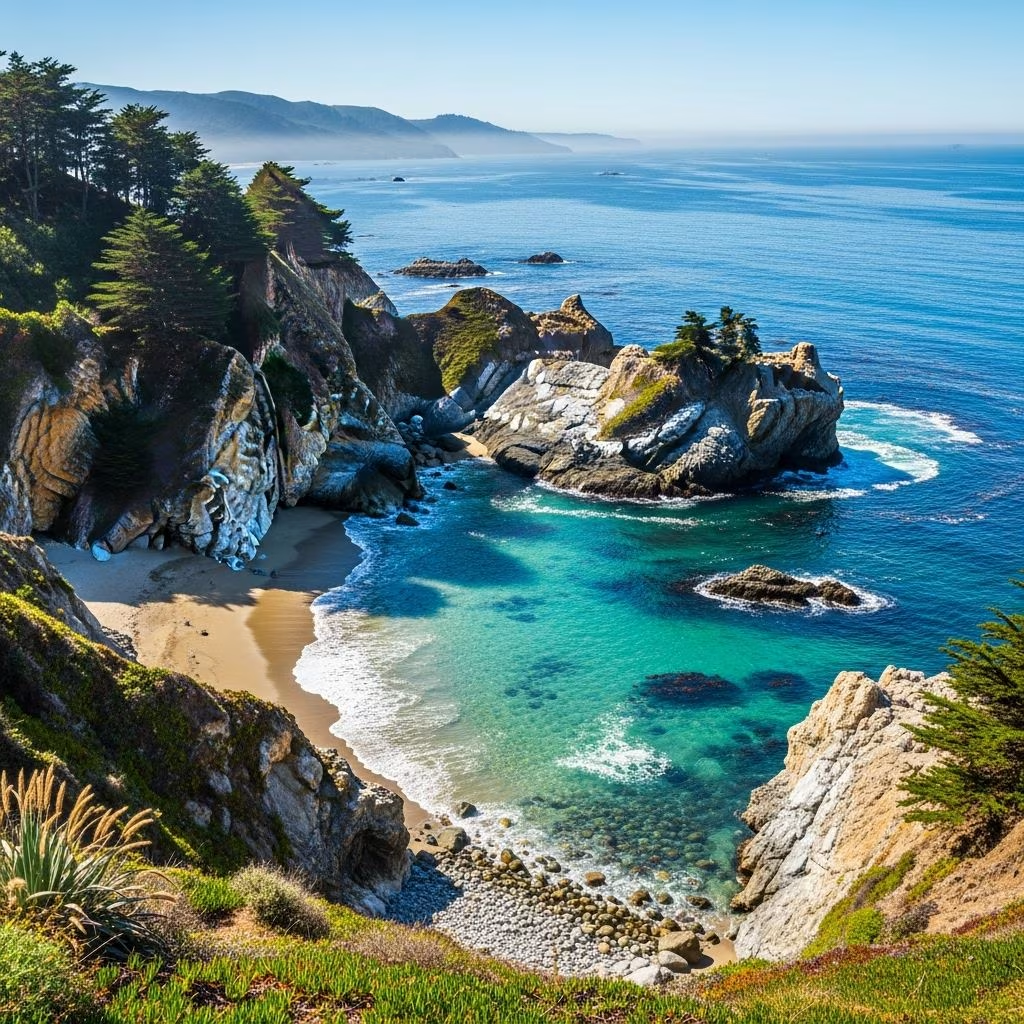
Explore secluded beaches, historic landmarks, and natural wonders tucked away from the main Pacific Coast Highway route in California.
 Travel Essentials
California’s Pacific Coast Highway stretches across approximately 440 miles of stunning coastline, yet most travelers focus on the same well-known landmarks and popular beaches. While iconic locations like Big Sur and Monterey certainly deserve their fame, the region harbors numerous lesser-known destinations that showcase the true diversity of California’s natural and cultural heritage. These hidden retreats offer opportunities for adventure, wildlife observation, historical exploration, and genuine moments of solitude that have become increasingly rare along heavily trafficked routes.
While McWay Falls garners attention as one of the region’s most photographed cascades, the Central Coast contains additional waterfall experiences that deliver comparable beauty with significantly fewer crowds. The Black Swift Trail at Ragged Point provides access to a secluded black sand beach featuring its own waterfall, creating an intimate natural amphitheater accessible to those willing to navigate the steep, half-mile descent. The challenging terrain means that many passing motorists overlook this location entirely, preserving its character as a genuine refuge for explorers willing to invest physical effort. The trail’s elevated difficulty level—including sections prone to slipperiness—filters out casual visitors, ensuring that those who reach the beach encounter a quieter, more contemplative experience.
These waterfall destinations represent different aspects of coastal geology and hydrology. Some cascade directly onto sandy beaches, while others plunge into rocky coves, each creating distinct ecosystems and photographic opportunities. The seasonal variation in water flow means that return visits during different times of year reveal dramatically different landscapes, from powerful torrents during winter months to gentle trickling streams in summer.
Coastal lighthouses embody California’s maritime heritage while simultaneously serving as premier wildlife observation points. The Piedras Blancas Light Station, constructed in 1875 near San Simeon, continues operating while offering public access through guided tours. The facility earned its name from distinctive white rocks offshore that create an otherworldly landscape and serve as critical habitat for marine mammals. Sea lions, elephant seals, and seabirds congregate around these formations, visible from the lighthouse grounds during specific seasons when populations gather for breeding and birthing activities.
Two-hour tours provide comprehensive historical context, visiting the Fog Signal Building and the lighthouse structure itself. Visitors should bring binoculars to enhance wildlife viewing capabilities from designated observation areas. The combination of architectural history and ecological significance makes lighthouses more than mere tourist destinations—they function as living museums where human engineering intersects with wildlife conservation. The reservation requirement ensures manageable visitor numbers, contributing to preservation of both the structure and the surrounding ecosystem.
The Fiscalini Ranch Preserve in Cambria exemplifies how conservation efforts create accessible recreational opportunities while protecting sensitive habitats. This protected open space encompasses extensive native plant communities, supporting over 150 different botanical species and attracting more than 430 bird species throughout the year. The facility’s network of hiking trails accommodates visitors of varying fitness levels, while coastal bluff pathways provide elevated vantage points for observing migratory bird and whale populations during their seasonal journeys.
What distinguishes Fiscalini Ranch is its cost structure—the preserve remains completely free to visitors, removing financial barriers to nature access. This policy reflects a philosophical commitment to democratic recreation and environmental stewardship. The hiking trails range from gentle, accessible loops suitable for families to more strenuous routes challenging experienced trekkers. Coastal bluff trails provide particularly valuable whale-watching platforms during migration seasons when massive marine mammals pass relatively close to shore.
The preserve’s approach to land management prioritizes ecological health through native plant restoration and invasive species removal, creating visible conservation outcomes. Visitors observing seasonal changes across multiple visits witness how management practices support ecosystem resilience and biodiversity.
The Marley family operates private seaweed foraging tours in Cayucos, offering participation-based learning about sustainable coastal harvesting practices. These experiences extend beyond typical food tourism by teaching participants to identify edible species, understand ethical harvesting techniques, and recognize ecological implications of foraging activities. Tour participants gather kelp and other edible seaweeds before preparing and consuming ramen prepared with their harvested ingredients on the beach.
This model of experiential dining connects visitors directly to landscape, food source, and preparation process simultaneously. The educational component transforms simple meal consumption into meaningful engagement with coastal ecosystems and sustainable practices. Foraging experiences reflect growing consumer interest in food system transparency and direct participation in ingredient sourcing.
The Morro Bay National Estuary encompasses tidal wetlands, open water habitat, and transitional zones that collectively support hundreds of animal species and specialized plant communities. While Morro Rock’s distinctive silhouette attracts immediate attention from highway travelers, the adjacent estuary remains largely overlooked despite offering superior recreational opportunities. Kayak rentals enable visitors to paddle through calm waters reaching Sandspit Beach and observing the estuary ecosystem from water-level perspective. This intimate viewpoint reveals aspects of ecological complexity—predator-prey interactions, species-specific habitat requirements, and seasonal population dynamics—that shore-based observation cannot provide.
The contrast between Morro Rock’s dramatic terrestrial prominence and the estuary’s subtle aquatic complexity illustrates how coastal environments function as integrated systems. Both components require protection and management to maintain ecological function and visitor access.
The Guadalupe-Nipomo Dunes harbored a remarkable archaeological secret for approximately 60 years. Following completion of Cecil B. DeMille’s 1923 film production of “The Ten Commandments,” massive set structures were buried within the dunes rather than disassembled and transported. These remains remained hidden until archaeologists systematically excavated them in 1983, revealing remarkably preserved artifacts including a colossal sphinx head, period-appropriate makeup containers, tobacco tins, and prohibition-era beverage bottles.
The Dunes Center now displays these artifacts, providing visitors with tangible connections to early cinema history and artifact preservation techniques. The site demonstrates how unexpected historical layers exist within seemingly simple geographical features. The dunes’ preservation qualities—stable sand, protective burial, minimal bacterial activity—enabled conservation of organic materials that would typically decompose rapidly in other environments.
Elephant seal pupping and breeding seasons create concentrated wildlife viewing opportunities at specific locations along the coast. The Piedras Blancas area experiences particularly dramatic seasonal population changes as these massive marine mammals gather for reproductive activities. Winter months present optimal viewing windows when breeding colonies establish hierarchies and pups develop rapidly. The spectacle of these multi-ton animals engaging in complex social behaviors provides unparalleled opportunities for wildlife observation and photography.
Seasonal timing becomes crucial for maximizing wildlife encounter probability. Research into breeding calendars and migration patterns enables strategic visit planning that coordinates human schedules with animal activity rhythms. This approach respects wildlife behavior patterns while enabling meaningful observation experiences.
Successful visits to these lesser-known destinations require advance preparation exceeding typical road trip logistics. Reservation systems at certain locations (particularly Piedras Blancas Light Station) necessitate booking prior to travel dates. Seasonal considerations impact not only weather and visibility conditions but also wildlife presence and accessibility. Trail conditions vary throughout the year, with winter storms potentially rendering certain routes temporarily impassable.
The following considerations optimize coastal exploration experiences:
These hidden destinations warrant protection through responsible visitor behavior that preserves ecological conditions and maintains authentic character. Several practices contribute to sustainable tourism along the coast. Staying on designated trails prevents vegetation damage and soil erosion that accelerate landscape degradation. Using binoculars rather than approaching wildlife closely minimizes stress on animals engaged in critical life activities. Disposing of all trash, including seemingly innocuous items like fruit peels, prevents ecosystem contamination and reduces wildlife hazards.
The lightweight human footprint enables future visitors to encounter landscapes resembling those experienced by earlier travelers. This intergenerational access represents a form of environmental stewardship where current decisions about behavior directly shape possibilities for future exploration.
These destinations provide opportunities for experiences that extend beyond typical vacation photography and restaurant visits. Participation in seaweed foraging connects visitors to landscape through sensory engagement and practical learning. Lighthouse tours combine architectural appreciation with ecological observation and historical context. Hiking within protected preserves enables physical engagement with landscape while supporting conservation missions through entrance fees or donation mechanisms.
The common characteristic among these destinations is their resistance to passive consumption. Rather than observing from vehicle windows or brief photo stops, meaningful engagement requires time investment, physical participation, and intellectual curiosity. This engagement model aligns with growing recognition that transformative travel experiences involve active participation rather than passive observation.
Spring and early fall offer optimal conditions for most locations, with moderate temperatures, reliable weather, and active wildlife populations. Winter brings dramatic storms and powerful wave action, while summer can attract significant crowds to even hidden destinations.
Destinations vary considerably in accessibility requirements. Some like Fiscalini Ranch offer gentle loops suitable for families, while Black Swift Trail requires sustained climbing ability. Researching specific trail ratings ensures appropriate destination selection.
Piedras Blancas Light Station tours require reservations, while seaweed foraging tours need advance booking. Other locations typically accommodate walk-up visits, though busy season periods may experience congestion.
Binoculars, water bottles, appropriate footwear, layers for temperature changes, sun protection, and a camera enhance most visits. Specific destinations may warrant additional items like field guides or specialized gear.
Budget 2-3 hours for most destinations, though lighthouse tours typically require 2 hours minimum. Allow additional time for photography and wildlife observation.
