

 Travel Essentials
 Travel Essentials

Discover must-have hiking survival gear including navigation tools, first aid, fire starters, and more to stay prepared on any trail.
 Travel Essentials
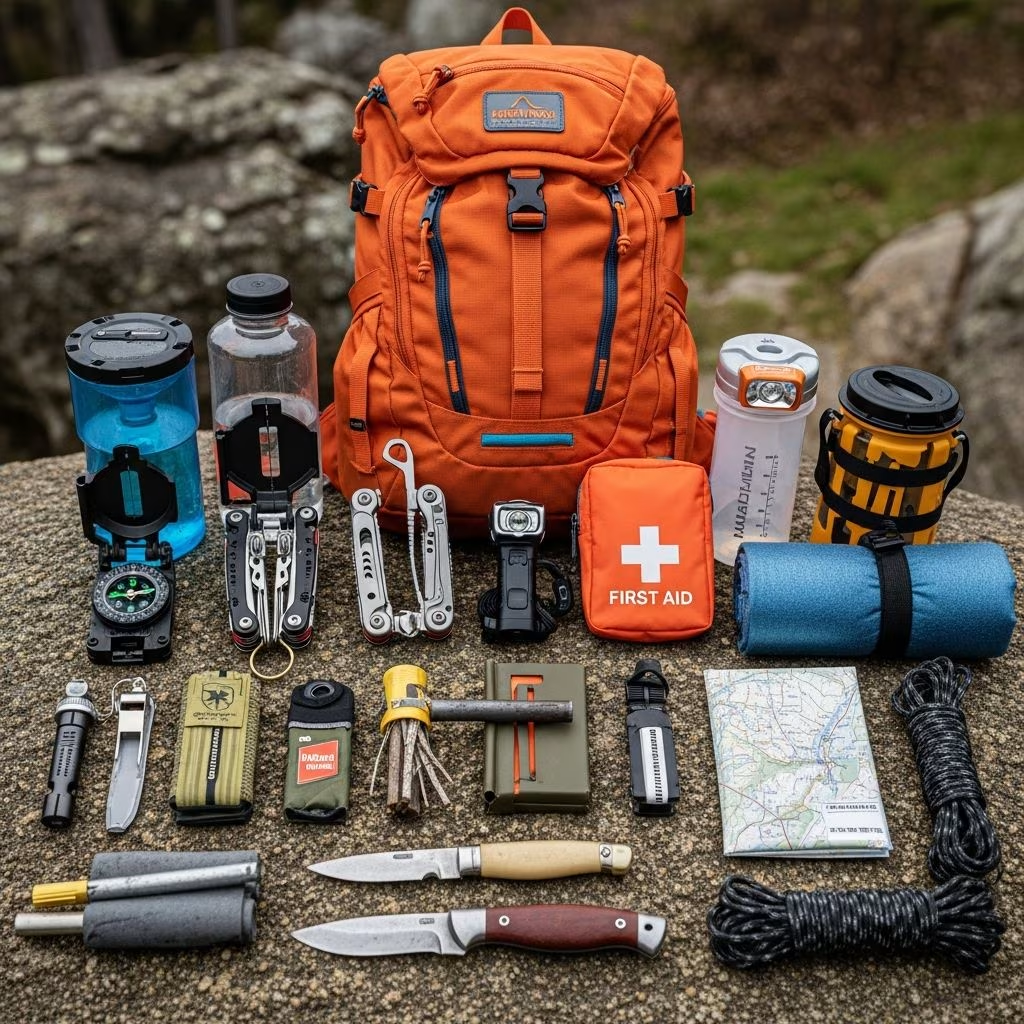
Heading into the wilderness requires more than enthusiasm; it demands preparation with reliable survival gear. This guide outlines critical items every hiker should carry, drawing from established systems like the Ten Essentials to prevent mishaps and enable self-rescue. Whether you’re on a day hike or multi-day trek, these tools address navigation, shelter, fire, water, and medical needs, ensuring you return safely.
Trails can turn treacherous due to weather shifts, injuries, or getting lost. The U.S. National Park Service emphasizes the Ten Essentials as a baseline for handling such scenarios, covering first aid and emergencies from minor cuts to sudden storms. Similarly, REI’s updated list organizes gear into systems that promote preparedness without overloading your pack. Carrying these items lightens the mental load, allowing focus on the journey.
Statistics from outdoor organizations show that proper gear reduces rescue needs. For instance, hydration packs and water filters prevent dehydration, while signaling devices cut response times. Beginners often overlook these, but integrating them builds confidence and safety.
Getting lost tops hiker risks. Reliable navigation prevents this.
REI recommends combining these for redundancy, as batteries fail and signals drop. Practice using them pre-hike to build proficiency.
Visibility changes rapidly at dusk or in storms. Headlamps with spare batteries ensure hands-free light. Opt for models with red modes to preserve night vision.
For daytime, sun protection includes sunglasses, broad-spectrum sunscreen, and UPF clothing. These prevent burns and snow blindness on high elevations. Insect repellent complements first aid for bug bites.
A compact first aid kit is non-negotiable. Stock it with bandages, antiseptic, scissors, moleskin for blisters, pain relievers, and tweezers. Customize for personal needs like allergy meds or prescriptions.
Include a gear repair kit: duct tape, needle/thread, and multi-tool for fixes. The National Park Service lists these under first aid and repair systems, vital for extended outings.
Fire provides warmth, signals rescuers, and purifies water. Carry multiple methods: waterproof matches, lighters, and ferrocerium rods. Tinder like cotton balls soaked in petroleum jelly ignites easily.
Even in wet conditions, these tools work. REI stresses fire starters alongside stoves for reliability. Practice striking sparks beforehand.
Dehydration strikes fast. Carry a hydration pack with 2-3 liters capacity, plus purification tools. Filters like squeeze systems remove bacteria; chemical tablets backup.
Emergency rations pair well, offering calories without cooking. NPS advises sufficient water for your route plus extra.
Sudden hypothermia kills. Pack extra layers: moisture-wicking base, insulating mid, waterproof shell. An ultralight bivvy or tarp creates instant shelter.
These retain body heat even if wet. REI’s clothing system prioritizes versatility for variable weather.
A sturdy knife or multi-tool handles cutting, repairs, and food prep. Folding models with pliers, screwdrivers, and blades pack small. Quality steel ensures durability.
High-calorie bars provide quick fuel. Aim for 2,400 calories per pack, divisible for rationing. Combine with nuts or dried fruits for variety.
Use a dedicated pouch in your backpack for quick access. Weight under 5 pounds keeps it hike-friendly. Test pack weight on training walks.
| Category | Key Items | Weight Estimate | Purpose |
|---|---|---|---|
| Navigation | Map, Compass, Whistle | 0.5 lbs | Location & Signaling |
| Light/Sun | Headlamp, Sunscreen | 0.3 lbs | Visibility & Protection |
| First Aid | Kit, Moleskin | 0.8 lbs | Injury Care |
| Fire | Matches, Ferro Rod | 0.2 lbs | Warmth & Signal |
| Water | Filter, Bladder | 1.0 lbs | Hydration |
| Shelter | Bivvy, Layers | 1.5 lbs | Weather Defense |
| Tools | Knife, Repair Kit | 0.7 lbs | Utility |
For backpacking, add satellite communicators and PLBs. Emergency blankets reflect heat; radios enable group contact. RECCO reflectors aid search teams.
Gear alone isn’t enough. Learn skills: map reading, fire building, shelter setup. Join workshops or apps for simulations. Share itineraries with contacts.
The Ten Essentials include navigation, illumination, sun protection, first aid, insulation, fire, repair tools, nutrition, hydration, and emergency shelter, as per NPS and REI.
Target 3-5 pounds for day hikes, scaling up for overnights without hindering mobility.
It covers basics but add a dedicated blade for heavy tasks.
Squeeze filters for speed; tablets for backup in cloudy water.
Essential in backcountry; consider for any off-trail adventure.
This curated selection empowers safe exploration. Prioritize quality, practice usage, and adapt to your routes for worry-free hikes.
