


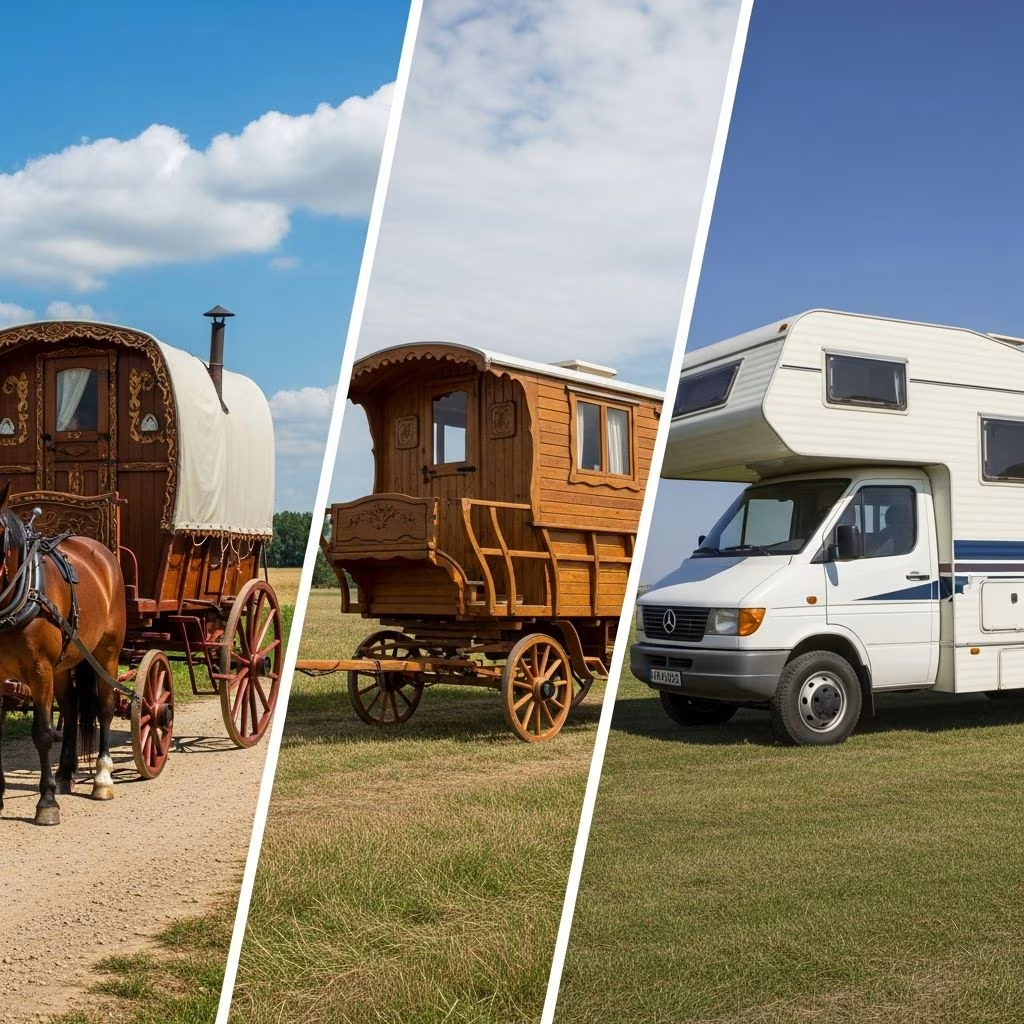
Recreational vehicles, commonly known as RVs, represent a remarkable chapter in the story of human mobility and leisure. Emerging from humble beginnings as horse-drawn carriages designed for comfort on the move, RVs have evolved into sophisticated, self-contained homes that enable unprecedented freedom for travelers. This journey spans over a century, driven by technological advancements, cultural shifts, and a growing desire for outdoor adventure combined with modern conveniences.
Roots in Nomadic Traditions and Early Innovations
The concept of a mobile home predates motorized travel by centuries. Nomadic groups across Europe and the US adapted wagons for living quarters, including gypsy vardos in Europe and sheep herders’ wagons in America. These were practical solutions for those needing shelter while on the move, featuring basic beds, storage, and cooking facilities.
By the late 19th century, leisure travel inspired purpose-built designs. In 1884, British physician Dr. Gordon Stables commissioned the Wanderer, a horse-drawn caravan crafted by Bristol Wagon Works. This vehicle marked the birth of recreational caravanning, promoting health benefits through open-air living and sparking the Gentlemen Gypsies movement. It led to the founding of the Caravan Club in 1907, the world’s first RV organization.
Across the Atlantic, American inventor Alonzo J. McMaster patented a camping carriage in 1889, equipped as a bedroom, sitting room, and kitchen—predating the Ford Model T by nearly two decades. Though horse-drawn, it embodied the dream of portable comfort for hunting, health retreats, and leisure.
The Dawn of Motorized Mobility
The transition to powered vehicles accelerated post-World War I, as automobiles became affordable and roads improved. Early experiments in France included steam-powered trailers like Prince Oldenburg’s Grande Diligence in 1896 and the De Dion Bouton trailer in 1898. The first steam motorhome, Quo Vadis, rolled out in 1900, followed by the gasoline-powered Passe Partout in 1902.
In the US, pioneers like Roy Faye and Freeman Young created ‘camp cars’ from 1904-1906 using chassis from Rambler, Thomas Flyer, and Matheson models. These slept four, featured incandescent lighting, iceboxes, and even radios, bridging the gap between tent camping and luxury travel.
- Key Early Milestones:
- 1884: Wanderer – First purpose-built leisure caravan (UK)
- 1889: McMaster Camping Car – Patented US mobile home
- 1904: First US auto camper on Rambler chassis
- 1910: Commercial ‘auto campers’ enter the market
Pioneering Cross-Country Journeys and Mass Appeal
A defining moment came in 1915 when Roland Conklin and his family embarked from New York to San Francisco in the Gypsy Van. Built by Conklin’s Gas-Electric Motor Bus Company, this 25-foot, 8-ton behemoth included generators, showers, folding bunks, electric stoves, and fresh water tanks. Dubbed a ‘summer cottage on wheels,’ it captivated the public and symbolized RV luxury.
Simultaneously, tent trailers gained traction. Starting as basic frames for gear in the 1910s, they evolved into manufactured units with cots and cupboards by mid-decade. The affordable Ford Model T, new national parks, and better roads fueled popularity. George N. Pierce also contributed, converting Pierce-Arrow limousines into Touring Landau campers between 1904-1910.
By 1919, the Tin Can Tourists club formed, uniting trailer enthusiasts and marking RVs’ shift to mainstream recreation.
Interwar Boom: Trailers Take Center Stage
The 1920s and 1930s saw explosive growth, especially in travel trailers. UK manufacturers like Eccles and Navarac produced weatherproof caravans, while US firms such as Detroit Trailer Company and Pierce-Arrow experimented with diverse types: motorhomes, fifth-wheelers, and touring limousines.
Early motorhomes, often ‘house cars’ on truck chassis, were heavy and costly, limiting them to the affluent. Trailers dominated due to affordability and towability. At the 1930 Detroit Auto Show, the Covered Wagon debuted—a refined trailer with solid walls, born from Arthur G. Sherman’s frustration with leaky tents.
| Type | Key Features | Pros | Cons |
|---|---|---|---|
| Travel Trailers | Folding beds, kitchenettes, lightweight | Affordable, flexible | Requires tow vehicle |
| Motorhomes | Integrated chassis, full amenities | Self-contained | Expensive, heavy |
| Tent Trailers | Collapsible canvas, cots | Compact storage | Less weatherproof |
Post-War Revolution and Industry Expansion
World War II paused civilian production, but postwar prosperity ignited demand. Aircraft factories retooled for RVs, introducing lightweight materials like aluminum. The 1950 Volkswagen Kombi popularized the ‘one-box’ design—compact, versatile motorhomes.
In the US, the 1950s-1960s saw mass production. Icons like the 1973 GMC Motorhome offered streamlined aesthetics and powerful engines. Trailer sales soared with suburban families seeking escapes. By the 1970s, models like Hanomag-Henschel Orion and Dodge Travco catered to diverse needs.
RVIA notes 1910 as the industry’s birth, with ‘camping trailers’ commercialized then. Membership in clubs like Tin Can Tourists exploded, fostering community.
Modern Era: Technology and Sustainability
The late 20th century brought fiberglass construction, slide-outs for extra space, and amenities rivaling homes: air conditioning, microwaves, GPS. Classes A, B, C motorhomes and fifth-wheels cater to all budgets.
Today, RVs emphasize eco-friendliness with solar panels, electric propulsion, and compact designs for van life. The COVID-19 pandemic boosted rentals, proving RVs’ resilience for safe, flexible travel.
Global Perspectives on RV Culture
While US-centric, RV history is international. France led motorized pioneers; UK caravans influenced Europe. Australia and Canada developed unique models for rugged terrains. Globally, RVs promote ‘slow travel,’ blending exploration with comfort.
FAQs
What was the first recreational vehicle?
The Wanderer (1884, UK), a horse-drawn caravan commissioned by Dr. Gordon Stables.
Who built the iconic Gypsy Van?
Roland Conklin’s Gas-Electric Motor Bus Company in 1915 for a cross-country trip.
When did motorized RVs begin commercial production?
Around 1910 in the US, with ‘auto campers’.
How did WWII impact RV development?
Paused production but postwar tech from aircraft fueled lightweight innovations.
Are RVs becoming more sustainable?
Yes, with solar, lithium batteries, and electric models emerging.
References
- Recreational vehicle – Wikipedia — Wikipedia contributors. 2023-10-15. https://en.wikipedia.org/wiki/Recreational_vehicle
- A Brief History of the RV — Smithsonian Magazine. 2018-06-12. https://www.smithsonianmag.com/innovation/brief-history-rv-180970195/
- History of Recreational Vehicles — Hickory Point RV Park. 2023-06-09. https://www.hickorypointrvpark.com/2023/06/09/history-recreational-vehicles/
- History of RVs — RV Industry Association (RVIA). N/A. https://www.rvia.org/about-us/history-rvs
- Looking at The History of Recreational Vehicles — RecPro. N/A. https://recpro.com/blog/looking-at-the-history-of-recreational-vehicles-recpro/
- The Road Less Traveled: A History of the American RV — Freedom RV AZ. N/A. https://www.freedomrvaz.com/blog/The%20Road%20Less%20Traveled:%20A%20History%20of%20the%20American%20RV

