

 Travel Essentials
 Travel Essentials

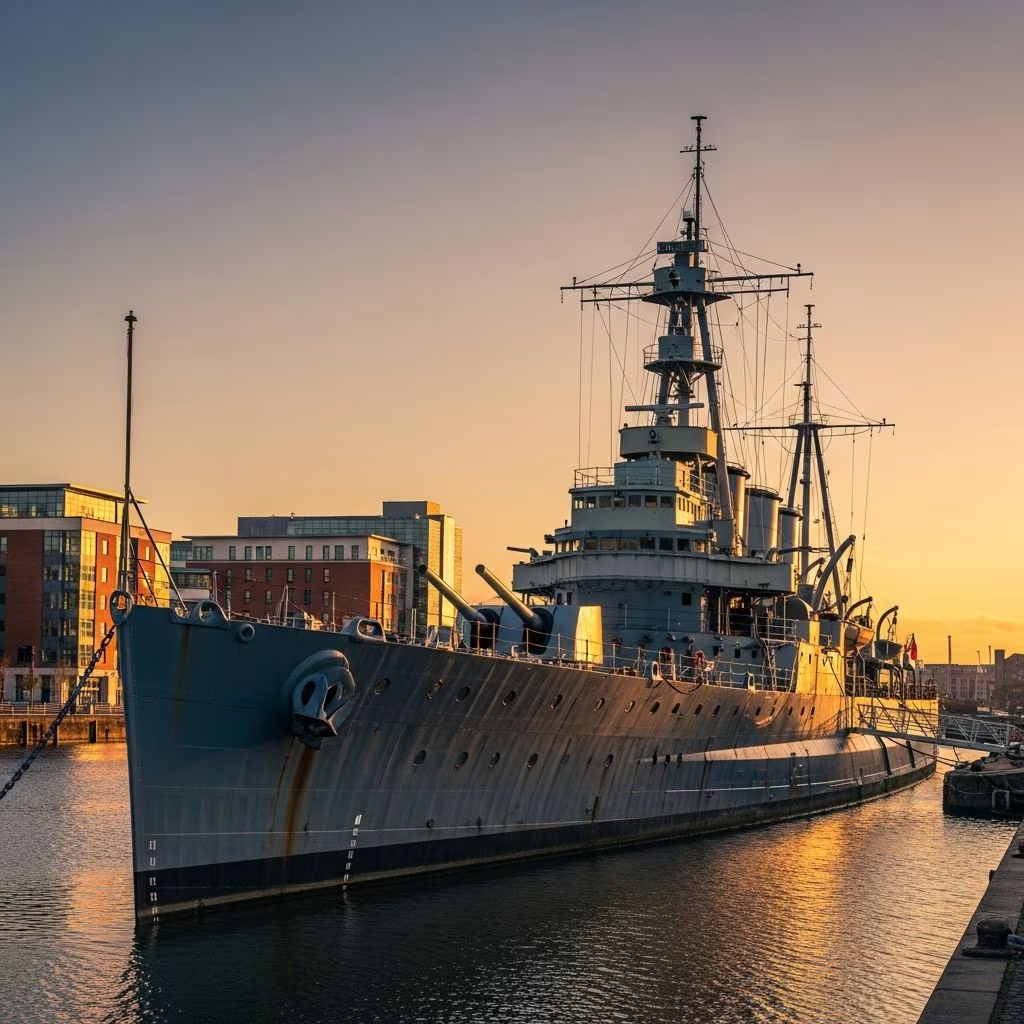
HMS Caroline, the last afloat from WW1's Battle of Jutland, offers immersive tours in Belfast. Explore its history, interactive exhibits, and nearby attractions in Titanic Quarter.
 Travel Essentials
Nestled in Belfast’s vibrant Titanic Quarter, HMS Caroline stands as a timeless relic of naval warfare, the only surviving ship from the pivotal Battle of Jutland in World War I. This C-class light cruiser, launched in 1914, has endured over a century of service, conflict, and transformation, now welcoming visitors to explore its decks and uncover stories of bravery and innovation.
HMS Caroline entered service just as the world plunged into the Great War. Built as the lead ship of her subclass under the Royal Navy’s 1913-1914 program, she was designed for speed and agility, equipped with quick-firing guns to escort convoys and patrol contested waters. Her early missions involved protecting vital trade routes in the North Sea, a critical theater where German naval forces threatened British supply lines.
The defining moment came on May 31, 1916, during the Battle of Jutland—the largest naval engagement of the war. Amidst a chaotic clash of over 250 ships, Caroline maneuvered through smoke, shellfire, and close-quarters combat. Though she sustained damage, her crew’s skill ensured survival, marking her as the last afloat from that furious encounter. This battle halted German naval ambitions, securing British dominance at sea.
Post-Jutland, Caroline continued patrols but transitioned roles in World War II. Moored in Belfast’s Alexandra Dock, she became the headquarters for the Ulster Division of the Royal Naval Reserve, coordinating anti-submarine efforts during the Battle of the Atlantic. Her static position didn’t diminish her importance; she trained personnel in minesweeping techniques essential against Axis threats.
Into the Cold War, she served as a training vessel, adapting to new naval doctrines. Decommissioned in 2011, she was the second-oldest ship in Royal Navy service, trailing only HMS Victory. After repairs at Harland and Wolff—the yard that built Titanic—she reopened as a museum in 2017, part of the National Museum of the Royal Navy.
Boarding HMS Caroline transports you to eras of grit and glory. Self-guided audio tours, available in multiple languages, narrate her journey. Key areas include:
Open Fridays to Sundays, tickets cost around £15 for adults, with family deals. Allow 1-2 hours; weekends avoid crowds.
Personal tales humanize the steel behemoth. Diaries and letters from Jutland veterans describe terror of near-misses and camaraderie forged in crisis. WW2 reservists recount tense nights scanning for U-boats. A new quayside center showcases these narratives via photos, uniforms, and recordings, emphasizing the human cost of service.
| Era | Crew Size | Key Roles |
|---|---|---|
| WW1 | ~400 | Patrols, Battle of Jutland |
| WW2 | ~200 (training) | HQ, Minesweeping School |
| Cold War | Varies | Reserve Training |
This table illustrates her shifting crew dynamics and missions.
HMS Caroline anchors the 185-acre Titanic Quarter, a hub of maritime heritage. Adjacent Titanic Belfast immerses visitors in the liner’s saga through galleries, artifacts, and a ride simulating her launch. Stroll the Maritime Mile: spot the colorful Big Fish sculpture symbolizing Belfast’s River Lagan tale, or the towering Great Light optic, one of the world’s largest.
Combine with hop-on-hop-off buses for city sights like murals and cathedrals. Nearby cafes offer fish and chips, evoking nautical flavors.
Maintaining a 1914 warship demands expertise. Post-decommissioning surveys revealed hull corrosion; Harland and Wolff’s drydock work stabilized her. Ongoing conservation by the National Museum ensures accessibility. She’s one of three surviving RN WW1 ships, alongside HMS M33 and HMS President.
Future plans include expanded exhibits on women’s wartime roles and digital VR tours. Visitor feedback drives enhancements, solidifying her as a educational cornerstone.
Yes, she’s the last afloat from that battle, unique among British light cruisers.
From 1914 to 2011—97 years, spanning three major conflicts.
Primarily self-guided with audio; group tours bookable.
Yes, interactive elements engage kids 8+; under 5 free.
Titanic Belfast, SS Nomadic, harbor walks.
Beyond artifacts, Caroline embodies resilience—surviving wars, obsolescence, and time. She educates on naval strategy’s role in history, from Jutland’s tactical chess to Atlantic convoy defenses. In Belfast, she boosts tourism, drawing 50,000+ annually, fostering pride in shipbuilding legacy.
For history buffs, sailors, families, she’s essential. Her story reminds us: amid machines, it’s human spirit that endures.
