

 Travel Essentials
 Travel Essentials

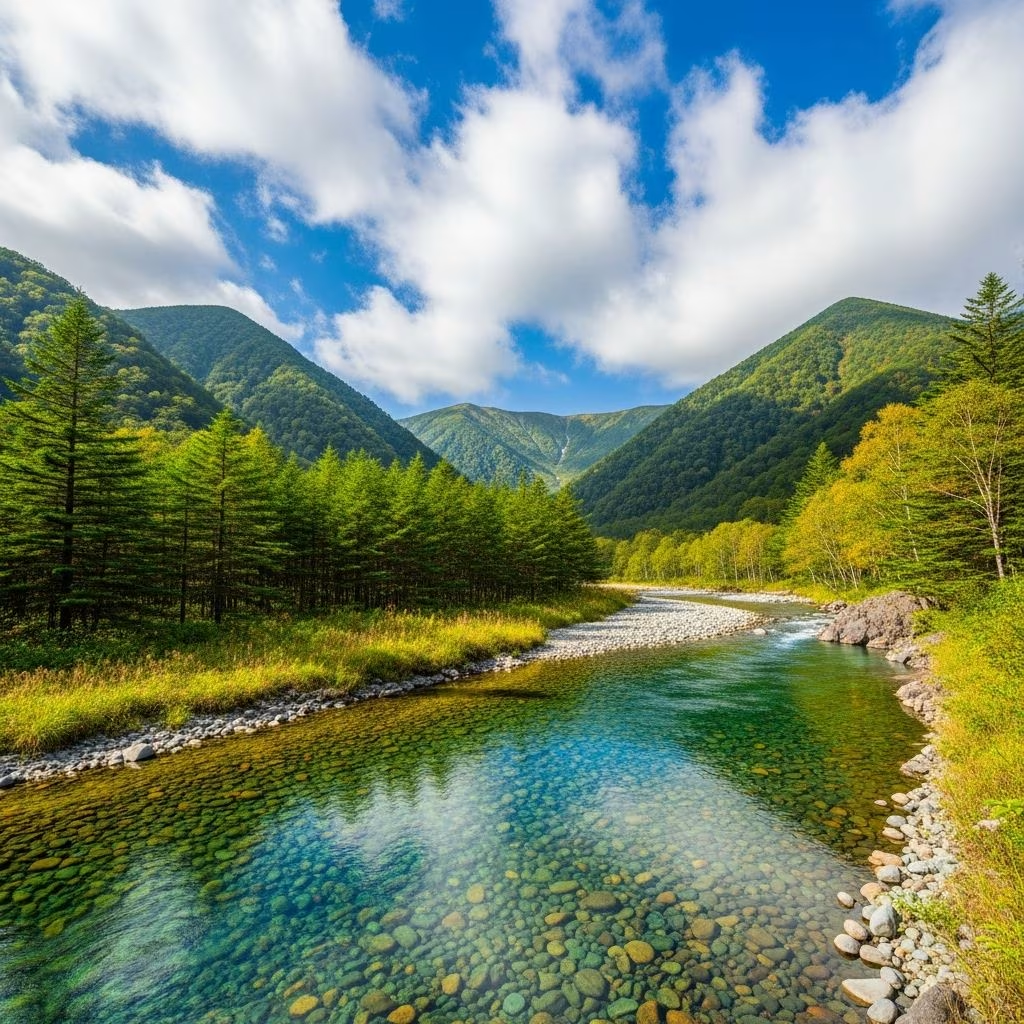
Explore Hokkaido's seven national parks featuring volcanic mountains, pristine forests, coastal cliffs, and unique wildlife habitats across Japan's northernmost island.
 Travel Essentials
Hokkaido, Japan’s northernmost and second-largest island, represents one of the world’s most remarkable concentrations of protected natural areas. This expansive region encompasses seven distinct national parks, each offering visitors an unparalleled window into diverse ecosystems, dramatic geological formations, and pristine wilderness environments. These protected areas collectively preserve millions of hectares of landscapes that range from volcanic highlands to coastal marshlands, making Hokkaido an essential destination for nature enthusiasts, hikers, and conservation-minded travelers.
Hokkaido’s seven national parks represent some of Japan’s most significant conservation achievements. Together, these protected areas safeguard ecosystems that support rare and endangered species, maintain geological formations of international importance, and provide opportunities for sustainable tourism and outdoor recreation. The parks demonstrate the region’s commitment to preserving its natural character while allowing visitors meaningful access to wilderness experiences.
One notable achievement in this conservation effort occurred recently, with the designation of a new national park on June 25, 2024, marking Japan’s 35th national park overall. This addition underscores the ongoing recognition of Hokkaido’s ecological and scenic significance on the national stage.
Among Hokkaido’s most impressive protected areas are those centered on mountainous terrain, which showcase dramatic peaks, deep gorges, and alpine meadows. These highland parks offer visitors opportunities to experience Japan’s northern mountain wilderness in its most authentic form.
Daisetsuzan National Park stands as a premier destination for mountain enthusiasts, earning the designation “Roof of Hokkaido” for its prominent position in the regional landscape. This park features Mount Asahidake, recognized as Hokkaido’s highest peak, which serves as a focal point for hiking and mountaineering activities. The park’s attractions extend beyond its summits to encompass spectacular geological formations such as Sounkyo Gorge, where towering columnar joint cliffs create a visual landscape of extraordinary majesty. Additionally, the park preserves Lake Shikaribetsu, distinguished as one of Japan’s most transparent natural lakes, whose crystal-clear waters reflect the surrounding alpine environment.
The mountainous regions benefit from the region’s thermal resources, with hot springs distributed throughout the park. These geothermal features contribute to the park’s appeal and provide visitors with opportunities to experience traditional onsen culture in pristine natural settings.
Hokkaido’s geological history has shaped distinctive volcanic parks that showcase active and dormant volcanic features alongside geothermal phenomena. These areas provide tangible connections to the dynamic geological processes that continue to shape the landscape.
Shikotsu-Toya National Park exemplifies the volcanic character of many Hokkaido protected areas. This park features two major calderas, Lake Shikotsu and Lake Toya, which represent large volcanic depressions filled with water, creating striking landscape features. The park remains geologically active, with Mount Usu and Mount Tarumae continuing to demonstrate volcanic processes. Mount Yotei, with its distinctive conical shape, has earned comparison to Mount Fuji and represents another significant volcanic landmark. The park’s geothermal activity manifests dramatically at locations such as Noboribetsu Jigokudani, commonly known as Hell Valley, where steam vents and mineral-rich waters create otherworldly landscapes. Throughout the park, hot springs emerge in various locations, offering visitors the traditional Japanese experience of bathing in naturally heated geothermal waters.
Hokkaido’s national parks encompass diverse coastal environments ranging from volcanic islands to expansive sandy plains, each supporting distinct ecosystems and providing unique recreational opportunities.
Rishiri-Rebun-Sarobetsu National Park, situated at Japan’s northernmost point, represents a unique integration of terrestrial and marine environments. The park extends from Hokkaido’s main island northward to encompass the smaller islands of Rebun and Rishiri, creating a comprehensive protected landscape. The park’s distinctive features include volcanic cones on the islands themselves, alongside rugged coastal cliffs that meet the sea. The Bakkai-Wakkasakinai Coast within the park displays developed sand dune formations, while the vast Sarobetsu Plain, formed along the Sarobetsu River and officially recognized under the Ramsar Convention for its wetland significance, provides habitat for diverse species. This combination of landscapes makes the park particularly valuable as one of Japan’s major stopover points for migratory birds, with the wetlands and coastal areas serving as critical resting grounds during seasonal migration.
Beyond their scenic appeal, Hokkaido’s national parks serve critical conservation functions, protecting some of Japan’s most pristine remaining wilderness and supporting populations of endangered species.
Shiretoko National Park, located at Hokkaido’s easternmost extremity, exemplifies this conservation significance. Designated as a UNESCO World Heritage Site in 2005, the park encompasses rugged mountain ranges with peaks exceeding 1,000 meters, together with pristine virgin forests and spectacular coastlines. The park’s ecological importance derives from its richly integrated ecosystem, which sustains numerous endangered species including the Blakiston’s fish owl and the Ezo deer. During winter months, extensive sea ice forms in the marine area, creating nutrient-rich waters and phytoplankton blooms that support diverse marine species including whales and seabirds. This seasonal phenomenon sustains the complex food web that characterizes the region, though climate change poses emerging threats to this delicate balance.
Akan-Mashu National Park represents another significant protected area where diverse landscapes support varied wildlife populations and provide opportunities for wilderness exploration. The park’s features encompass caldera lakes, forested areas, and volcanic formations that create a landscape of considerable ecological and scenic complexity.
Hokkaido’s national parks offer visitors diverse opportunities for outdoor activities suited to varying levels of experience and physical ability. These recreational opportunities allow visitors to engage directly with the protected landscapes while supporting sustainable tourism practices.
Shiretoko National Park particularly emphasizes hiking accessibility, with organized tours available between April and November that guide visitors through the park’s most remarkable features. A signature attraction consists of the Shiretoko Five Lakes, formed by the eruption of Mount Io and nestled among primeval forests at the base of Mount Rausu. These five lakes, said to resemble the shape of five divine fingerprints, create a surreal landscape that represents one of the park’s most memorable destinations. Mount Rausu itself offers an 8.3-mile out-and-back hiking route that provides comprehensive views of the surrounding volcanic and forested landscape.
Mountain parks provide opportunities for alpine hiking, with trails ranging from modest walks suitable for families to challenging routes requiring mountaineering experience. The accessibility of these areas has improved through infrastructure development and marked trail systems that allow visitors to experience the wilderness safely and responsibly.
The newly designated national park, centered on the Hidaka Mountain Range, demonstrates the substantial geographic scope of Hokkaido’s protected areas. This park encompasses approximately 2,457 square kilometers, making it Japan’s largest national park. The Hidaka Mountain Range stretches approximately 140 kilometers from north to south, creating a linear wilderness corridor across the region. The park includes significant landmarks such as Mount Apoi, Lake Toyoni, and Cape Erimo, along with surrounding waters that extend protection to marine environments.
Hokkaido’s northern latitude creates distinct seasonal variations that influence visitor experiences throughout the year. Winter sea ice formation in maritime parks creates dynamic ecosystems but may limit accessibility to certain areas. Spring and autumn offer optimal conditions for hiking and outdoor exploration, with comfortable temperatures and clear visibility. Summer provides extended daylight hours, enabling longer hiking days and more extensive exploration of alpine and coastal environments.
Reaching Hokkaido’s national parks requires advance planning regarding transportation options. For Shiretoko National Park, visitors from Tokyo can fly to Memanbetsu Airport and access the park town of Utoro via a two-hour bus journey, representing the quickest access route. Alternative options exist for visitors arriving from Sapporo, including flights to regional airports or driving directly to park entrances. A six-hour bus route provides another transportation option for those preferring public transit.
Late spring through early autumn offers optimal conditions, with comfortable temperatures, manageable snow conditions at higher elevations, and accessible trail systems. Winter visits are possible but require specialized equipment and experience.
Hokkaido is home to seven national parks, making it Japan’s most concentrated region of protected wilderness.
Yes, several parks, particularly Shikotsu-Toya and Daisetsuzan, feature hot springs and onsen facilities that allow visitors to experience traditional geothermal bathing in natural settings.
Many parks offer guided hiking tours and nature walks during specific seasons, particularly in spring through autumn months.
Depending on the park and season, visitors may observe Ezo deer, various bird species, marine mammals, and numerous smaller wildlife species in their natural habitats.
The protection and expansion of Hokkaido’s national parks reflect Japan’s commitment to preserving natural heritage for future generations. The designation of new parks and the ongoing management of existing protected areas demonstrate recognition of these ecosystems’ irreplaceable value. Climate change presents emerging challenges to these ecosystems, particularly regarding sea ice formation, species migration patterns, and alpine vegetation communities. Continued investment in conservation science, sustainable tourism practices, and climate adaptation strategies will remain essential to maintain these wilderness areas’ ecological integrity and recreational value.
Hokkaido’s seven national parks collectively offer visitors unparalleled access to Japan’s most remarkable natural environments. From alpine peaks to coastal marshlands, volcanic calderas to pristine forests, these protected areas provide opportunities for outdoor recreation, wildlife viewing, and intimate engagement with natural systems that remain largely unchanged by human development. Whether visitors seek challenging mountain hikes, peaceful nature walks, or simply the restorative experience of untrammeled wilderness, Hokkaido’s national parks deliver experiences of lasting significance.
