

 Travel Essentials
 Travel Essentials

Complete guide to celebrating Holi in India, featuring top destinations, regional celebrations, traditions, and practical travel tips for first-time visitors.
 Travel Essentials
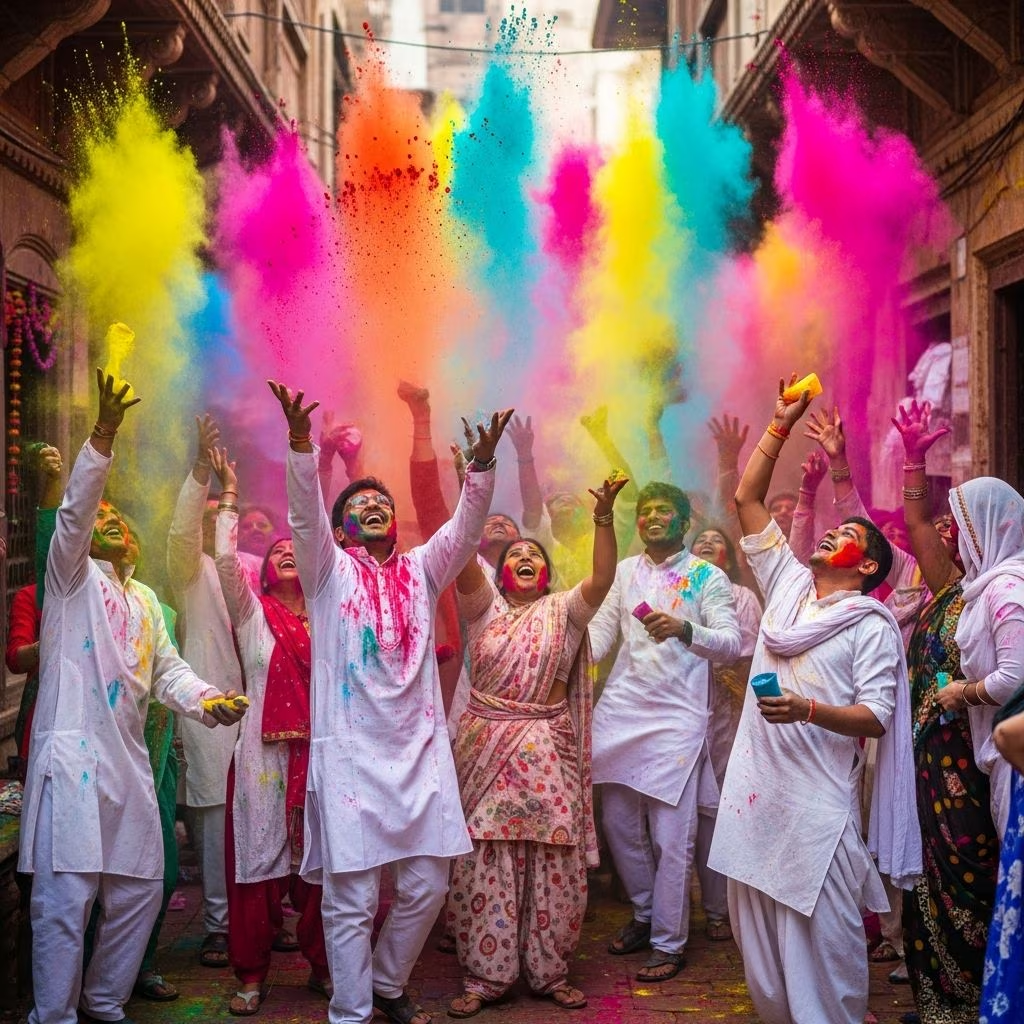
India’s calendar is marked by numerous festivals, but few rival the sheer vibrancy, joy, and spiritual significance of Holi, the festival of colors. Celebrated across the Indian subcontinent with variations in customs and intensity, Holi represents the triumph of good over evil, the arrival of spring, and a time for renewal, forgiveness, and celebration. Whether you’re seeking an immersive spiritual experience or a colorful social gathering, Holi offers something extraordinary for every traveler.
Holi emerges on the lunar calendar, specifically celebrated on the day of the full moon during the Hindu month of Chaitra, also known as Phalguna. This means the exact dates shift annually, typically falling between mid-February and mid-March in the Gregorian calendar. The festival unfolds across two primary observances: Holika Dahan marks the first day, a nighttime celebration centered around sacred bonfires that symbolize the destruction of wickedness and the protection of righteousness. The second day, called Rangwali Holi or Dhulandi, represents the heart of the festivities, featuring the iconic color play that has become synonymous with the festival worldwide.
The religious underpinnings of Holi trace back to ancient Hindu mythology, particularly the legends surrounding Lord Krishna, whose playful nature and romantic escapades form the narrative foundation of many regional celebrations. These stories of divine love and mischief have transformed Holi into a celebration where social hierarchies temporarily dissolve, and communities come together in uninhibited joy.
While Holi maintains core elements throughout India, the celebration’s character varies dramatically based on geography, local traditions, and predominant religious practices. Understanding these regional distinctions helps travelers choose destinations that align with their preferences for celebration intensity and cultural authenticity.
Northern India, particularly the states of Uttar Pradesh and Rajasthan, hosts the most elaborate and well-documented Holi celebrations. This region’s connection to Krishna’s mythology makes it the spiritual epicenter of Holi observance. Cities like Mathura and Vrindavan attract visitors from across the globe, drawing both pilgrims seeking spiritual connection and travelers pursuing unforgettable experiences. The week-long celebration beginning in these cities commences with Phoolon Wali Holi, or Flower Holi, a gentler prelude featuring cascades of flower petals rather than powder, before escalating into more boisterous color play.
The villages surrounding these temple towns develop their own distinctive rituals. Barsana and Nandgaon have become internationally recognized for Lathmar Holi, a unique tradition where women ceremonially strike men with wooden staves in a playful reenactment of Krishna’s legendary escape from Radha. This ritual, occurring two days before the main celebrations, has transformed into a major tourist attraction while maintaining its cultural authenticity through the participation of local families who have practiced this tradition for generations.
Udaipur in Rajasthan offers a different northern experience, hosting an ornate Holika Dahan ceremony at Manek Chowk within the historic City Palace. The celebration incorporates traditional elements including processional parades featuring decorated elephants, camels, and horses, culminating in dramatic fireworks displays that illuminate the night sky.
Southern India approaches Holi with greater restraint than its northern counterpart, emphasizing religious observance and temple rituals over extensive public color play. However, this reduced external celebration does not indicate diminished spiritual significance. The villages surrounding Hampi in Karnataka have emerged as notable exceptions to this general pattern, maintaining vibrant color celebrations that rival northern traditions. Here, communities gather along the Tungabhadra River following Holika Dahan bonfires and color play, utilizing the river’s waters for communal cleansing that symbolizes purification and renewal.
Mathura, recognized as the birthplace of Lord Krishna according to Hindu tradition, serves as the spiritual headquarters of Holi celebration. The city’s ancient temples, including the Dwarkadhish Temple—accessible by traditional boat across the sacred Yamuna River—become focal points for week-long festivities involving temple processions, musical performances, and synchronized color-throwing rituals. Vrindavan, located nearby, extends these celebrations through the prestigious Banke Bihari Temple, which orchestrates an entire week of progressively intense festivities culminating in the most enthusiastic color throwing recorded throughout India.
These destinations attract visitors seeking genuine cultural immersion rather than tourist-oriented productions. The relatively lower concentration of international visitors compared to metropolitan areas means experiencing Holi primarily among local communities, though this also necessitates more careful logistical planning and potentially engaging local guides for navigation and cultural context.
Delhi, Mumbai, and Jaipur provide alternative Holi experiences emphasizing contemporary celebration modes alongside traditional elements. These major cities host organized music festivals, rooftop parties, community events, and structured celebrations that cater to diverse preferences. Delhi, in particular, has developed a reputation for energetic urban Holi celebrations that blend traditional color play with modern entertainment venues. The flexibility and variety available in metropolitan areas make these destinations ideal for travelers preferring established tourist infrastructure without sacrificing authentic cultural participation.
Anandpur Sahib in Punjab showcases Hola Mahalla, a Sikh interpretation of Holi incorporating wrestling competitions, martial arts demonstrations, mock sword fighting, acrobatic military exercises, and ceremonial turban tying. This celebration attracts visitors interested in exploring Holi through different religious and cultural lenses.
Goa presents yet another variation, offering beach-based celebrations combining traditional Holi elements with contemporary nightlife. Beachfront venues, clubs, and bars throughout Goa organize high-energy Holi parties and music festivals, creating a vacation atmosphere distinct from spiritual or village-based observances.
Travelers planning Holi attendance should prepare for India’s increasing temperatures as spring approaches. Lightweight, breathable fabrics suit the climate, though modest clothing covering shoulders and knees respects local customs and religious sensitivities. The color powder used during celebrations, while generally safe, can be persistent—many participants deliberately wear white clothing expecting permanent discoloration.
Transportation logistics require advance planning, particularly for destinations like Mathura and Vrindavan, which experience significant population surges during festival periods. Train networks provide affordable options, while local transportation including auto-rickshaws and ride-sharing services facilitate movement within celebration zones. Currency considerations are minimal, as Holi participation remains fundamentally free—the only expenses involve optional colored powder purchases and incidental meals.
Understanding local customs enhances both personal experience and community relations. Seeking explicit permission before applying colors to others, respecting religious spaces, and participating with genuine enthusiasm rather than detached observation shape positive interactions. Women travelers should exercise the same precautions as would apply throughout India, though Holi’s celebratory atmosphere and communal nature generally creates a secure environment. Hiring local guides in less-touristed destinations provides both logistical assistance and cultural interpretation.
The first evening features Holika Dahan ceremonies involving communal bonfires that symbolize the destruction of the demonic entity Holika and the triumph of righteousness. Participants gather around these sacred flames, often making offerings and circumambulating the fire as part of ritual practice. This solemn, spiritually focused evening establishes the festival’s deeper meaning beyond surface-level color play.
The second day transforms into uninhibited celebration as participants drench each other with colored water and colored powder (gulal), creating scenes of joyful chaos. Social conventions temporarily dissolve—people of different castes, classes, and ages interact freely, sharing sweets and embracing as equals. This democratic spirit, however temporary, represents Holi’s deeper social significance within Indian culture.
Plan arrival 2-4 days before the main celebration date to experience preliminary rituals and secure accommodations. Exact dates vary annually based on the lunar calendar, typically falling between mid-February and mid-March. Checking the specific year’s calendar enables precise planning.
Popular destinations experience accommodation shortages during festival weeks. Advance booking 2-3 months prior is essential, particularly for Mathura, Vrindavan, and Udaipur. Alternative options include staying in nearby towns with longer daily travel times.
Absolutely. Holi celebrations welcome participants of all faiths and backgrounds. Hindu, Sikh, and other communities actively invite outsiders to participate in festivities, viewing inclusion as central to the festival’s inclusive spirit.
Communities collectively cleanse spaces, and individuals wash colors from clothing and skin. Many celebrate with sacred river bathing, symbolically purifying while supporting environmental consciousness through natural color ingredients.
Holi celebrations span all age groups, from infants to elderly participants. Events adjust intensity based on location and time; early morning activities typically feature gentler celebration modes suitable for families.
Selecting the appropriate destination requires matching personal preferences with available experiences. Spiritual seekers gravitate toward Mathura and Vrindavan for authentic religious immersion. Adventure-focused travelers might prefer Goa’s energetic beach celebrations or Delhi’s metropolitan party atmosphere. Those interested in unique traditions should consider Barsana’s Lathmar Holi or Anandpur Sahib’s Hola Mahalla. Regardless of destination choice, approaching Holi with openness to cultural participation, flexibility regarding logistical challenges, and genuine respect for community traditions transforms the festival from tourist spectacle into transformative personal experience.
India’s Holi festival transcends simple celebration, embodying spiritual renewal, social reconciliation, and seasonal transition. Whether your journey involves village streets exploding with color, sacred temple grounds resonating with devotional chanting, or urban gathering spaces thrumming with contemporary music, Holi offers authentic engagement with one of humanity’s most ancient continuous festivals.
