

 Travel Essentials
 Travel Essentials

Explore Holi's rich history, mythological roots, colorful traditions, global celebrations, and festive foods in this comprehensive guide to the Festival of Colors.
 Travel Essentials
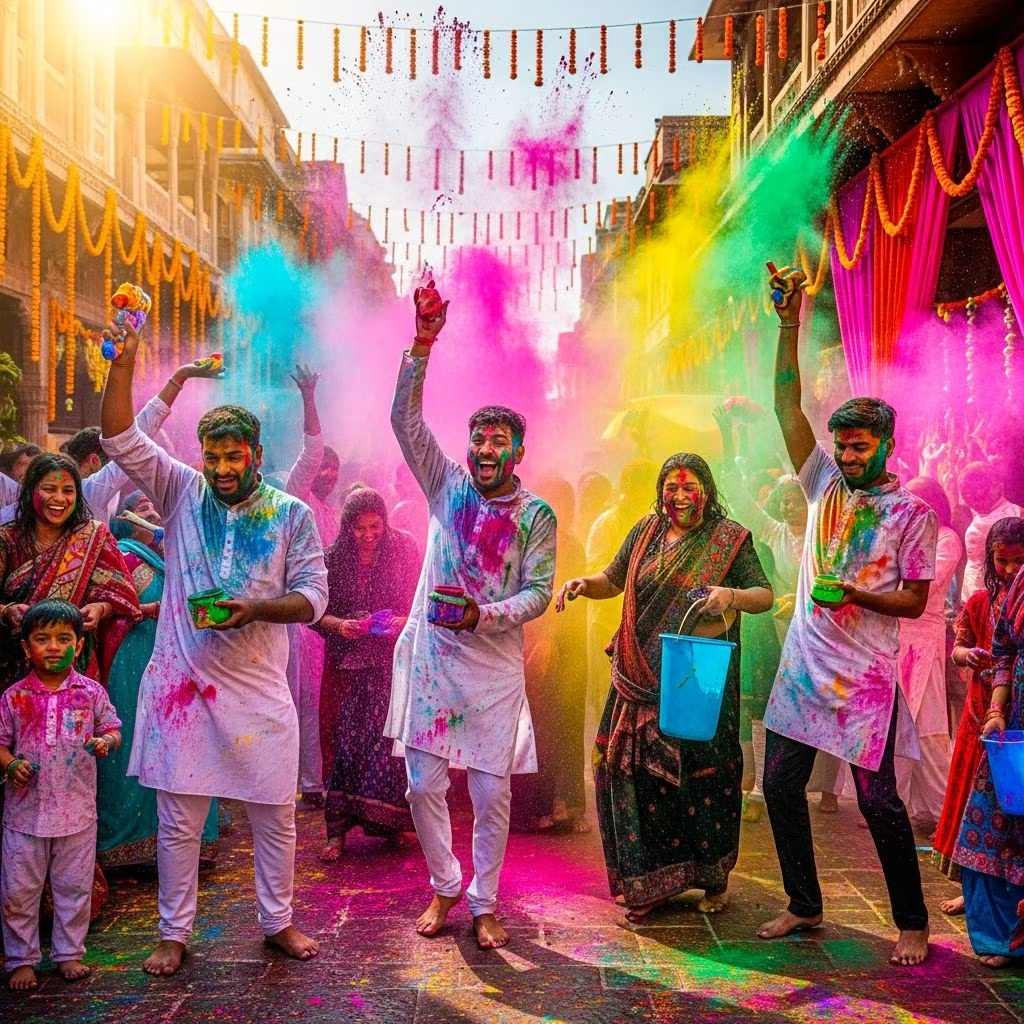
The Festival of Colors, known as Holi, stands as one of Hinduism’s most lively and inclusive celebrations, marking the arrival of spring and embodying themes of renewal, love, and the eternal battle between good and evil. Observed on the full moon day of the Hindu lunar month of Phalguna, this ancient festival transcends religious boundaries, drawing participants from diverse backgrounds to engage in playful color-throwing, music, dance, and feasting.
Holi’s roots trace back thousands of years to the ancient Indian subcontinent, predating the Gupta period and referenced in sacred texts like the Purva Mimamsa Sutras and Narada Purana. Initially tied to agricultural cycles, it honored bountiful spring harvests and fertile lands in 17th-century India, evolving into a vibrant public spectacle with music at its core before colors became prominent.
Today, Holi symbolizes the farewell to winter’s chill and the embrace of spring’s blooms, fostering community bonds as societal hierarchies dissolve in a day of unrestrained joy. It encourages forgiveness, ending old grudges, and welcoming fresh starts, often punctuated by the cheerful shout “Holi Hai!” (It’s Holi!).
Holi draws from multiple legends, each adding layers of spiritual depth. Central is the tale of the demon king Hiranyakashipu, who demanded worship as a god. His devout son Prahlada, a follower of Vishnu, resisted, prompting the king to enlist his fire-immune sister Holika to burn the boy on a pyre. Vishnu intervened as the half-man, half-lion Narasimha, saving Prahlada while Holika perished in the flames—a story symbolizing good’s triumph over evil.
Another beloved narrative features Krishna and Radha from the Braj region. Insecure about his dark blue skin contrasting Radha’s fairness, Krishna, prompted by his mother, playfully colored her face, birthing the tradition of color-smearing to celebrate divine love and equality beyond appearances. This inspires Rang Panchami and Phagwah in Indo-Caribbean communities.
In Vrindavan, Krishna’s playful pranks, like stealing buttermilk and dodging women’s retaliatory water fights, further infuse Holi with mischief and communal fun. These stories collectively promote compassion, renewal, and unity.
Holi unfolds over two primary days, blending solemnity with exuberance.
Regional variations abound: In Bengal, followers of Sri Chaitanya Mahaprabhu smear abir on Krishna idols and share malpoa sweets, honoring his love for the festival.
Each hue carries profound meaning, derived from natural elements and emotions.
| Color | Symbolism | Natural Sources |
|---|---|---|
| Red | Love, fertility, matrimony | Hibiscus, henna |
| Yellow | Prosperity, new beginnings, healing | Turmeric, marigold |
| Blue | Divine Krishna, spirituality | Indigo plants |
| Green | Life’s rejuvenation, spring | Mint, leaves |
Traditionally, powders are crafted from dried flowers and herbs, ensuring eco-friendliness, though modern synthetic versions are common.
From its Indian heartland—particularly Mathura, Vrindavan, and Barsana where women chase men with sticks in Lathmar Holi—Holi has spread worldwide. South Asian diasporas in the US, UK, Caribbean, and beyond host color runs, DJ-fueled raves, and family events, inviting all to participate.
In the West, events like those by the Hindu American Foundation blend tradition with accessibility, promoting cultural exchange. Post-pandemic, Holi surged as a symbol of reconnection. Safety tips include using natural colors, protective eyewear, and hydration amid the revelry.
No Holi is complete without indulgent sweets and drinks, emphasizing abundance.
These treats, shared communally, reinforce bonds and seasonal joy.
For newcomers:
Holi’s spirit lies in inclusivity—embrace the mess as metaphor for life’s vibrant chaos.
Holi follows the lunar calendar, typically March, varying yearly—check local panchang for 2026 dates.
No, it’s widely celebrated by diverse groups globally, emphasizing universal joy.
Natural ones are; avoid chemical-laden imports to prevent allergies.
Opt for organic colors and cleanup to minimize water pollution.
Supply natural powders, thandai, music, and open space for safe fun.
