

 Travel Essentials
 Travel Essentials

Explore Holy Island's unique tidal lifestyle, from monastic roots to modern residents adapting to twice-daily isolation, rich heritage sites, local crafts, and essential visitor tips for safe access.
 Travel Essentials
Perched off England’s northeastern coast, Holy Island—also known as Lindisfarne—embodies a profound harmony between land, sea, and time. This 1,000-acre haven connects to the mainland via a causeway that vanishes under the North Sea’s tides twice daily, enforcing a rhythm that has defined its inhabitants for over 1,300 years. Far from a mere tourist spot, it sustains a close-knit community of about 160-180 permanent residents who navigate isolation with ingenuity and tradition.
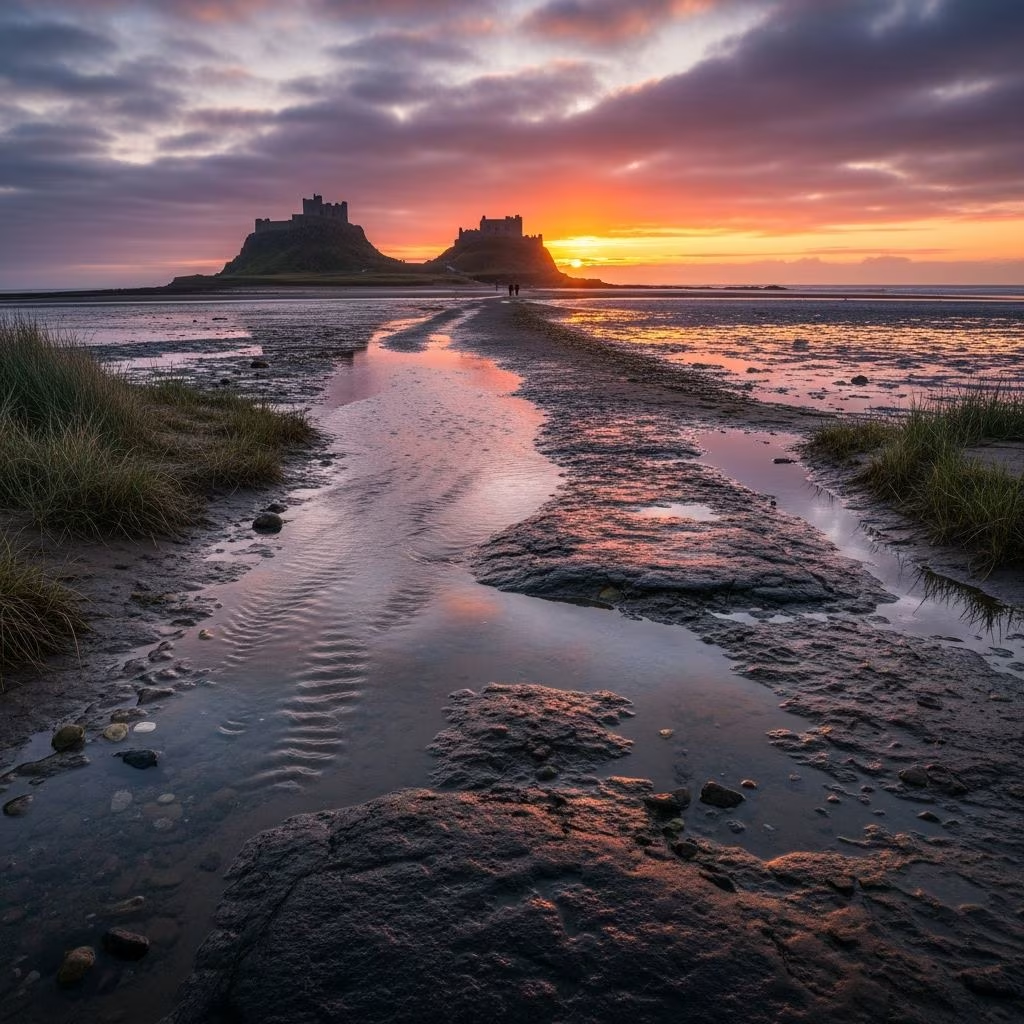
Every 12 hours, the sea reclaims the causeway, stranding the island for roughly five hours. This natural barrier, while challenging, fosters a deliberate pace of life. Residents consult tide tables meticulously, printed daily and posted at key spots like the post office. Planning revolves around ‘safe crossing times,’ when the path is dry and drivable.
Access demands respect for nature’s power. The incoming tide surges swiftly, capable of trapping vehicles or walkers unaware. Official advice urges checking schedules via apps or signs at the mainland car park, where visitors park and await low tide. Walking the two-hour causeway trek adds adventure but requires precise timing—stragglers risk wading through rising waters.
Holy Island’s story begins in 635 AD when Irish monk St. Aidan established a priory, drawn by its seclusion. This ‘thin place’—where heaven feels near—suited monastic contemplation. St. Cuthbert, later bishop, embraced the isolation fully, retreating to nearby St. Cuthbert’s Isle with its modest chapel ruins.
Viking raids in 793 AD shattered the peace, leading to the monks’ exodus with treasures like the illuminated Lindisfarne Gospels. The castle, built in the 16th century atop Viking remnants, later served as a retreat for Edward Hudson, enhanced by architects Edwin Lutyens and Gertrude Jekyll. Today, it stands as a dramatic silhouette against the sea.
| Era | Key Event | Legacy |
|---|---|---|
| 7th Century | St. Aidan’s Priory Founded | Center of Christian learning; Gospels created |
| 793 AD | Viking Raid | Shift to fortified structures |
| 16th-20th Century | Castle Built & Renovated | Iconic landmark blending defense and luxury |
With tourism booming—drawing 800,000 visitors yearly against 180 locals—the island balances welcome with preservation. Most residents cluster in the southwest village around Marygate, a quaint lane of stone cottages housing shops, a post office, and cozy eateries. Here, daily needs persist despite tides; supplies arrive by boat or timed crossings.
Locals diversify livelihoods: fishing yields crab and lobster from the harbor, where mudflats at low tide moor boats in the Ouse. Farming, arts, crafts, and retirement draw others. Sarah Hills, a former cathedral canon turned resident, describes sea swims off St. Cuthbert’s Beach as spiritually invigorating, even in icy waters.
‘The sea dominates everything—five hours every 12 when you can’t leave. Yet it’s refreshing, physically and spiritually.’ – Sarah Hills
Tradition meets innovation in local enterprises. The island’s meadery revives a 1,200-year-old monastic craft, fermenting honey wine with foraged herbs. Nearby, a coffee roastery has outgrown its yurt origins, expanding into shipping-container factories serving aromatic brews.
The working harbor buzzes at low tide, fishermen hauling pots for island restaurants. Craftspeople sell jewelry, art, and mead, capitalizing on pilgrims seeking spiritual souvenirs. Accommodation options abound: inns like The Lindisfarne Inn, farmhouses, and self-catering cottages allow overnight stays, immersing guests in tidal rhythms.
The 12th-century priory ruins evoke Aidan and Cuthbert’s era, a sandstone skeleton amid wildflowers. Pilgrims retrace ancient routes across sands, a barefoot tradition symbolizing devotion. The parish church, continuously active since 635 AD, offers services blending Anglican and Celtic rites.
St. Cuthbert’s Isle, reachable at true low tide, holds meditative appeal. Wooden remnants of his cell invite reflection, but timing is critical—far riskier than the main causeway.
Beyond history, Holy Island dazzles with biodiversity. Mudflats teem with waders—knot, dunlin, bar-tailed godwits—fueling for migrations. Seals bask on beaches; grey herons stalk shallows. The dune-backed straight shorelines frame epic sunsets.
Visiting requires strategy. Park at the mainland lot (pay-and-display), check tides online or via signs. Aim for 2-3 hours either side of low water for ample exploration. Buses shuttle from the car park during safe times. Bring cash—some spots are cardless—and weatherproof gear.
Overnighting enhances the magic: hear waves crash, witness dawn over the priory. Dog-friendly stays cater to pets, but leash them near wildlife.
Isolation tests resolve. Medical emergencies trigger helicopter evacuations; school runs sync with tides. Yet bonds tighten—neighbors share rides, stories. Retirees and remote workers thrive in this unplugging haven.
Yes, via causeway at low tide. Always verify schedules; winter tides can be treacherous.
Around 160-180 permanent residents, swelling with day-trippers.
Absolutely—hotels, B&Bs, and cottages offer immersive stays.
Spring/autumn for birds and fewer crowds; summer for events like mead festivals.
Many accommodations and paths welcome leashed dogs; check restrictions near birds.
Holy Island’s allure endures through careful stewardship. Residents advocate tide-safe parking to curb rescues (over 20 vehicles yearly). Community funds support heritage upkeep, ensuring future generations feel the pull of its tides.
This tidal jewel invites all to slow down, attuning to nature’s ancient cadence—a reminder that true connection often lies beyond the mainland rush.
