

 Travel Essentials
 Travel Essentials

Honolulu has secured the top ranking among U.S. cities for quality of life, outperforming major metropolitan areas globally.
 Travel Essentials
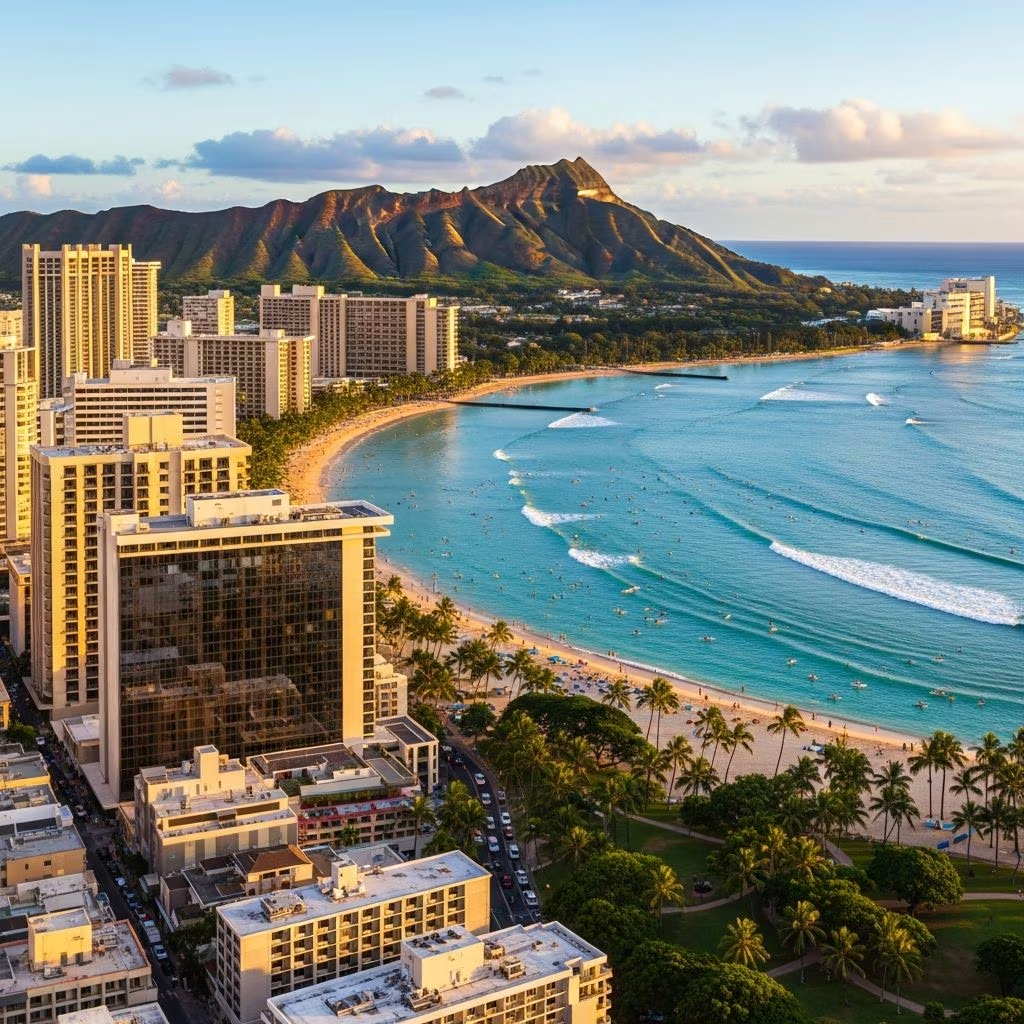
The Hawaiian capital of Honolulu has earned recognition as the most desirable location to establish residence within the United States, securing this distinction for the second consecutive year according to the Economist Intelligence Unit’s comprehensive Global Liveability Index. This achievement places the island city ahead of major metropolitan centers that typically dominate discussions about quality of life in America, including Seattle, Boston, and San Francisco. Understanding what elevates Honolulu above other American urban centers reveals important insights about contemporary urban living standards and the factors that contribute to resident satisfaction and well-being.
The Economist Intelligence Unit conducts an annual assessment of global urban centers through a rigorous analytical framework that evaluates 173 cities worldwide. The evaluation process examines 30 distinct categories of living standards, creating a comprehensive picture of what makes a city function effectively for its residents. This methodology considers multiple dimensions that extend beyond superficial appeals, instead focusing on measurable infrastructure quality, social systems, and environmental conditions that directly impact daily life.
The assessment framework encompasses five major categories: stability and safety, healthcare accessibility, cultural and environmental offerings, educational systems, and infrastructure development. Each dimension receives individual scoring on a scale where 100 represents the ideal conditions. By analyzing these interconnected factors rather than isolating single attributes, the index provides a nuanced understanding of urban liveability that reflects the complexity of modern city living.
Honolulu’s positioning as America’s premier city for liveability stems from several reinforcing strengths that combine to create an exceptionally favorable living environment. The city demonstrates exceptional performance across multiple dimensions that collectively establish its superiority.
Infrastructure Excellence: Honolulu consistently achieves outstanding marks for infrastructure development, featuring modern systems that facilitate efficient daily operations. The city’s transportation networks, utilities, and public facilities represent investments in resident quality of life that extend across multiple service categories.
Educational Opportunities: The educational framework supporting Honolulu residents contributes significantly to the city’s ranking advantages. Access to quality schools and educational institutions provides families with confidence in their children’s development and future prospects.
Natural Environment: The island setting provides Honolulu with environmental advantages that few mainland cities can replicate. The consistent tropical climate, natural beauty, and access to outdoor recreational opportunities create inherent lifestyle benefits that enhance resident satisfaction and well-being.
Stability and Security: Honolulu’s stability scores reflect a city where residents can pursue daily activities with confidence and security, a factor that becomes increasingly important when evaluating quality of life across different urban environments.
When examined against other prominent American cities, Honolulu’s rankings reveal a significant gap between the Hawaiian capital and alternative metropolitan options. Atlanta ranks as the second-most liveable American city at the 29th global position, followed by Pittsburgh at 30th. Seattle occupies 34th place globally, while Washington D.C. ranks 38th. Chicago, Boston, Miami, San Francisco, and Minneapolis complete the top ten American cities for liveability.
Notably, major cities that often receive international attention and acclaim rank substantially lower. New York City, despite its cultural prominence and economic significance, ranks 69th globally. Los Angeles, frequently celebrated for its lifestyle offerings, ranks 57th globally. This disparity highlights that urban size and international fame do not automatically correlate with liveability as measured by comprehensive quality-of-life assessments.
Honolulu’s achievement becomes particularly significant when considering its global standing. Ranking 23rd worldwide among 173 cities positions the Hawaiian capital ahead of numerous international destinations that frequently appear in travel guides and lifestyle publications. The city outperforms Sydney, Dubai, London, Tokyo, and Paris according to the liveability assessment framework.
Copenhagen claimed the top global position in 2025, replacing Vienna which had previously held the distinction. The Nordic city’s achievement reflects broader trends favoring cities with exceptional infrastructure, stability, and access to goods and services. Western cities dominate the top rankings globally, with Damascus, Syria, occupying last place due to ongoing civil conflict.
Honolulu represents the sole American city achieving placement within the global top 25, underscoring its exceptional performance relative to other U.S. metropolitan areas. This distinction emphasizes that the Hawaiian capital operates at a competitive level with world-class international cities rather than merely ranking highest among American alternatives.
Multiple interconnected elements work together to establish Honolulu’s exceptional liveability standing:
The broader performance of American cities in the Global Liveability Index reveals systemic challenges affecting urban quality of life across the nation. Most U.S. cities score consistently well in education and infrastructure categories, demonstrating American strengths in these domains. However, social cohesion challenges emerge as a significant concern, with social unrest and gun violence undermining quality-of-life metrics for many American metropolitan areas.
These issues create a disparity between America’s infrastructure and educational capabilities and its social stability measures—a gap that separates leading American cities from top-ranking global competitors. Addressing these challenges would require comprehensive approaches to violence reduction, community cohesion building, and social support system development across multiple urban centers.
The assessment authors have raised concerns regarding proposed policy directions that could affect future rankings for American cities. Discussions about reducing public spending on education and healthcare funding could lead to further downgrades in future assessments if implemented. Such developments would likely widen the gap between American urban centers and their international competitors, potentially pushing even high-ranking cities like Honolulu down in subsequent evaluations.
This projection underscores how policy decisions at state and federal levels directly influence the measurable quality of life that determines liveability rankings. Maintaining or improving American competitive positioning requires sustained investment in the public systems that enable residents to thrive in urban environments.
Several elements work synergistically to establish Honolulu’s distinctive positioning. The city benefits from its island geography, which creates natural boundaries and environmental benefits. The tourist economy provides economic dynamism without overwhelming the residential character of neighborhoods. The cultural heritage and population diversity create a cosmopolitan atmosphere while maintaining community identity.
Additionally, Honolulu’s relatively moderate size compared to mega-cities like New York or Los Angeles allows for more manageable urban systems and stronger community connections. The city achieves the benefits of urban sophistication without the congestion, crime, or systemic dysfunction that plague some larger American metropolitan areas.
For individuals and families considering relocation or evaluating where to establish residence, Honolulu’s liveability ranking carries practical significance. The assessment reflects measurable conditions in areas directly affecting daily living: access to quality schools, reliable infrastructure, safe neighborhoods, and environmental quality. Prospective residents can evaluate these specific factors alongside personal preferences regarding culture, climate, and economic opportunities when making relocation decisions.
The EIU evaluates 173 global cities across 30 categories within five major dimensions: stability, healthcare, culture and environment, education, and infrastructure. Each city receives individual scores in these areas, which combine to create overall rankings.
Honolulu has ranked as the most liveable American city for at least two consecutive years, with the 2025 assessment confirming its continued position at the top of the national rankings.
No other American city besides Honolulu achieves placement in the global top 25, emphasizing the Hawaiian capital’s exceptional standing relative to other U.S. metropolitan areas.
Infrastructure excellence, educational opportunities, natural environmental quality, and stability metrics represent primary contributors to Honolulu’s superior positioning in the overall assessment.
The presence of social unrest, gun violence concerns, and other stability issues in many large American cities undermines their overall liveability scores despite strengths in other categories like education and infrastructure.
Honolulu’s recognition as America’s most liveable city reflects a comprehensive assessment of what enables residents to thrive in urban environments. The city’s combination of infrastructure investment, educational quality, natural advantages, and social stability creates conditions that support individual and family well-being across multiple dimensions. As American cities continue to compete for residents and resources, Honolulu’s model demonstrates how attention to multiple quality-of-life factors can establish competitive advantages in an increasingly mobile population seeking optimal living conditions. The Hawaiian capital’s sustained ranking suggests that these advantageous conditions remain stable, offering prospective residents confidence in the city’s ongoing commitment to maintaining the systems and environments that support resident satisfaction and quality of life.
