

 Travel Essentials
 Travel Essentials

Complete guide to Hornstrandir Nature Reserve: hiking routes, wildlife encounters, logistics, and how to experience Iceland's most isolated wilderness safely.
 Travel Essentials
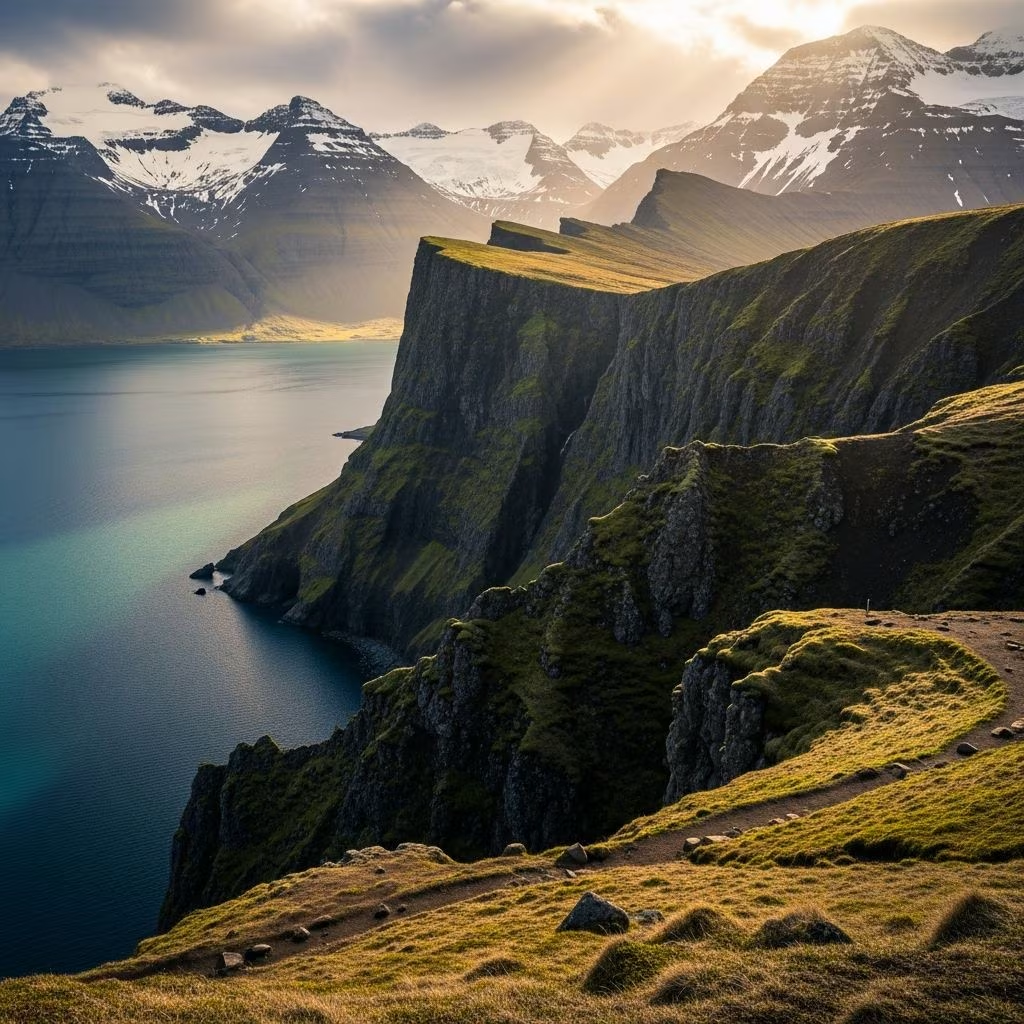
Perched at the edge of the Arctic Circle in Iceland’s far northwestern reaches lies one of Europe’s most extraordinary untouched landscapes. The Hornstrandir Nature Reserve sprawls across approximately 589 square kilometers of jagged terrain, where dramatic fjords cut deeply into mountainous wilderness and towering sea cliffs plunge directly into frigid waters. This isolated peninsula represents a realm where civilization feels entirely distant, where the landscape dominates completely, and where adventurers can experience profound solitude seldom found in contemporary Europe.
Hornstrandir occupies a distinctive geographic position that fundamentally shapes the visitor experience. Located roughly 30 kilometers south of Ísafjörður, Iceland’s Westfjords hub, the reserve remains deliberately disconnected from modern infrastructure by design and circumstance. The terrain comprises a complex network of fjord-cut valleys, imposing mountain ranges, and a dramatic coastline characterized by some of the continent’s most spectacular cliff formations.
The reserve’s physical geography presents both its greatest appeal and its most significant challenge. Multiple fjords carve deep channels into the landscape, creating natural divisions that influence hiking route planning and define distinct exploration zones. Waterfalls cascade down mountainsides with tremendous force, while the Drangajökull glacier presides over the interior landscape like an ancient sentinel. These features combine to create an environment that feels fundamentally removed from normal human experience.
The most iconic landmark within Hornstrandir is undoubtedly Hornbjarg, a breathtaking sea cliff complex that rises directly from the ocean without any transitional shoreline. The eastern section of these cliffs reaches heights exceeding 500 meters, with Kálfatindur representing the highest point at 534 meters elevation. These imposing vertical walls of rock create an almost unimaginable scale that becomes fully apparent only when viewing them in person.
The cliff formations serve multiple ecological purposes simultaneously. They function as crucial nesting grounds for numerous bird species, transforming them into dynamic ecosystems where thousands of individual creatures interact with their environment. The sheer number of birds utilizing these cliffs creates an intense sensory experience, with the air filled with calls and the cliff faces appearing almost alive with avian activity.
Beyond the dramatic coastline, the reserve contains multiple distinct environments. Mountain passes provide elevated vantage points revealing the complex topography, while coastal plains support vegetation adapted to harsh northern conditions. Glacier-fed rivers carve through valleys, creating dramatic gorges and waterfalls. This environmental diversity means that hiking routes through Hornstrandir traverse fundamentally different ecosystems within relatively compact distances.
Hornstrandir holds profound significance as a wildlife sanctuary, particularly for one species that defines the reserve’s ecological importance. The Arctic fox represents the only truly native land mammal in Iceland, having become stranded on the island following the last Ice Age and subsequently developing into a genetically distinct subspecies known as Vulpes lagopus fuliginosus. These remarkable animals adapted to survive on birds, bird eggs, berries, seaweed, and diverse other food sources across millennia.
The Hornstrandir Nature Reserve stands as the sole location in Iceland where Arctic foxes receive complete protection from hunting. This legal designation, combined with the presence of abundant bird populations and the absence of permanent human settlement, has created conditions allowing Arctic fox populations to thrive. Unlike most Icelandic regions where these animals remain elusive and wary, Hornstrandir’s foxes display notably relaxed behavior, making sightings remarkably common along hiking trails and near campsites.
Arctic foxes in Hornstrandir exhibit seasonal coat changes, appearing pure white during winter months and transforming to grey plumage during summer seasons. Observing these beautiful creatures requires visitors to maintain appropriate distance and refrain from feeding or close approach, despite the animals’ apparent calm demeanor. The foxes remain genuinely wild despite their apparent habituation to human presence.
Beyond Arctic foxes, Hornstrandir supports remarkable mammal diversity for such a remote location. Seals inhabit coastal areas and fjords, while whales frequent the surrounding waters. The bird populations create one of the reserve’s most notable features, with puffins, sea eagles, black guillemots, and Arctic terns representing major species present in significant numbers. This concentrated wildlife presence transforms Hornstrandir into one of Iceland’s preeminent destinations for animal observation.
Reaching Hornstrandir requires deliberate planning since no roads penetrate the reserve boundaries. Ferry services operate seasonally from two primary departure points: Ísafjörður and Bolungarvik, both located in the Westfjords region. Ísafjörður represents the primary access hub, with the most frequent ferry departures and the widest selection of tour operators and accommodation options.
Ferry costs typically range from approximately 80 to 90 USD per person for boat transportation to various interior drop-off points. Journey durations vary depending on destination within the reserve, with some routes requiring three hours of water travel. Multiple ferry operators service the routes, providing flexibility regarding departure times and specific landing locations.
The reserve’s geography means that most visitors access the interior through designated entry points established near campgrounds and major hiking trail junctions. Hornvik serves as a primary entry gateway, while Heysteri provides an alternative southern-access point. Ferry operators adjust routes seasonally based on weather conditions and operational capabilities, creating periods where certain landing locations may become temporarily inaccessible.
Hornstrandir offers exceptional hiking possibilities ranging from half-day excursions to multi-day wilderness treks. However, all routes demand proper physical preparation, navigation competency, and realistic expectations regarding weather variability and trail conditions. The reserve maintains no formally maintained trail system with guaranteed markings; instead, established routes connect key fjords, campsites, and natural features through landscape features and occasional directional markers.
Major hiking routes traverse between significant fjords and designated camping areas. The Hafnarskard pass connects Veidileysufjordur and Hornvik, offering views into both fjord systems. Multi-day expeditions typically connect three to six distinct camping locations, creating increasingly ambitious itineraries suitable for varied experience levels. Tours operated by specialized companies typically range from two to six days in duration.
Trail conditions vary dramatically depending on season, weather patterns, and recent precipitation. Vegetation coverage, snow presence, and stream water levels all influence hiking difficulty and route-finding challenges. Visitors consistently report that even shorter routes require vigilant navigation and careful attention to trail markers, particularly during periods of poor visibility or inclement weather.
Hornstrandir operates under strict seasonal constraints due to its northern latitude and challenging maritime climate. The reserve experiences a very short operational season, with most services and ferry routes available during summer months only. Winter conditions create environments where access becomes impractical for typical visitors, and accommodation facilities often close entirely during colder seasons.
Summer brings the midnight sun phenomenon, where sunlight persists throughout the night at this high latitude. This continuous daylight extends hiking opportunities and creates otherworldly visual experiences. However, even summer weather remains unpredictable, with temperature fluctuations, sudden precipitation, and strong winds representing constant concerns requiring appropriate gear and flexibility.
The brief season means that visitors must carefully coordinate travel plans, often requiring multi-night stays in Ísafjörður before embarking on reserve exploration. Day tour operators typically recommend two nights accommodation in the departure hub to maximize flexibility regarding weather-dependent ferry scheduling.
Hornstrandir provides limited accommodation options distributed across multiple fjord valleys, primarily concentrated at ferry drop-off locations. The reserve features a string of campgrounds, huts, and hostels positioned strategically to facilitate multi-day hiking connections. Accommodation quality ranges from basic camping platforms to rustic mountain huts offering modest shelter.
Designated camping areas represent the primary accommodation option, with specific zones established to concentrate visitor impact and protect vegetation. Most camping locations feature designated platforms or cleared areas, basic water sources, and minimal facilities. Visitors must arrive prepared with complete camping equipment including weatherproof tents and adequate insulation for northern conditions.
The reserve’s mountainous interior geography determines accommodation positioning. Rather than creating a connected town-like infrastructure, facilities spread across separated fjord valleys accessible only by hiking or water transport. This dispersed arrangement reinforces the wilderness experience while constraining visitor numbers through inherent logistical limitations.
Hornstrandir maintains designation as a protected nature reserve, with conservation regulations rigorously enforced to preserve the landscape’s pristine character. Established in 1975, the reserve currently remains managed by Iceland’s Environment Agency following complete depopulation in the 1950s, when the last permanent residents departed. A small number of descendants maintain restored family homes on the reserve, returning seasonally to maintain ancestral connections.
Visitor conduct directly impacts ecosystem health. Established protocols require remaining on designated trails whenever feasible, camping exclusively in designated zones, and practicing leave-no-trace principles. Wildlife interaction rules prohibit feeding any animals or approaching them beyond safe distances, even when creatures display apparent calm behavior. Respect for these guidelines ensures Hornstrandir maintains its status as one of Iceland’s most pristine and biologically rich regions.
Successfully navigating Hornstrandir requires thorough preparation spanning physical conditioning, equipment selection, and logistical planning. The remote location eliminates possibilities for resupply or emergency services, necessitating complete self-sufficiency regarding food, water, navigation equipment, and first aid resources. Quality weather-resistant gear becomes non-negotiable, as conditions can deteriorate rapidly regardless of season or initial forecasts.
Navigation competency represents a critical requirement often underestimated by visitors. Trail markers may prove sparse or absent during certain sections, particularly when weather obscures landscape features or vegetation obscures markers. Map reading skills, compass navigation, and GPS device proficiency significantly enhance safety and confidence during exploration.
Physical conditioning appropriate to intended itinerary intensity ensures positive experiences and reduces injury risk. Even moderate multi-day routes involve significant elevation changes, extended daily hiking distances, and potentially challenging terrain. Visitors should honestly assess their capabilities and select appropriate routes rather than overestimating abilities.
Multiple operators offer guided tours and supported hiking expeditions for visitors preferring structured experiences over independent exploration. These services range from single-day excursions to extended multi-day wilderness treks, with tour operators handling logistics, accommodation arrangement, and route expertise. Guided experiences particularly benefit first-time Hornstrandir visitors unfamiliar with terrain navigation and environmental conditions.
Tour operators typically depart from Ísafjörður, with regular departures throughout the operational season. Multi-day tours accommodate varying fitness levels and experience backgrounds, allowing visitors to select appropriate intensity levels. Professional guides provide valuable ecological knowledge, enhance wildlife viewing opportunities, and ensure adherence to conservation protocols.
Perhaps Hornstrandir’s most defining characteristic lies in its profound remoteness and resulting solitude. Despite covering 589 square kilometers, the reserve remains virtually uninhabited, with tourist populations remaining minimal relative to landscape scale. Visitors frequently report hiking full days without encountering other people, creating an increasingly rare opportunity to experience genuine wilderness isolation within Europe.
This exceptional solitude generates transformative psychological effects for many visitors. The absence of human infrastructure, minimal visitor density, and overwhelming landscape scale combine to produce meditative experiences increasingly difficult to access in contemporary society. The reserve functions simultaneously as physical destination and contemplative space where visitors can disconnect from external pressures and reconnect with natural systems.
