
 Stays
StaysStays
Hotel Rooms of the Future: AI, Robotics & Sustainable Design
Explore how AI, robotics, and sustainable design are reshaping hotel rooms into flexible, personalized, and eco-friendly spaces.
 Stays
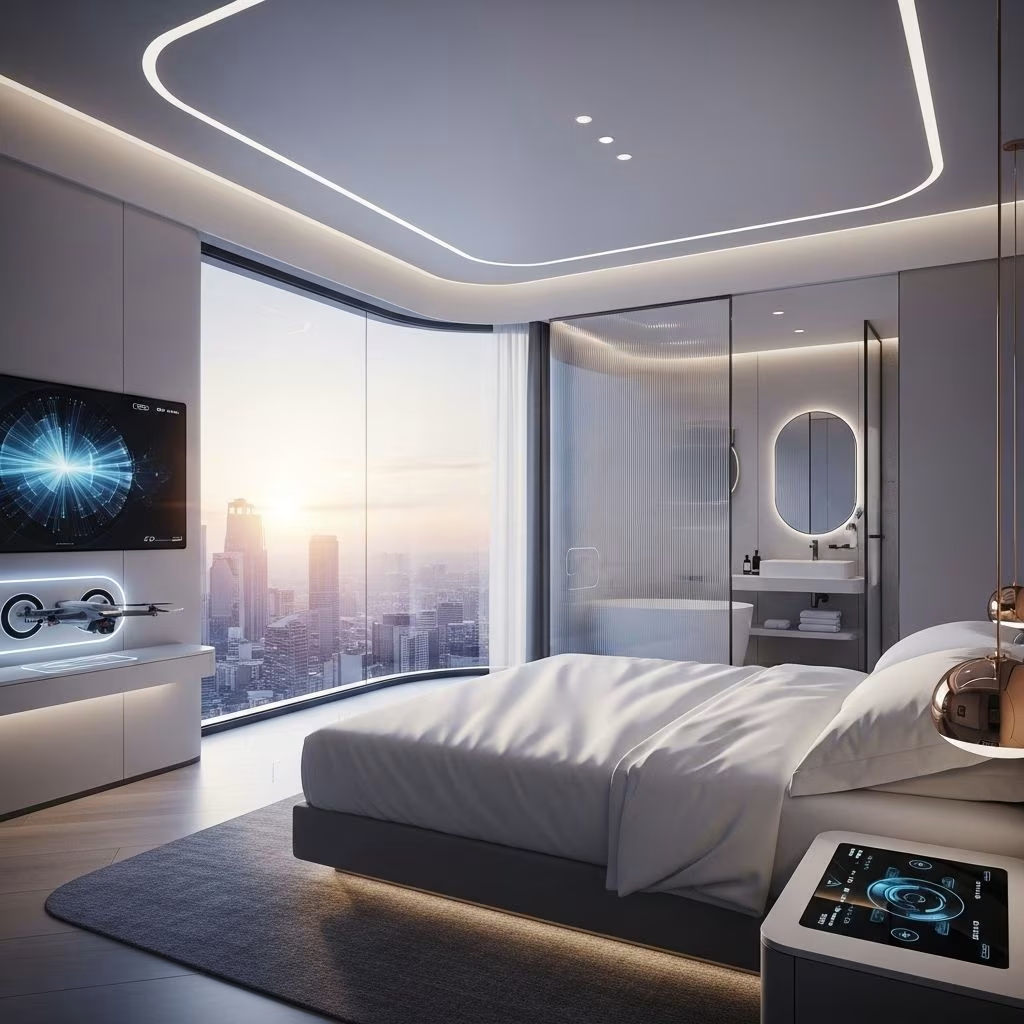
StaysHotel accommodations are undergoing a profound transformation, driven by advancements in artificial intelligence, robotics, and sustainable materials. Future rooms prioritize flexibility, personalization, and efficiency, adapting to individual guest preferences while minimizing environmental impact. These spaces blend cutting-edge technology with intuitive design to create immersive, hassle-free stays.
Adaptive Spaces for Dynamic Needs
Modern hotel rooms maximize limited square footage through modular and automated furniture systems. Walls, floors, and ceilings integrate retractable elements that reconfiguration based on guest activities, from work to relaxation. For instance, beds can ascend into ceilings to free up floor space for yoga mats or social lounging areas delivered by robots.
This approach stems from collaborative projects like the Hotel of Tomorrow, involving major chains such as Hilton and Marriott, which envision rooms that evolve seamlessly. Guests select modes via apps or voice commands, enabling efficient use of space without compromising comfort.
- Exercise configuration: Equipment deploys from storage units.
- Dining setup: Tables and chairs emerge from floors.
- Sleep mode: All elements retract for a spacious sleeping area.
AI-Driven Personalization
Artificial intelligence anticipates guest needs by analyzing past behaviors and real-time data. Upon entry, rooms adjust lighting, temperature, and ambiance to match preferences, such as dimming lights to 22°C settings or displaying personalized schedules on smart mirrors. Voice assistants handle requests around the clock, from room service to itinerary planning.
Connected ecosystems link mobile devices to room controls, allowing guests to manage lights, climate, and entertainment remotely. Intelligent minibars alert staff for restocking, while adjustable beds offer massage functions tailored to user profiles. EHL Insights notes that such features elevate rooms as strategic differentiators beyond basic amenities like Wi-Fi.
| Feature | Benefit | Example Tech |
|---|---|---|
| Temperature Control | Energy optimization | Smart thermostats |
| Lighting Adjustment | Mood enhancement | Daylight-sync LEDs |
| Entertainment | Personalized content | Gesture walls |
Robotic Assistance and Automation
Robots are set to redefine service delivery, acting as butlers that greet guests at airports, deliver meals, and perform housekeeping. Multilingual capabilities and local knowledge make them ideal concierges. In-room, autonomous units handle routine tasks, freeing human staff for personalized interactions.
Mobile check-in eliminates front-desk queues, with smartphones unlocking doors and accessing upgrades. Facial recognition, piloted by brands like Marriott, streamlines arrivals. Automation extends to self-flushing smart toilets that detect usage and optimize water flow.
Sustainable Designs for Eco-Conscious Travelers
Sustainability is integral, with rooms featuring water-saving showers, recycled furniture, and biodegradable linens. Green roofs and energy systems reduce carbon footprints without sacrificing luxury. The Hospitality Insights project emphasizes ultra-personalization alongside well-being through eco-materials.
Future concepts include portable, simulated experiences for remote access, minimizing physical travel’s impact. 3D printers in rooms produce essentials like toiletries or adapters on demand, cutting waste.
Immersive Tech Integrations
Hyperconnectivity turns surfaces into interactive hubs. Touchscreen mirrors display news or weather, while spa walls release aromatherapy scents. Virtual reality transforms rooms into virtual destinations, enhancing stays for immobile guests. Smart glass in showers shifts opacity via apps.
Provision of in-room tablets or integrated IoT ensures seamless control. Guests command everything from entertainment to service requests, creating intuitive environments.
Challenges and Industry Perspectives
While promising, these innovations face hurdles like privacy concerns and high implementation costs. Experts like Achim Schmitt from EHL highlight the shift from standardized rooms to tech-rich havens. Richard Haworth predicts morphing rooms within 20 years, driven by flexible components.
Alternative accommodations may erode traditional hotels’ share, prompting hybrid models with portable tech. Videos from prototypes showcase sustainable prototypes with app-controlled flexibility.
Frequently Asked Questions
What technologies define future hotel rooms?
Key elements include AI personalization, robotic service, adaptive furniture, and sustainable systems like smart thermostats and 3D printing.
How do transformable rooms save space?
Furniture retracts into walls or ceilings, allowing reconfiguration for work, exercise, or socializing via automation.
Are robots replacing hotel staff?
They handle repetitive tasks like delivery and cleaning, enhancing efficiency while humans focus on hospitality.
What role does sustainability play?
Features like energy-optimizing lights, recycled materials, and water-efficient fixtures promote eco-friendly stays.
When will these rooms become standard?
Prototypes exist today; widespread adoption is expected in 10-20 years as costs drop.
Key Trends Summary
- Personalization via AI and apps.
- Space optimization through modularity.
- Automation for seamless service.
- Sustainability in materials and energy.
- Immersive experiences with VR and IoT.
References
- OBMI & Hotel of Tomorrow Project Reveal Transformable Hotel Room — OBMI. 2023. https://obmi.com/obmi-hot-reveal-transformable-hotel-room/
- The Hotel Room of the Future — EHL Insights (hospitalityinsights.ehl.edu). 2023. https://hospitalityinsights.ehl.edu/hotels-room-innovation
- In the Hotel Room of the Future, Technology Will Simplify Things — Zaplox. 2023. https://zaplox.com/zaplox-unlocked-blog/in-the-hotel-room-of-the-future-technology-will-simplify-things/
- What will the hotels of the future look like? — Richard Haworth. 2023. https://www.richardhaworth.co.uk/news/what-will-the-hotels-of-the-future-look-like
- Asking ChatGPT: What is the Hotel Room of the Future? — SuitePad. 2023. https://www.suitepad.de/en/blog/asking-chatgpt-what-is-the-hotel-room-of-the-future
← Previous
10 Common International Travel Mistakes to Avoid
Next →
Top 10 Most Livable Cities in the World 2026
Related Reading