

 Travel Essentials
 Travel Essentials

Explore a remote island national park in Western Australia with coral reefs, rare wildlife, rich shipwreck history, and day-only adventures.
 Travel Essentials
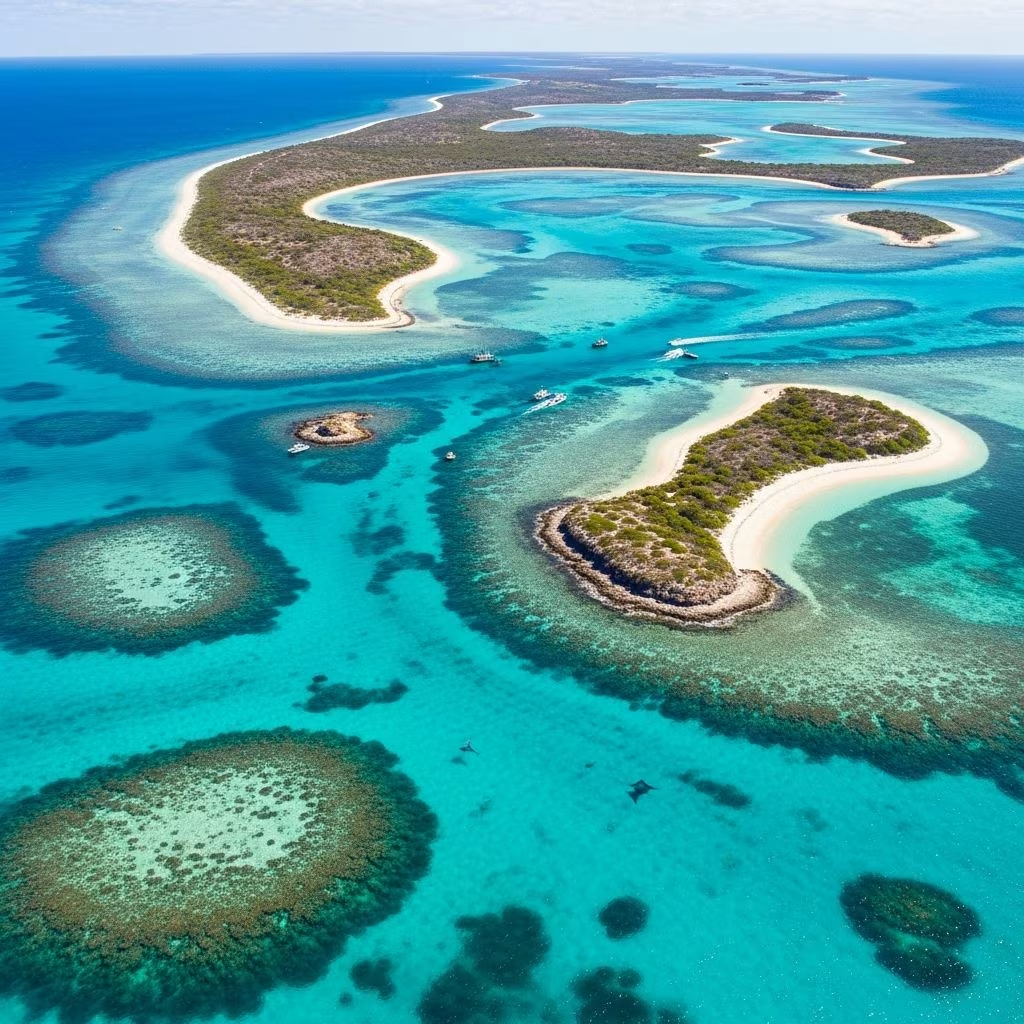
The Houtman Abrolhos Islands National Park stands as a remote jewel in Western Australia’s Mid West region, situated approximately 75 kilometers west of Geraldton. Established in 2019 and spanning 1,564 hectares, this protected area safeguards over 122 islands divided into three primary clusters: the Wallabi Group, Easter Group, and Pelsaert Group. Often likened to the Galapagos of the Indian Ocean, the park boasts extraordinary biodiversity where temperate and tropical marine species converge, thanks to the warm Leeuwin Current.
Stretching across 100 kilometers of ocean, the archipelago emerges from coral limestone platforms, creating a labyrinth of shallow reefs, lagoons, and rugged shorelines. The Wallabi Group dominates in the north with larger islands like East and West Wallabi, while the Easter and Pelsaert Groups lie to the south, featuring smaller, more fragmented isles. These formations host vibrant coral communities, seagrass meadows, and dynamic tidal flats that shape unique ecosystems.
Access to the islands demands careful navigation due to persistent southerly winds exceeding 32 km/h for 44% of the year, heavy swells, and risks from cyclones or tsunamis. Boaters must notify the Department of Primary Industries and Regional Development (DPIRD) via an online form before entering the Fish Habitat Protection Area.
The park’s isolation fosters endemic species and serves as critical habitat. Seabird colonies thrive here, with over 35 species including Caspian terns nesting in lagoons. The northernmost range for the endangered Australian sea lion includes playful pups on beaches like Leo Island. Tammar wallabies hop across East Wallabi, alongside the rare Abrolhos painted button-quail and carpet pythons.
Recognized as an Ocean Hope Spot by Mission Blue, the area exemplifies conservation success, blending national park status with marine protections.
Five accessible walking trails—ranging from 426 meters to 1.6 km—offer moderate to easy hikes across coral ridges, sandy paths, and shell-strewn shores. Day visits only; no camping permitted to protect breeding grounds.
| Trail Name | Location | Length & Difficulty | Highlights |
|---|---|---|---|
| Beacon Island Trail | Wallabi Group | Short, easy (crushed coral path) | Batavia shipwreck history, interpretive signs |
| Leo Island Trail | Easter Group | Easy lagoon edge walk | Caspian tern colonies, sea lion pups |
| Pelsaert Island Trail | Pelsaert Group | Moderate ridges and loops | Seabird breeding sites, limestone formations |
| Tammar Trail | East Wallabi Island | Moderate return to lookout | Tammar wallabies, button-quails, pythons |
| West Wallabi Island Trail | Wallabi Group | 1.6 km loop | Wiebbe Hayes Fort ruins, endemic wildlife |
Visitors should wear sturdy shoes for uneven terrain and stay on paths to avoid disturbing fragile habitats.
The islands echo with tragedy from 1629, when the Dutch East India Company ship Batavia struck Morning Reef. Survivors faced mutiny, massacre, and heroism; a group built Wiebbe Hayes Fort on West Wallabi—the oldest European structure in Australia—repelling attackers until rescue. Relics persist, blending with pearling and crayfishing legacies.
Archaeological sites underscore centuries of human interaction, from shipwrecks to guano mining, now preserved within the park.
Snorkeling and Diving: Plunge into coral gardens teeming with tropical and temperate fish, turtles, and crayfish. Visibility peaks in calm seasons.
Fishing and Crayfishing: Prime grounds for recreational anglers, regulated within the FHPA. Commercial operators require DBCA licenses.
Birdwatching and Wildlife Spotting: Binoculars reveal nesting colonies and marine mammals from island lookouts or boat decks.
Aerial and Boat Tours: Scenic flights (2 hours to full day) or charters from Geraldton provide panoramic views. Eco-tours emphasize low-impact visits.
Reach the park via boat from Geraldton (60-75 km offshore) or chartered flights. Expect changeable weather; check forecasts and vessel safety.
Day-use focus preserves serenity; no overnight stays ensure minimal disturbance.
Managed by the Department of Biodiversity, Conservation and Attractions (DBCA), the park balances tourism with safeguarding. Licenses regulate access, protecting cultural and natural values. Ongoing monitoring supports species like the vulnerable Australian sea lion.
Recent accessibility upgrades, including disability-friendly paths, broaden appeal without compromising ecosystems.
No, camping is prohibited to protect seabird breeding sites and fragile habitats. Day visits only.
By boat from Geraldton or scenic flights/charters. Boaters must notify DPIRD beforehand.
July to September for humpback migrations.
Yes, eco-tours for snorkeling, fishing, and history. Commercial operators need DBCA licenses.
Sea lions, tammar wallabies, seabirds (35+ species), dolphins, whales, fish, and corals.
This archipelago’s blend of raw nature, rich history, and adventure draws nature lovers worldwide. Its status as a national park since 2019 ensures enduring legacy, offering immersive experiences in one of Australia’s most biodiverse marine realms. Plan your journey to witness unspoiled beauty responsibly.
